Best Adjustable Kettlebell 2026: What 7-in-1 Really Means
By Felipe Iglesias · Updated
The word seven-in-one is the strongest claim in this category and the emptiest. It counts how many weights a kettlebell can be, and it never says how far apart they are — which is the number that decides whether one adjustable bell can really replace a rack of them. The LIFERUN at number nine shows what happens when a listing fills in the rest badly. Its title names two ceilings, ten and twenty kilograms. Its own first bullet lists the seven levels it actually has, and they stop at ten: 1.5, 3, 4.5, 6, 7.5, 9 and 10 kilograms. The specification field then states an item weight of 12 kilograms, which matches neither. Three numbers on one product page, and a buyer scanning the headline has no way to tell that the top weight here is half of the largest figure on the screen, or that the £65.99 buys the smaller of the two versions. The same listing carries 26 per cent one-star reviews from six ratings, the worst histogram in this comparison.
Nine other listings here have the same habit in a milder form, and five of them contradict their own headline number in the item weight field: the ATIVAFIT advertises a 20kg top level and states 18kg, the JAXJOX tops out at 19kg in its bullet and states 20kg, and the Strongology, whose title says up to 18kg, states 8kg in the field that is supposed to describe the product. When five out of ten listings disagree with themselves about the maximum, the only figure worth trusting is one you can add up or measure yourself.
So use the step, not the count. The Bells of Steel at number one is the only listing here that publishes increments as fine as half a kilogram and one kilogram, and it costs £159.99, roughly double the next tier — that relationship between price and step size holds across this whole market and is the most useful thing on this page. The £90 to £100 group moves in 2.5 to 3kg jumps. The £28 to £34 group, which sells in pounds rather than kilograms, moves in 1.3 to 1.8kg jumps between three weights. If your programme asks for 12kg then 16kg, a 3kg step means you cannot land on the second number at all, and no listing here says so, because none of them knows what your programme is.
The rest of the field is what you would expect from a young market. The deepest sample here is 417 ratings and five of these ten have fourteen or fewer, so a perfect score on eleven reviews is not evidence of anything — it is a small number. The handle field, which decides whether both hands fit and whether a heavy bell stays controllable, is the most chaotic line in every table: two listings state it properly, in millimetres and centimetres, and one states a figure that cannot be a kettlebell grip at all. Read the weight that is stated, look for the step, and treat the count in the title as a headline rather than a specification.
One more thing decides whether an adjustable kettlebell is worth owning, and almost no listing here answers it: what the empty unit weighs, and what happens when the mechanism fails. The BRAINGAIN at number two is the only one that publishes the weight of the bell with nothing loaded — 4kg — and the only one with a stated warranty, two years, from a UK brand. The Bells of Steel at number one ships with eighteen plates and an Allen key, which tells you that changing weight is a manual job rather than a twist. Everything else leaves you to infer the empty weight by subtracting the plates you can see from the total you were promised, which is precisely the arithmetic that five of these listings get wrong.
At a glance
 1
1
 3
3
 4
4
 5
5
 7
7
 8
8
| # | Product | Price | Rating | Link |
|---|---|---|---|---|
| 1 | Bells of Steel Adjustable Kettlebell, Internally-Loaded Steel Shell, Competition Standard 35mm Handle, 12-20.5kg | £159.99 | 4.6 | View |
| 2 | BRAINGAIN Adjustable Kettlebell 18kg 7-in-1 with Quick-Lock Mechanism, Cast Iron | £99.99 | 4.5 | View |
| 3 | HXD-ERGO Adjustable Kettlebell for Home Gym, Quick Weight Adjustment, 6 Levels 3-18kg | £99.99 | 4.8 | View |
| 4 | ATIVAFIT 20kg Adjustable Kettlebell 7 in 1 with Solid Aluminium Handle and Safety Locking System | £93.49 | 4.0 | View |
| 5 | JAXJOX Adjustable Weight Kettlebell with One-Touch Weight Selection and Stand, 5.5-19kg | £99.99 | 4.2 | View |
| 6 | BURAKH Adjustable Kettlebell Weight Set, 9kg Home Gym Fitness Workout Kettle Bell | £40.49 | 4.6 | View |
| 7 | YANZHI Adjustable Kettlebell 5-12lbs, Blue, Cast Iron, Full-Body Workout and Strength Training | £28.99 | 4.5 | View |
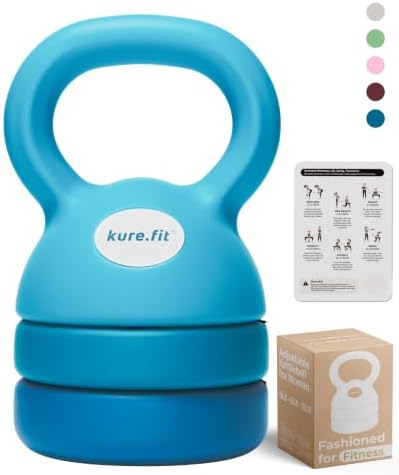
| 8 | kure.fit Adjustable Kettlebell for Women, 3-in-1, 5lb / 8lb / 12lb with Exercise Guide | £33.95 | 4.6 | View |
| 9 | LIFERUN 7-in-1 Adjustable Kettlebell, 1.5-10kg Quick Adjust Weights, Safety Locking Design | £65.99 | 4.8 | View |
| 10 | Strongology HERCULES18 7-in-1 Adjustable Smart Kettlebell, Red Dial, up to 18kg | £94.99 | 5.0 | View |
Free WhatsApp group
Amazon deals, around the clock
Price drops and lightning deals posted the moment they go live. No spam, leave whenever you like.
Join the groupFree to join · Leave any time
Bells of Steel Adjustable Kettlebell, Internally-Loaded Steel Shell, Competition Standard 35mm Handle, 12-20.5kg
The only listing that publishes its increments — half a kilo and one kilo — and a specification that matches its own title.
Pros
- The only published increments in this comparison: 0.5kg and 1kg
- Seventy-one ratings at 4.6 stars, the deepest adjustable sample here
- A 35mm competition-standard handle, the only one measured in millimetres
- Item weight of 20.5kg matches the top of its own range
- Sold by a strength brand with a stated warranty, not a marketplace name
Cons
- £159.99, roughly double the next tier for a similar range
- Changing weight needs an Allen key rather than a twist
- Starts at 12kg, which is too heavy for a beginner
- A manual plate swap is slower mid-set than a dial
Why it is number 1
- Increments as stated
- 0.5kg and 1kg The only listing here that publishes the step
- Levels and range
- 18 levels, 12kg to 20.5kg Plates listed: 1x3kg, 2x2kg, 1x1kg, 1x0.5kg
- Handle diameter
- 35mm, competition standard The only handle measured in millimetres here
- Weight at the top
- 20.5kg Matches the item weight field exactly
- Ratings
- 4.6 from 71 82 per cent five-star, 3 per cent one-star
- Price
- £159.99 The most expensive here, and the only one worth it for fine steps
What buyers actually say
Quoted from customer reviews on Amazon
Verified purchase“Great piece of equipment for strength training.”
Verified purchase“Really impressed, easy to adjust weights and no shaking or rattling when in use, will be getting another one!”
Everything wrong with this category is answered by one sentence in this listing: eighteen kettlebells in one, and only this model includes half-kilogram and one-kilogram increments. That is the number the other nine listings treat as a secret. It then makes the claim checkable by listing the plates that ship in the box — one 3kg, two 2kg, one 1kg and one 0.5kg — in a unit that runs from 12kg to 20.5kg. A buyer can add those up and reach the top of the range, which is more than can be said for half the products on this page.
The specification agrees with the title from three directions at once, which is rarer here than it should be. The handle diameter is given as 35 millimetres: the only measurement in millimetres anywhere in this comparison, and the figure a competition kettlebell is built to, because it decides whether both hands fit around the grip. The material reads alloy steel, which describes the shell rather than the handle coating. The item weight is 20.5kg, exactly the top of the advertised range. In a table where another listing states a handle of 27.27 inches, an internally consistent specification is worth paying for.
What the £159.99 buys is the increment itself. The quick-lock designs at around £95 to £100 move in steps of 2.5 to 3 kilograms, because their plates are chunky and the mechanism counts positions rather than grams. Here the plates include half-kilo discs, so a programme that asks for 12.5kg or 13kg can be followed exactly rather than approximated. The trade is that changing weight is a manual job: the listing describes undoing the shell with an Allen key and swapping plates, which is slower than a twist and much faster than owning a rack. It also carries the deepest sample among the adjustable bells here, 71 ratings at 4.6 stars with 82 per cent five-star and 3 per cent one-star, and it is the only listing that answers what happens if a lock fails on a bell you swing above your head.
BRAINGAIN Adjustable Kettlebell 18kg 7-in-1 with Quick-Lock Mechanism, Cast Iron

A UK brand with a stated two-year warranty and a published starting weight of 4kg, in seven steps up to 18kg.
Pros
- The only stated warranty here: two years, UK
- Publishes the weight of the empty unit: 4kg
- Cast iron, confirmed in the material field
- Item weight of 18kg matches the top of the range
- Quick-lock adjustment instead of handling loose plates
Cons
- Only 40 ratings, with 6 per cent of them one-star
- The 2.33kg step is never stated, only derivable
- Handle diameter field reads 27.27 inches, a unit error
- £99.99 for a 2.33kg step, when £60 more buys half-kilo steps
Why it is number 2
- Range as stated
- 4kg to 18kg The empty weight is published
- Increment
- About 2.33kg Derived from the range, never stated
- Warranty
- 2 years, UK The only warranty in this comparison
- Weight at the top
- 18kg Matches the item weight field exactly
- Ratings
- 4.5 from 40 76 per cent five-star, 6 per cent one-star
- Handle diameter as listed
- Less than 27.27 inches A unit error in the field that decides grip
What buyers actually say
Quoted from customer reviews on Amazon
Verified purchase“Thank you BRAINGAIN for proving such a great product and the versatility is brilliant. Kind regards Anowar Idrissi”
Verified purchase“This is really good quality and great for people who are moving up with weights giving so much flexibility. I bought it specifically for when I go away as it saves loading the car with lots of different weights. I was incredibly pleased with it.”
Two pieces of information in this listing exist nowhere else on the page together. The first is a warranty: the bullets name the company, describe it as a founder-led UK brand, quote a customer count and offer two years of cover, and the specification field confirms the brand name. When someone is spending £99.99 on a piece of cast iron that will be swung above their head, a warranty with an address behind it is worth more than a bullet about ergonomics, and no other listing here states one. The second is the weight of the bell with nothing loaded: the item highlight says it adjusts from 4kg, so the empty unit is 4kg and the seven levels run from there to 18kg.
Those two facts together let a buyer do the arithmetic the listing itself avoids. Divide a 14kg range by the six gaps between seven weights and the real increment is about 2.33kg — a number the listing never states, because it does not have to. Compare that with the half-kilo steps of the pick at number one, which costs £60 more, and the trade is visible: this is the fine-step mechanism of the £100 tier, which means roughly two-and-a-half kilos at a time rather than one.
The specification contains one entry that illustrates this category's habit of filling a field with the wrong thing. The handle diameter reads less than 27.27 inches, which is 69 centimetres. A kettlebell handle is between three and four centimetres across. Somewhere a unit was converted twice, and the line that should tell a buyer whether both hands fit is the least usable entry in the table. The sample is also modest: 40 ratings at 4.5 stars, with 6 per cent of them one-star, so the warranty is doing more work here than the review count. For anyone who wants the cheapest route to a quick-lock bell from a named brand with cover, this is the sensible stopping point.
HXD-ERGO Adjustable Kettlebell for Home Gym, Quick Weight Adjustment, 6 Levels 3-18kg
The cleanest statement of what you actually get: six levels in 3kg steps from 3kg to 18kg, with 89 per cent five-star reviews.
Pros
- Publishes its level list: 3, 6, 9, 12, 15 and 18kg
- The 3kg step is finer than a classic 4kg progression
- 89 per cent five-star with no one-star ratings at all
- Specification agrees with the title on six levels and an 18.6kg top weight
- One bell replaces six, at the storage cost of one
Cons
- Only 14 ratings, the thinnest evidence in the top three
- Material field says aluminium for a cast iron bell
- The 3kg step is far coarser than the word adjustable suggests
- Nothing stated about a warranty
Why it is number 3
- Levels as stated
- 3, 6, 9, 12, 15, 18kg The clearest level list in this comparison
- Step between levels
- 3kg Finer than a 4kg progression, coarser than the word suggests
- Ratings
- 4.8 from 14 89 per cent five-star, none below three stars
- Weight at the top
- 18.6kg Matches the 18kg level
- Material as listed
- Aluminium Names the handle; the bell is cast iron
- Price
- £99.99 Joint-highest of the quick-lock tier, with a 3kg step
What buyers actually say
Quoted from customer reviews on Amazon
Verified purchase“Great kettlebell, sturdy and easy to use. Also great customer service when I had a query!”
Verified purchase“I love this item makes kettlebell exercise so much easier quick and easy to switch weights a useful piece of kit”
The problem with the phrase seven-in-one is that it counts levels without saying how far apart they are, and that gap is what decides whether an adjustable kettlebell can replace a rack of them. This listing answers it in plain language: it switches between 3, 6, 9, 12, 15 and 18 kilograms. Six weights, three kilograms apart, in a single sentence. The specification then agrees from a different direction by stating six weight levels across a 3 to 18kg range, and an item weight of 18.6kg at the top of it.
Whether 3kg is close enough is a training question rather than a product one. A classic progression moves in 4kg steps, so three is finer than that and far coarser than the 1kg a buyer might picture when they read the word adjustable. The honest way to read any claim in this category is to divide the range by the gaps inside it, and this listing does the division for you. It is a slower adjustment than a dial — plates come off the shell — but three kilograms is a real working interval rather than a marketing one.
The sample is the weakness. Fourteen ratings at 4.8 stars with 89 per cent five-star and nothing below three stars is a good first signal and a small one, and it sits alongside my earlier comparison of fixed kettlebells rather than replacing it: a fixed bell's handle can be measured from the outside, an adjustable one cannot. The material field is the other flaw. It reads aluminium, while the bullet two lines above says cast iron build. Both statements describe parts of the same product, since the handle is aluminium and the bell is iron, and the field that exists to tell a buyer what they are lifting names the handle.
ATIVAFIT 20kg Adjustable Kettlebell 7 in 1 with Solid Aluminium Handle and Safety Locking System
Seven stated levels from 2kg to 20kg — the lowest starting weight here — in a specification that disagrees with its own ceiling.
Pros
- Lists its seven levels: 2, 5, 8, 11, 14, 17 and 20kg
- The lightest starting weight here, 2kg
- 3kg steps, stated rather than left to the buyer to derive
- Handle given as a real measurement: 1.25 inches
- A safety locking system described in its own bullet
Cons
- 14 per cent one-star, the worst histogram of the kilogram group
- Item weight field says 18kg against a 20kg ceiling
- Material field is a sentence, not a material
- Nothing stated about a warranty
Why it is number 4
- Levels as stated
- 2, 5, 8, 11, 14, 17, 20kg The lightest start in this comparison
- Step between levels
- 3kg Stated, but coarser than the word adjustable implies
- Weight at the top
- 20kg claimed, 18kg in the field The specification disagrees with the title
- Ratings
- 4.0 from 48 61 per cent five-star, 14 per cent one-star
- Handle diameter
- 1.25 inches A real measurement, unlike two others here
- Price
- £93.49 Cheapest of the quick-lock tier with a stated list
What buyers actually say
Quoted from customer reviews on Amazon
Verified purchase“Great value and very handy multi-weight kettlebell for a gym with limited space. Well made & durable too.”
Verified purchase“Easy to use. Weights easy to change. Doesn't take up a lot of room. 20kg the overall weight. Good grip on the handle. Good design and like the way the weights change quickly”
This listing does the thing the rest of the category avoids: it lists the weights. Seven selections, from 2 kilograms through 5, 8, 11, 14 and 17 to 20. That is a 3kg step, stated rather than implied, and it starts lower than anything else in this comparison — two kilograms is a weight a beginner can press on day one, which matters because the pick at number one starts at 12kg and the tier below starts at 4kg and 5.5kg.
What it does not do is stay consistent with itself. The title and the bullet advertise a 20kg ceiling, and the item weight field states 18 kilograms. The number of items field says seven, which is the plate count rather than the weight, so the specification knows there are seven pieces and still lands two kilos short of the top of its own range. That is the mild version of the problem this whole page is about: not a fabrication, but a table assembled from whatever the listing had to hand, in which the only figure a buyer can verify by lifting is the wrong one.
The 4-star average is the lowest of the quick-lock group, and the histogram explains why: 14 per cent of its 48 ratings are one-star, roughly one unhappy buyer in seven. For context, the HXD-ERGO at number three has no one-star ratings at all and the pick at number one has 3 per cent. The handle is given as 1.25 inches, which is a real measurement in a field where another listing states 27.27 inches, and the material field contains an entire sentence rather than a material: solid aluminium handle, double-layer ABS plastic. Both parts are true — the handle is aluminium and the shell is plastic — and neither tells you what the load is made from.
JAXJOX Adjustable Weight Kettlebell with One-Touch Weight Selection and Stand, 5.5-19kg
The only dial-operated adjustable kettlebell here, six levels from 5.5kg to 19kg, and a stand included in the box.
Pros
- The only one-touch adjustment here: no plates to handle
- Lists all six levels, from 5.5kg to 19kg
- States what is in the box, including a stand
- Rotating weight-selection core with a compact footprint
- A dial is faster to change mid-set than any shell here
Cons
- Only 11 ratings, with 12 per cent one-star
- The title never states the range
- Item weight field says 20kg against a 19kg top level
- Material field reads synthetic, which names nothing
Why it is number 5
- Levels as stated
- 5.5, 8.5, 11, 13.5, 16.5, 19kg Published in the bullets
- Step between levels
- 2.5 to 3kg Same bracket as the other quick-lock designs
- Adjustment
- One-touch rotating core The only dial here, no plates to handle
- In the box
- Weight plates, stand, shell The only listing that says so
- Weight at the top
- 19kg claimed, 20kg in the field The field overshoots the range
- Ratings
- 4.2 from 11 65 per cent five-star, 12 per cent one-star
What buyers actually say
Quoted from customer reviews on Amazon
Verified purchase“All good - as expected - excellent transaction with recommended seller”
Verified purchase“Delivery as always very good, kettlebell excellent so easy to use and looks great”
This is the only kettlebell in the comparison that changes weight without touching a plate. The bullets describe an instant one-touch adjustment and a rotating weight-selection core, which is a different engineering answer from the quick-lock shells and the Allen keys used elsewhere on this page: turn the dial, feel the click, lift. For anyone who trains in a small space or in short sessions, that difference is the product, and it explains a price of £99.99 for a range that starts at 5.5 kilograms.
The levels are published, which puts this listing in the minority that can be trusted on the number that matters. Six weights: 5.5, 8.5, 11, 13.5, 16.5 and 19 kilograms. The steps work out between 2.5 and 3 kilograms, so it sits in the same bracket as the HXD-ERGO and the ATIVAFIT rather than the half-kilo territory of the pick at number one. It is also the only listing here that says what arrives in the box — weight plates, stand and shell — and a stand is a genuine inclusion, because a kettlebell without a flat resting place ends up on the floor between sets.
The problems are the title and two fields. The title calls it an adjustable weight kettlebell and never mentions a range, so the 5.5 to 19kg span exists only inside a bullet, which is the same information the rest of this page buries but in the opposite direction. The item weight field states 20 kilograms against a top level of 19, one kilo over rather than ten, and the material field says synthetic, a word that describes no material in particular. The sample is also thin: 11 ratings at 4.2 stars, with 12 per cent of them one-star, which is the second-highest proportion of unhappy buyers in this comparison.
BURAKH Adjustable Kettlebell Weight Set, 9kg Home Gym Fitness Workout Kettle Bell

An honest 9kg specification with the widest stated handle in this comparison, and the least documented weight range.
Pros
- Specification states iron, the load rather than the handle
- Item weight of 9kg matches the only weight in the title
- The widest stated handle here at 1.5 inches
- No one-star ratings, though from a 13-rating sample
- £40.49, cheaper than every quick-lock design on this page
Cons
- No list of levels anywhere in the listing
- Bullets are generic and repeat the same idea five times
- A 9kg ceiling, the lightest adjustable weight here
- Thirteen ratings is too few to compare with the deeper samples
Why it is number 6
- Levels as stated
- None published Only the 9kg ceiling appears, in the title
- Weight at the top
- 9kg Matches the item weight field
- Handle diameter
- 1.5 inches The widest stated grip in this comparison
- Material as listed
- Iron Names the load, not the coating
- Ratings
- 4.6 from 13 67 per cent five-star, no one-star reviews
- Price
- £40.49 Half the price of the quick-lock tier
What buyers actually say
Quoted from customer reviews on Amazon
Verified purchase“Customer service was top draw when had a damaged one delivered. Item was replaced next day and item is great quality”
Verified purchase“This is brilliant..really great to be able to slide out plates and then work up to the rest..well chuffed with purchased item 👍 😁”
This listing is the clearest example of the trade-off the whole page is about, in reverse. Its specification is the most straightforward here: the material field says iron, which describes the load rather than the handle, the item weight is 9 kilograms, and the handle diameter is 1.5 inches. In a comparison where the material field contains sentences and one entry reads synthetic, an entry that reads iron is doing its job.
What it does not do is tell you what you are buying in any detail. The title says 9kg and the bullets stay at the level of easily change the weight, durable construction made with high-quality materials, and a reminder to secure the lock before starting. There is no list of levels, no range, and no statement of how many weights this bell can become — so a buyer knows the ceiling and nothing about the steps beneath it. For a 9kg bell priced at £40.49 that is probably harmless, because the odds of anyone needing half-kilo precision below 9kg are low, but it is the one product here where the arithmetic cannot be done at all.
The handle measurement is worth more than it looks. At 1.5 inches it is around 38 millimetres, the widest stated grip in this comparison, and it is measured in a field where one competitor declares 27.27 inches and a third gives the width of the whole unit instead. That matters because a kettlebell grip is designed for one hand, then widened so a second hand can join, and everything above 35 millimetres does that comfortably. The 67 per cent five-star rating comes from only 13 ratings, and there are no one-star reviews, which on a sample this size means a few people were happy rather than that nobody was not.
YANZHI Adjustable Kettlebell 5-12lbs, Blue, Cast Iron, Full-Body Workout and Strength Training
The deepest sample in this comparison, 417 ratings with the cleanest histogram, selling in pounds rather than kilograms.
Pros
- 417 ratings at 4.5 stars, the deepest sample here
- 71 per cent five-star and 1 per cent one-star, the cleanest histogram
- Cast iron, stated in the material field
- Item weight of 5.4kg matches the top of the range
- £28.99, less than half the price of the quick-lock tier
Cons
- Sold only in pounds, with no kilograms anywhere in the listing
- Level gaps are uneven: 1.36kg, then 0.45kg, then 1.36kg
- Handle diameter field repeats the width of the unit
- A 12lb ceiling, so it will not load a trained press
Why it is number 7
- Ratings
- 4.5 from 417 The deepest sample in this comparison
- Levels as stated
- 5, 8, 9, 12 lb Pounds only, and the gaps are uneven
- Weight in kilograms
- 2.27 to 5.44kg Converted here, not in the listing
- Weight at the top
- 5.4kg Matches the item weight field
- Handle diameter as listed
- 15.5 centimetres That is the width of the unit, copied from the dimensions line
- Price
- £28.99 The cheapest cast iron option here
What buyers actually say
Quoted from customer reviews on Amazon
Verified purchase“These are nice starter kettle bells, attractive and useful.”
Verified purchase“Bought as a gift. Well received. Can't rate use as it wasn't for myself.”
Four hundred and seventeen ratings at 4.5 stars, with 71 per cent of them five-star and 1 per cent one-star, makes this the most-reviewed adjustable kettlebell in this comparison by a factor of almost two — and the histogram is the cleanest of the ten. On a page where the flagship models carry 14, 40 and 48 ratings and one carries six, that weight of evidence is worth more than a bullet point, and it costs £28.99.
The catch is the unit. This bell is sold in pounds: five, eight, nine and twelve, which convert to 2.27, 3.63, 4.08 and 5.44 kilograms. The item weight field says 5.4 kilograms, so the top of the range matches, and anyone who trains in pounds will read the four levels as a natural progression. Anyone following a programme written in kilograms has to do the arithmetic at every step, and the level gaps are not even: roughly 1.36 kilograms, then 0.45, then 1.36. That last detail is the practical argument for the kure.fit at number eight, which sells the same idea and does the conversion inside the listing.
The body is cast iron, which the material field states plainly, and the colour field says turquoise where the title says blue, a discrepancy that matters only if you wanted blue. What the specification gets wrong is the handle: the field reads 15.5 centimetres, which is exactly the width in the dimensions field, 15.5 by 15.5 by 25 centimetres. Somebody copied the wrong number into the wrong line, which is a gentler failure than the 27.27-inch entry at number two but sits in the same column of the same table. For a first adjustable kettlebell with a large body of reviews behind it, and a budget under £30, this remains the safest cheap purchase on the page.
kure.fit Adjustable Kettlebell for Women, 3-in-1, 5lb / 8lb / 12lb with Exercise Guide
The most honest specification in this comparison: pounds converted to kilograms, a handle measured in centimetres, and a shell described as it is.
Pros
- Converts its own weights to kilograms: 5/8/12 lb or 2.3/3.6/5.4kg
- The only true handle measurement in both centimetres and inches: 3cm
- Describes its shell precisely: PE over a sand-based composite
- 236 ratings at 4.6 stars, the second-deepest sample here
- Includes an illustrated exercise guide for beginners
Cons
- Only three levels, with gaps of 1.3 and 1.8kg
- Item weight field says 3kg, which matches no setting
- A 12lb ceiling, so it is a beginner tool rather than a training bell
- The patented mechanism is not described in the specification
Why it is number 8
- Levels as stated
- 5/8/12 lb or 2.3/3.6/5.4kg The only listing that converts for the buyer
- Step between levels
- 1.3 and 1.8kg Coarse in pounds, ordinary in kilograms
- Handle diameter
- 3cm (1.18 inches) The only measurement in both units here
- Material as listed
- PE over sand-based composite An honest description of a plastic shell
- Weight at the top
- 5.4kg (12lb) Matches the top setting
- Ratings
- 4.6 from 236 77 per cent five-star, 2 per cent one-star
What buyers actually say
Quoted from customer reviews on Amazon
Verified purchase“Exactly as described!Good grip, nice colour with a helpful exercise chart.”
Verified purchase“Wife was very pleased with the adjustable Kettlewell. Just what she wanted good quality as well.”
Three weights in one bell, and for once the listing tells you exactly what they are in both systems: five pounds, eight pounds and twelve, which it converts to 2.3, 3.6 and 5.4 kilograms in the same line. That single decision — doing the arithmetic for the buyer — makes this the only listing here that a person following a kilogram programme can use without a calculator, and it matters because the other pounds-only option on this page, at number seven, leaves the conversion to you.
The specification continues in the same spirit, which is rare enough here to be worth listing. The handle diameter is given as three centimetres, in millimetres and inches, the only true handle measurement in both units anywhere in this comparison. The material reads PE polyethylene over a solidified sand-based composite, which is a precise description of a plastic shell with a sand core — the same honest answer that the cast iron entries give, in the opposite direction. The special features field repeats the three weights, mentions a flat base for small spaces and a patented three-in-one mechanism, and the item highlight mentions an illustrated exercise guide in the box.
There is one field on the page that matches nothing, and it is the same field that misbehaves everywhere else. The item weight says three kilograms. The three settings weigh 2.3, 3.6 and 5.4 kilograms, so three is not any of them — it is much more likely that the three from three-in-one was read as three kilograms by whoever filled in the form. That is the harmless end of the spectrum, given how often this field is wrong by ten kilos elsewhere on the page, but it is the same column of the same table. The adjustment is a press and a counter-clockwise twist with a spring clasp, which is the standard mechanism at this price, and the 236 ratings at 4.6 stars make the evidence second only to the YANZHI at number seven.
LIFERUN 7-in-1 Adjustable Kettlebell, 1.5-10kg Quick Adjust Weights, Safety Locking Design

Some of the finest steps in this comparison at 1.5kg, wrapped in the least clear statement of what you are actually buying.
Pros
- Seven levels with 1.5kg steps, finer than the £100 tier
- 1.5kg start, usable by a beginner
- Handle given as a real measurement: 1.5 inches
- Die-cast aluminium and ABS construction described in the highlight
- £65.99, well under the quick-lock group
Cons
- The title names a 20kg ceiling that this unit does not reach
- Nothing on the page says which of the two versions it sells
- Item weight field says 12kg, matching neither version
- 4.8 stars from six ratings, with 26 per cent one-star
Why it is number 9
- Levels as stated
- 1.5, 3, 4.5, 6, 7.5, 9, 10kg Seven levels, in 1.5kg steps
- Ceiling as advertised
- 10kg in the bullet, 20kg in the title Two versions, and the page does not say which
- Weight in the field
- 12kg Matches neither version
- Step between levels
- 1.5kg Finer than the quick-lock tier at twice the price
- Handle diameter
- 1.5 inches A real measurement
- Ratings
- 4.8 from 6 62 per cent five-star, 26 per cent one-star
What buyers actually say
Quoted from customer reviews on Amazon
Verified purchase“Great piece of kit. Easy to use and keeps the gym tidy as only one kettle bell to store”
Verified purchase“Excelling kettlebell set, bit complicated to setup, however once weights installed was easy to select and now just drop on stand choose weight and pull to use.”
This listing is the reason this comparison exists, and it is worth reading slowly. The title says ten and twenty kilograms. The first bullet lists seven weight options: 1.5, 3, 4.5, 6, 7.5, 9 and 10 kilograms. The specification field reports an item weight of 12 kilograms and a model number of ten. Read together, the most likely explanation is that LIFERUN sells two versions, a ten and a twenty, that the bullet list describes the ten, and that the model number confirms this page is the ten — which means the twenty in the title is advertising a product you are not buying. Nothing on the page says that. A buyer scanning the headline, the price and the photograph has no way to know that the top weight here is half of the largest number on the screen.
The item weight field matches neither version, at twelve kilograms, which is the same behaviour that the pick at number one avoids by publishing 20.5kg for a 12 to 20.5kg range and that three other listings here fail in the same direction. The material field says ABS, which is the shell rather than the load, in a category where the honest entries say cast iron or iron.
Where the listing deserves credit is the step itself. Seven levels from 1.5 kilograms to 10 with 1.5 kilogram gaps is finer than the £95 to £100 group, which moves in 2.5 to 3 kilogram jumps, and it costs £65.99. If the ten-kilogram version is what a buyer wants — and for a beginner or a smaller frame it may be — this is a reasonable proposition with an unusually fine increment. What it is not is a twenty-kilogram kettlebell, and the 4.8-star rating that makes it look safe comes from six ratings, one of which is the 26 per cent one-star share this histogram reports. Six ratings is not a verdict, in either direction.
Strongology HERCULES18 7-in-1 Adjustable Smart Kettlebell, Red Dial, up to 18kg

The biggest contradiction here: an 18kg ceiling in the title against an 8kg weight field, with the seven weights never listed.
Pros
- A dial adjustment rather than a plate swap
- Seven weight levels, according to the bullets
- Handle described as large and non-slip
- Red dial finish, distinct from the black shells here
- £94.99, in line with the other quick-lock designs
Cons
- The seven weights are never listed anywhere
- Item weight says 8kg against an 18kg title ceiling
- Material field names neoprene and vinyl, not the load
- No dimensions field at all, so nothing can be cross-checked
Why it is number 10
- Levels as stated
- Seven, never listed The count with no numbers behind it
- Ceiling as advertised
- Up to 18kg, 8kg in the field A 10kg gap, the widest here
- Adjustment
- Dial with a locking mechanism Faster than a plate swap
- Material as listed
- Neoprene, Vinyl The handle coating and shell, not the load
- Dimensions
- Not published Nothing on the page to cross-check the weight
- Ratings
- 5.0 from 11 A perfect score on the smallest usable sample here
What buyers actually say
Quoted from customer reviews on Amazon
Verified purchase“Great piece of kit. Versatile and compact for storage”
Verified purchase“Very good product. Easy to remove plates to get your desired weight”
This listing is the cleanest illustration of why the count in the title should never be trusted on its own. It is a seven-in-one, says the listing, and then it never says what the seven weigh. Seven different weights, no list, no range beyond up to 18kg in the title, no dimensions, and a price of £94.99 that places it alongside quick-lock designs which do publish their levels. A buyer choosing between this and the ATIVAFIT at number four is choosing between a listing that lists seven weights and one that only counts them, at the same price, and the difference is entirely in the documentation.
The weight field makes it worse rather than better. Where the title says up to 18 kilograms, the item weight says 8. That is a 10 kilogram gap, the widest in this comparison, and it is not the direction that flatters the product: if eight is the honest number, this is a £94.99 kettlebell whose real ceiling is lower than two of the cheapest options on the page. There is no third figure to arbitrate, because no dimension or included components field exists to cross-check it.
The specification names two materials that are not the load: neoprene and vinyl, which describe the handle coating and the shell on a bell that advertises a red dial. And the title puts a model number where the brand belongs: HERCULES18 is the product, Strongology is the company, and only the specification field says so. Against all that stands a perfect 5-star rating, from eleven ratings, which is the least reliable evidence on this page — smaller than the six-rating sample at number nine and without its one-star counterweight. A dial adjustment and seven weights for £94.99 may be a fair deal, but this page does not give a buyer the numbers to decide.
Final Verdict
What we would buy. The Bells of Steel at £159.99 is the pick, and it earns the price by doing the one thing nobody else does: it publishes the increments. Eighteen levels from 12kg to 20.5kg, including half-kilogram and one-kilogram steps, a 35mm competition-standard handle given in millimetres, an alloy steel shell, and an item weight of 20.5kg that matches the top of its own range exactly. It also carries the deepest sample of the adjustable group, 71 ratings at 4.6 stars. If £160 is not the budget, the BRAINGAIN at £99.99 is the best of the £100 tier: cast iron, adjustable from 4kg to 18kg, the only stated warranty here, and the only listing that tells you what the empty bell weighs. For a beginner or a smaller frame, the kure.fit at £33.95 is the best-documented cheap option — three weights of 5, 8 and 12 pounds, converted to 2.3, 3.6 and 5.4 kilograms inside the listing itself, an honest material description of a PE shell over a sand core, and a real handle measurement of 3cm. The YANZHI at £28.99 is the same idea in cast iron, with 417 ratings, the deepest budget sample on this page. What the listings will not tell you. Read the step before the count: a seven-in-one with 3kg gaps is not the same object as an eighteen-in-one with half-kilo gaps, and only the second can follow a programme precisely. Check the item weight against the headline ceiling, and when they disagree — five listings here — the field is usually a different size of the same product rather than a lie, so read the bullets for the actual list. Convert pounds before comparing, because two of these sell only in pounds and just one does the conversion for you. Do not read a high rating on a small sample as a verdict: 100 per cent five-star from eleven ratings sits three places below 4.5 stars from 417. Measure your own hand before trusting the handle field, where two of these entries state dimensions that cannot describe a kettlebell grip. And ask what happens if the lock fails on a bell you swing above your head, because one listing here answers that with a warranty and the other nine answer it with silence. Everything on this page comes from the Amazon listings, collected on 12 September 2026.

Written by
Felipe Iglesias
Founder & Lead Reviewer
Felipe is a computational engineering student who has been working in SEO since he was sixteen. He founded ranked10 and researches every guide on the site.
Related buying guides
All Fitness guidesBest Electric Scooter for Adults 2026: 350W, in a 250W Country
An electric scooter for adults is sold by numbers that the law in this country does not permit. The rules that govern the machines which may be used on British roads — the rental trial scooters, and only those — are written around two figures: 250 watts of continuous motor power, and a top speed of 15.5 miles per hour. Every scooter in this article is advertised with a motor above the first figure, and not one of the eight listings mentions either. The cheapest but one sells a 350 watt motor. The one that leads its category has a 350 watt motor. Two others advertise a 500 watt peak, which is a real measurement of a different thing — the power a motor can reach briefly, rather than the power it can sustain — and is left on the page with the word peak to be noticed or not noticed. And one lists its motor as 350/500W, two figures separated by a slash, without saying which is which, so that a shopper comparing it with a 350 watt rival cannot tell whether they are looking at the same machine. The law itself appears nowhere. Privately owned electric scooters cannot legally be ridden on public roads, in cycle lanes or on pavements in the United Kingdom: ownership is legal, private land is legal, and the commute these listings are photographed for is not. One buyer of the best-selling scooter in this article writes that sentence for the seller, and it is the most important text on any of these pages. The brakes did not work, they say, it is not suitable for UK roads and is not legal, and the seller would not take it back — do not buy from them. It is one review among two hundred and eight, and most of those are five stars, so it describes an experience rather than a product. But it states, in public, the fact that every listing in this ranking withholds, and a buyer who reads only the star rating will never see it. Before any of the numbers below, that is the one worth knowing. Where the numbers are honest, they are unusually revealing. The scooter with the deepest sample here by nearly two to one — 370 ratings, where the next has 208 — is also the one that promises least: twenty kilometres of range in its own range field, and a rider limit of a hundred kilograms, against the thirty-five kilometres and one hundred and twenty kilograms claimed by brands with ten or twenty-eight reviews. That inversion is the most useful thing in this article. The market's least-reviewed scooters make its largest claims, and the one with the most buyers behind it makes the smallest — which is what a listing looks like when the specification was written by someone who expected the machines to be used. The same pattern repeats in the units: the scooter with the most thorough battery figure gives it in watt-hours, 280 of them, which can be compared across machines, where the cheaper scooters give amp-hours and leave a shopper to remember that volts multiply into the figure that matters. Two families in this ranking show the other way a specification can mislead without saying anything false. Three colourways of one scooter carry exactly 208 ratings between them, and two scooters from a second family carry exactly 28, with the same category rank, because Amazon pools reviews across a product's variations. A shopper reading the verdict of two hundred and eight buyers is reading the verdict of everyone who bought any colour of a listing. And one title promises thirty-five to forty kilometres of range while its own battery bullet, four lines down, says up to thirty-four — a fifteen per cent gap between a headline and a specification, on one screen, in a market where a scooter that runs out of charge is a scooter that has to be pushed.
FitnessBest Skipping Rope 2026: The Length Nobody States
A skipping rope is bought by its length, and the length is the one number these listings cannot agree on how to write. In this ranking of ten, it appears in metres on two listings, in centimetres on five, in inches once and in feet once — and the same rope turns up in two of those units depending on which page you open. The little KK rope is 9.5 feet on one listing and 290 centimetres on its twin. Worse, two products state two different lengths for themselves on the same page. The Blukar at number two has a specification saying 2.8 metres and a bullet saying the length of the rope is 3M. The BONTNGE at number seven advertises 270 centimetres in its title and 300 centimetres in its length field, which is thirty centimetres of disagreement about the product you are buying. And one of the two Blukar listings omits the length entirely, leaving a buyer to guess from the photograph. There is a reason none of it settles the question, and it is the same reason the makers are relaxed about it: every adult rope arrives longer than it needs to be, and the owner trims it to their own height. The correct length is a personal measurement, roughly three times your height for a beginner and less as your technique improves, and no seller can print it on a box. What they can print — and mostly do not — is the thickness of the cord and the diameter of the handle, because those two decide whether the rope whips properly and whether your hand can close around it at speed. The cord thickness appears once in ten listings, on the rope at number six: six millimetres of PVC with an inner string. The handle diameter appears five times, and three of those five are unusable — five inches, which is a coffee mug; 2.2 inches, which is a mug handle; and 1.5 and 3, with no unit at all. Only the Gritin at number one and the Muza at number five publish a figure a hand could be measured against. The decision that actually separates these ten ropes is not the length or the handle: it is how the rope adjusts, because that one choice is permanent. A steel-wire rope is shortened by cutting it, once, at the right place, and never lengthened again. The Blukar listings at numbers two and three are that kind, and their reviews say so in the plainest terms available — one buyer recorded using wire cutters to shorten the wire rope, and another loved the product but had no tools and found they were needed. A rope with a clamp or a screw collar can be adjusted as many times as you like, and among these ten only the Titan Armour at number eight names such a mechanism, with a self-locking system and a spare cable in the box. The cheap ropes at numbers nine and ten simply say to trim the excess, which is honest and unforgiving. So if you already know your length to the centimetre, a wire rope is the better instrument; if you are learning, or your height is still doing its last growing, buy the clamped one. Then there is the matter of what a sample is worth here, and this category is a good lesson in pools. The Gritin at number one has 33,317 ratings, which is the largest number in this ranking. The Blukar has 28,430 ratings on the listing Amazon ranks first and 28,430 on a second listing for the same rope, because they share the pool. The two KK listings share 107. And one of the reviews of the cheapest rope describes it as the best hose the buyer has ever owned, which tells you what pooled and recycled review data is worth when it arrives from a different product entirely. Read the distribution as well as the average: the Elite Jumps at number six has 82 per cent five-star from 1,248 buyers, which is the strongest signal here, and the £3.95 rope has 10 per cent one-star from 107, which is the weakest.
FitnessBest Foam Roller 2026: The Firmness Field Holds a Word
A foam roller is bought by two numbers and neither of them is a number. The first is the firmness, and on these ten listings that field — Item Firmness Description — contains a word: firm, extra firm, soft and hard, in four different vocabularies with nothing connecting them and no density figure anywhere in the ranking. The second is the diameter, because the width of the roll is what your spine meets and therefore what decides whether rolling hurts, and the diameter field gives a number that is not the diameter on four of the ten listings. The Amazon Basics roller, with 93,705 ratings, states 30 centimetres for a roll its own dimension field measures at 15.2. The Core Balance listing at number four says 33, which is its length. The Physique Pro says 30, also its length. And the TriggerPoint puts 10 centimetres in its dimension field for a roller that is 33 long, while its highlight field advertises 84 by 36 centimetres. So the diameter is stated four times wrongly, once in inches, and correctly five times. The KG Physio at number five gives its diameter as 5 inches on a page whose every other measurement is in centimetres, and the ELVIRE at number six measures its product in millimetres while quoting its diameter in centimetres. Underneath all of it there is a detail that explains the rest: the name of the field itself is misspelled on three of these listings, where it reads Item Nype Name. Nobody proofreads a label, which is why nobody proofreads what is written under it. The only two listings here that say anything a buyer can act on are the Amazon Basics, which is the only one to name who the roller is for, and the Yes4All, which is the only one to publish a weight capacity. There is a third thing these pages do not control, and it is the one that decides whether the roller survives: the density of the foam, which is what makes a roller stay round under a body rather than flattening into a bar of soap. One reviewer of the TriggerPoint at number two puts it in one line — that at 100 kilograms, other rollers lost their shape and this one did not. No listing gives density in kilograms per cubic metre, but the item weight field gets close by accident: the Yes4All at number eight weighs 181 grams and the roller at number ten weighs one kilogram, for the same kind of object in the same size, and that five-fold difference in mass is the most useful measurement in the whole comparison. So read the weight field as a density clue, and read the capacity if a listing gives one, because only one here does. What to do with all that, in order. Decide the length first, because it is the one field they all state correctly: 30 centimetres is a limb and travel roller, 33 to 44 is a back roller, and 90 centimetres exists for people who want to roll both sides at once. Then decide how much pain you want. Soft, at number five, is the right first roller and the right choice for a painful back; firm, at numbers three, four, seven and nine, is the middle; extra firm, at numbers one, six and eight, is the standard recommendation for a trained user; and hard, at number ten, is a specific tool. Then check the diameter, and do not trust the diameter field: compare it against the dimension field on the same page, and if the two disagree, believe the dimensions. Then look for the weight capacity if you are heavy, since the foam is rated and only one listing here tells you at what. And if you are buying your first roller, remember that the cheapest one here covers 44.5 centimetres of back for £7.50 while the most expensive small roller covers 30 for £20.98.
Comments
Reader comments are not checked against the manufacturer's claims above.
No comments yet
Be the first to add something we missed — a price change, a spec that turned out wrong, or how one of these held up.
Leave a comment
No account needed. Own one of these? Tell other readers how it actually performed.