Tech
Independent, research-led buying guides to the best phones, gadgets and tech available in the UK.
Best OLED Gaming Monitor 2026: 10 Ranked, Brightness Listed Four Ways
Brightness is written four different ways across the ten screens below: '1000' on the ASUS ROG Strix XG27ACDNG, '1000 nits' on the MSI MPG 321CURX, '250 Candela' on the Samsung Odyssey OLED G81SF, and a bare '100' on the Alienware AW3225QF. No two of those figures are directly comparable. Picking the best OLED gaming monitor is therefore a reading exercise before it is a shopping one. Meanwhile two of the biggest 49-inch screens in this bracket are not OLEDs at all: the Gawfolk carries 1,049 ratings, the highest count we saw, and its own feed lists 'Display Type: LED' and 'VA Panel'. The £539.99 49-inch LXZ lists the same. Neither made this top ten. The 49-inch VA Gawfolk at £599.99 sits £1 away from the 27-inch 4K OLED Gigabyte at £599.00. We ranked ten of the best OLED gaming monitor options on Amazon on four verifiable criteria: the panel type the listing itself declares, the refresh rate and resolution a buyer can check, the price at the time of writing, and the spread of ratings rather than the average alone. A 4.6 average built on 217 ratings is a different object from a 4.5 built on 77, and both appear below.
Read the rankingBest 128GB SD Cards 2026: 10 Ranked, and Three Adverts That Contradict Themselves
Every 128GB SD card in this set leads with its read speed — the number you get offloading to a computer, not the one you get while shooting. The SanDisk Extreme PRO advertises 200MB/s, yet its own bullets put shot speeds at 90MB/s. The Lexar Silver's 205MB/s only arrives with a Lexar RW310X reader, sold separately. Meanwhile, three listings here contradict themselves outright: the Integral's model number reads 100/90 while the write figure in the same advert says 50MB/s; the SanDisk Extreme bullet says 90MB/s shot speed while its spec field says 20MB/s; and the Kodak's media speed field reads '10x' next to bullets claiming 85MB/s read and 25MB/s write. We ranked ten of the best 128GB SD cards on Amazon on three honest criteria: whether the stated read and write speeds survive cross-checking against the rest of the same listing, review volume at 4.5 stars or better, and what you actually pay for each megabyte per second. Crucially, we have not laboratory-tested these cards. Every figure below comes from the manufacturer's own advert, and where two numbers in one advert disagree, we give you both.
Read the rankingBest DAB Radios 2026: 9 Ranked, and the 30W Claim That Doesn't Add Up
A radio that claims 30 W of output and a battery that lasts over 10 hours is claiming something the arithmetic will not support. The AZATOM Spitalfields 2 lists 30 W maximum speaker output; the same listing says its 2,000 mAh battery runs for over 10 hours. A 2,000 mAh cell at the 3.7 V that appears in these spec sheets holds about 7.4 Wh, so ten hours averages 0.74 W. At a genuine 30 W, that pack would be empty in about 15 minutes. That is the problem with shopping for the best DAB radios on wattage alone: the Mycket, at £29.99, declares 5 W against a 2,200 mAh battery and 12 hours — around 0.68 W average, the same order of magnitude as the AZATOM. The '30 W' and the '5 W' are not the same measurement, which is why a £29.99 radio looks six times more powerful than a £44.95 one. We ranked nine of the best DAB radios on Amazon on preset count, power source, battery type, display and how well each listing's own numbers agree with each other. Every one of the dab radios reviewed here was checked against its spec table, not against its marketing headline. Price runs from £21.59 to £99.00, and the most expensive model is not the one with the biggest wattage claim.
Read the rankingBest CPU Air Cooler 2026: 10 Ranked, One Sold Twice at Two Prices
The same cooler appears twice in this best cpu air cooler shortlist, at two different prices. The Thermalright Peerless Assassin 120 SE is listed at £29.99 with 3,133 ratings and again at £35.90 with 307 ratings — £5.91 more for a name that is identical. The two listings cannot both be right about the hardware: one records 12 Volts and 265 watts, the other 5 Volts and 3 watts. Those watts are not power draw. The cooler's own fan is a 4-pin, 12-volt part moving 66.17 CFM, and the 265 W sitting in the Wattage field is the thermal capacity quoted in the bullet text, not the current the product consumes. The pattern repeats. be quiet! sells two Pure Rock Pro 3 coolers at the same £41.98, yet one lists 3.6 watts and the other 250 watts. Cooler Master's MasterLiquid describes a 394 mm radiator in its copy while its own dimensions field says 15.7 cm long. We ranked ten of the best cpu air cooler options on Amazon on three criteria: the published price and rating counts, the socket support each listing actually states, and whether a product's own specifications agree with each other.
Read the rankingBest Case Fans 2026: 9 Ranked by What a Fan Actually Costs
Almost nothing in this list of the best case fans is sold as a single fan, so the price on the page is not the price of a fan. The £21.49 ARCTIC five-pack works out at £4.30 a fan. The £18.66 ARCTIC pack works out at £3.73. Meanwhile the £18.99 be quiet! Light Wings buys you one fan. The same be quiet! Light Wings 120mm PWM high-speed fan is listed twice — £18.99 on its own and £44.99 as a three-pack with an ARGB hub. That is £15.00 a fan, and £11.98 less than three singles. The noise numbers cannot be lined up either: ARCTIC quotes 0.3 sones on both its five-packs, Noctua quotes 25.1 dB(A), be quiet! 31 dB and Corsair 36 dB. As a result the spec tables are not all in the same unit, and Noctua is the only brand here quoting airflow in cubic metres rather than CFM. We ranked nine of the best case fans on Amazon on three measures a buyer can check: the price divided by the number of fans in the box, the specification each manufacturer actually publishes, and the review count behind the star rating. There is no test bench here. Where a listing contradicts itself — and several do — we say so, with both numbers.
Read the rankingBest Camera Tripods 2026: Nine Ranked, and the Spec Tables That Contradict the Copy
Three of the nine listings below contradict themselves on the numbers that decide a purchase. The MACTREM CT67 advertises a 33 lb maximum load in its own highlight line; the specification field on the same page says 13 Pounds (6 kg) — a factor of 2.5 inside one product page. The £22.99 Victiv gives its folded size as 1.35 cm, which is not a size a tripod with a 174 cm maximum height folds to. The JOILCAN H60 lists its minimum height and its maximum height as the same figure, 68 Inches. On a camera tripod, those are the numbers you feel at 7am on a cold hillside. The figure to trust is the one the bullets repeat, not the one sitting in the spec table. We ranked nine of the best camera tripods on Amazon on four checkable criteria: what the stated payload is worth against the stated weight, how small the tripod folds relative to how tall it stands, how many buyers have actually left a rating, and whether the box contains a phone holder as well as a camera plate.
Read the rankingBest Car Phone Holder 2026: 10 Ranked by What You Can Actually Check
Every car phone holder in this list quotes a Maximum Weight Capacity, and the field tells you almost nothing. Across these ten products it runs from 130 grams to 55 kilograms — a 423-fold spread for items doing exactly the same job. The bigger the number, the less it describes. The vacuum MagSafe mount's 55 kg is a suction-cup pull-off figure, and the same listing states its magnets hold with 25N, roughly 2.5 kg. Meanwhile another bullet is headed 'Up to 3800gf' and then says 'up to 2800gf' in the sentence underneath. So we ranked ten of the best car phone holder options on Amazon on things a buyer can actually check: mounting positions, arm length in centimetres, warranty length, and how many reviews sit behind each star score.
Read the rankingBest OBD2 Scanner 2026: 10 Ranked, and the Numbers That Don't Fit
Two of the most-reviewed obd2 scanner models in this list are also the ones that do the least. The ANCEL AD310 carries 64,319 ratings at 4.3 and the MOTOPOWER MP69033 carries 50,531 at 4.4 — and both listings state outright that they cannot touch ABS, airbag, SRS or EPB. Meanwhile the paperwork on the Bluetooth side stops adding up. The KINGBOLEN EDIAG Elite, £80, is listed with a 'Screen Size: 20 Centimetres' and 'Power Source: Corded Electric', on a 170g dongle that pairs with your phone and has no screen at all; its own dimensions field says the body is 10.4cm long. The TOPDON TopScan Lite, £55.92, is subscription-free for the first year only, while the KINGBOLEN at £80 advertises lifetime updates. We ranked ten of the best obd2 scanner options sold on Amazon on four things: how many buyers actually left a rating, what the listing claims in writing, what it costs today, and whether the specification table contradicts the bullet points. Where the numbers disagree with each other, we say so.
Read the rankingBest Digital Multimeter 2026: 10 Ranked, and the Number That Doesn't Measure Anything
The biggest number in this category is not a measurement. The £11.99 AstroAI carries 55,860 ratings — more than the next two digital multimeter listings combined (22,442 + 19,497 = 41,939) — yet it is a 2000-count meter that reads DC current but not AC current, and has no capacitance, frequency or temperature range. The star ratings barely separate the rest: every meter here sits between 4.4 and 4.7. What actually tells them apart are the specs the listings contradict. We ranked ten of the best digital multimeter options sold on Amazon on three honest criteria: what the meter physically measures, how its safety rating is stated, and how often the listing's own numbers disagree with one another.
Read the rankingBest 32GB USB Flash Drive 2026: 8 Ranked, Read vs Write
Shop for a 32GB USB flash drive and the biggest number on the page will usually be the read speed. When the specification also lists a write speed, the two rarely agree. The SanDisk Ultra Flair advertises 150 MB/s read; its own listing states 4 MB/s write, a ratio of 37.5 to 1 on the same page. The SanDisk Ultra promises 130 MB/s in the title and 100 MB/s in the spec table. Meanwhile the SanDisk Cruzer Blade is a USB 2.0 drive claiming 70 MB/s read, above the theoretical 60 MB/s (480 Mbps) ceiling of the USB 2.0 interface it uses. We ranked eight of the best 32GB USB flash drive options on Amazon on three honest criteria: the read and write figures the listing itself publishes, the price of each drive, and the size of the rating base behind it. Where one number in a listing contradicts another number in the same listing, we say so rather than repeat the headline.
Read the rankingBest Wireless Lavalier Microphone 2026: 10 Ranked by What's in the Box
A wireless lavalier microphone is usually sold on price, but on this list the price tag tells you less than the box contents. The DJI Mic Mini set with two transmitters and one receiver is £52.00. The DJI Mic 3 transmitter on its own is £58.42, and its listed box contents are one transmitter, one magnet, one clip, a charging cable and two windscreens — there is no receiver in it. So the larger box costs £6.42 less. The same gap sits at the cheap end: the BOYA Mini 2 appears twice, at £49.99 and at £38.93, and both listings claim the same 5 g transmitters, 48 kHz/24-bit audio, 30 hours with the case, a 100 m range and a 12 dB safety track. We ranked ten of the best wireless lavalier microphone kits on Amazon on four checks: what the manufacturer actually puts in the box, the numbers it prints on its own specification sheet, how those numbers compare with rival listings at the same price, and how many buyers have reviewed each one. Where a listing contradicts itself, we give both figures.
Read the rankingBest USB Microphone 2026: 10 Ranked, and Why the Big Numbers Lie
The biggest audio numbers in this set of ten sit on the cheapest mics. The £25.49 K KASONIC advertises 24-bit/192 kHz recording — a sample rate and a bit depth, not a range of sound — while the £129 Shure MV6 tops out at 15 kHz on maximum frequency. Signal-to-noise ratio is quoted just as loosely: the £48.99 MAONO PD100X claims 99 dB against 60 dB for the £169 RØDE PodMic USB. In practice, three listings print an 'audible noise' figure identical to their signal-to-noise figure to the decibel (78, 75 and 73 dB), which reads as a copy-paste rather than two separate measurements. Meanwhile the zealsound K66 quotes 85 dB of signal-to-noise and 66 dB of audible noise on the same page. The catch is simple: none of this makes them bad microphones, but it does mean the headline numbers are a poor way to choose which usb microphone to buy. We ranked ten contenders for the best usb microphone on Amazon on three things you can check without trusting a box: how many owners left a rating and what they gave it, what the price actually buys in the spec table, and whether the spec table contradicts itself. Every figure below comes from the listing.
Read the rankingBest Studio Headphones 2026: 10 Ranked, 32 Ohm to 250 Ohm
The best studio headphones listings in this category contradict their own marketing more often than they confirm it. The Audio-Technica ATH-M20X is labelled 'Over Ear', 'On Ear' and 'Over-Ear' in three separate fields of the same page. The FIFINE H8 connects by 3.5mm and 6.35mm jack and still carries a 'Wireless Technology Type: RF' field. Meanwhile the number that actually decides whether a pair works with your kit is impedance, and it runs from 32 ohm — OneOdio Pro-002, MAONO MH700, M-Audio HDH40 — up to 250 ohm on the beyerdynamic DT 990 PRO. Only one model here, the DT 770 PRO X at 48 ohm, states outright that it needs no external amp. We ranked ten of the best studio headphones on Amazon on three tests you can check yourself: whether the stated impedance matches gear you already own, whether the spec sheet agrees with itself, and how much review evidence sits behind the star rating. On that last point the field is lopsided. The Sony MDR-7506 carries 27,549 ratings at 4.7 for £75, while the newest beyerdynamic DT 770 PRO X carries 649 at 4.6 for £189. Price and certainty do not move together here.
Read the rankingBest Smart Bulbs 2026: 10 Ranked, Wattage Claims Checked
The best smart bulbs in this round-up are the ones whose spec tables you can actually trust — and not one of them is perfect. Tapo's B22 two-pack with 806 lumens per bulb lists 'Wattage: 60 watts' and 'Incandescent Equivalent: 8.3 Watts' in the same table, which is the wrong way round for a bulb that actually draws 8.3W. Lepro's 1521-lumen bulb is titled '12W=100W', yet its own table says 'Incandescent Equivalent: 12 Watts' and gives the wattage in 'Watt-hours'. Meanwhile, Avatar Controls claims 900 lumens of maximum output and 600 lumens of white brightness for the same twin pack. In short, shop on lumens and check the headline wattage twice. We ranked ten of the best smart bulbs on Amazon on light output in lumens, per-bulb price, base fitting, claimed lifespan, and how well each listing agrees with itself.
Read the rankingBest RX 9060 XT Graphics Card 2026: 10 Ranked, Specs That Disagree
Every card on this page runs the same 128-bit GPU, yet the listings cannot agree what that GPU is. The Gigabyte ICE 16G title claims a 256bit memory bus while the bullet list in the very same listing says '16GB GDDR6 128bit memory interface' — one of those numbers has been invented. If you want the best RX 9060 XT graphics card, start there. Meanwhile the ASUS PRIME spec table names 'AMD Radeon RX 9070' as the graphics coprocessor, quotes 3310 MHz where its own title says 3330 MHz, and is the dearest card here at £519.98. Crucially, the same GDDR6 is quoted as 2,500 MHz on both Sapphire cards and 20,000 MHz on both Gigabyte cards — an eightfold gap that is a unit convention, not a speed. We ranked ten of the best RX 9060 XT graphics cards on Amazon on what each listing can actually evidence: the price against the documented spec, whether the memory bus and clock figures agree with themselves, the physical size and power requirement, and the balance of 5-star against 1-star ratings rather than the headline average alone.
Read the rankingBest RTX 5060 Graphics Cards: 9 Ranked, £365.99 to £449.99 for 8 GB
Nine RTX 5060 graphics cards sit on sale right now, and every one of them carries 8 GB of GDDR7 on a 128-bit bus. Prices run from £365.99 to £449.99 — an £84 gap, or 23%, for identical memory. Two MSI listings make the point plainly: the 8G VENTUS 2X OC at £365.99 and the 8G SHADOW 2X OC at £449.99 both print a 197 mm, 2-slot PCIe 5.0 x8 card drawing 145 W with a 2527 MHz GPU clock. The spec sheets also contradict the silicon. Memory clock speed reads 286 MHz on four MSI cards, 2535 MHz on two ASUS cards and 2280 MHz on the PNY card, when every card here runs 28 Gbps GDDR7 — 28,000 MHz. Only the Gigabyte sheet states 28,000 MHz. We ranked these nine candidates for the best RTX 5060 graphics card on Amazon by price against specification, physical size, power draw and cooling design, and by how reliable the listing's own numbers are. Where one field contradicts another in the same listing, we say so.
Read the rankingBest PC Power Supply 2026: 10 Ranked, and the Specs That Don't Add Up
This category has a paperwork problem. The ASUS TUF Gaming 850W Gold lists a current rating of 850 Amps, and the same spec table lists 240V AC input. Multiply those two and you get over 200,000W from a pc power supply the listing rates at 850 Watts. Meanwhile the Vetroo 850W quotes a 90-130V AC input range, which does not cover the roughly 230V a British socket supplies. The MSI MPG A850G calls its fan 135mm in the bullet text while its own spec table says 120 Millimetres. We ranked ten of the best pc power supply units on Amazon on two things only: the numbers each listing publishes, and whether those numbers agree with each other. Wattage, input voltage, fan size, connector counts and warranty length all had to survive a cross-check against the rest of the same page. Where a table contradicts itself, we say so and rank the unit lower for it.
Read the rankingBest PC Cases 2026: 10 Ranked, and Why the Fan Count Misleads
Looking for the best pc cases on Amazon means reading two numbers on every listing, not one. On these ten, the fan figure in the spec table is the maximum the case will hold, not what arrives in the box. The Corsair 3500X is titled 'No Fans Included' while its own spec field reads 'Number of Fans: 10'. The dearer version of the same chassis lists three pre-installed RS120-R ARGB fans and an 'Internal Bays Quantity' of 10. MSI's MAG FORGE 112R advertises 4 x 120mm ARGB fans in the title and 'Number of Fans: 6' in the table. Crucially, the pricing settles it: the same Corsair 3500X costs £61.27 without fans and £74.99 with three of them. We ranked ten of the best pc cases on Amazon on three criteria we could check: what the listing actually promises, how many pre-installed fans the price really includes, and how many customer ratings those claims rest on. Prices run from £49.99 to £87.99, ratings from 4.4 to 4.7, and review counts from 66 to 1,888.
Read the rankingBest Open Ear Headphones 2026: 10 Ranked, and the 40-Hour Myth
Every '40-hour' battery figure in this list of open ear headphones is a two-part sum, not a single-charge time. On the SHOKZ OpenDots ONE it is 10 hours in the buds plus the charging case; on the TOZO OpenEarRing it is 10 plus 30; on the OHAYO it is 10 hours plus the case again. None of them runs 40 hours between charges. The spec tables argue with the adverts too. The Raycon Essential Open lists its carrying case at 22.48 lb — about 10 kg — and 21.45 inches long, beside a 141 g product weight. Monodeal's own bullet says 29 g while its Item Weight field says 160 g, a 5.5x gap inside one listing. Where the numbers on a page contradict each other, the single-charge time is the one worth trusting. We ranked ten of the best open ear headphones on Amazon on three honest criteria: the playback time the brand gives for one charge, the price you pay today, and whether the numbers inside a single listing agree with each other. Ratings and review counts are quoted as they stand. Where marketing and the spec table disagree, we say so.
Read the rankingBest Magnetic Power Bank 2026: 10 Ranked, 15W vs 7.5W
A 10,000mAh badge tells you almost nothing about a magnetic power bank. Every model on this page is sold as 10,000mAh, yet the spec tables argue with themselves: the Anker MagGo at £55.99 lists "Battery Capacity: 10", the Anker Zolo at £24.99 says "10000 Amp Hours", and the Baseus PicoGo gives 10.2 × 1.6 × 6.7cm for a bank meant to sit flat on a phone. Wireless wattage is the number that decides your day. The Zolo tops out at 7.5W, while the £19.99 iWALK and the £29.98 UGREEN Zapix both declare Qi2 15W. We ranked ten of the best magnetic power bank options on Amazon by declared wireless output first, then by whether the price, the spec table and the spread of review scores agree with each other. Capacity figures were only taken seriously when the rest of the listing backed them up.
Read the rankingBest Kids Headphones: 9 Ranked, and the Battery Claims That Don't Add Up
Amazon titles for kids headphones are not always written by the same person who wrote the bullet points underneath them. The iClever BTH12 is the clearest case: its title advertises 55H of playtime, while the third bullet on the same page promises 85H — a 30-hour gap. The EarFun K2 repeats the pattern, with 45H in the title and 40H in the fifth bullet. The PuroQuiet Plus goes further still and calls itself 'In-Ear' in the title, while its own specification table lists it as On Ear. None of these is a scam, and none of the pairs here is unsafe; they are listings whose copy was never reconciled. We flag every mismatch we found, because a number you cannot trust is worse than no number at all. We ranked nine of the best kids headphones on Amazon on four honest measures: price, average rating, review volume, and whether the stated volume limiter is a real cap or a line of marketing. Volume ceilings across the list run from 74dBA to 94dB, and prices from £12.99 to £95.00. Where the title and the specification table disagreed, we say so and give both figures.
Read the rankingBest DDR5 RAM 2026: 10 Kits Ranked, and the £184 Gap Between Two CL30 Kits
Nine of the ten DDR5 RAM kits on this list are 32GB running at 6000MHz. Only the Crucial Pro 6400MHz kit steps up in speed; only the Kingston drops to 16GB. That sameness is the whole problem. When the headline spec is identical, price and the listing's own specification table are all you have left to judge. Two kits here — the Biwin DW100 and the Lexar ARES Gen2 RGB — share 32GB, 6000MHz and CL30, and they are £184 apart: £409.99 against £593.99. Meanwhile the listings contradict their own copy. The Biwin's first bullet advertises 8400MT/s while its title and its Memory Speed field both say 6000MHz, and its RAM Size field reads 16GB for a kit the title calls 32GB (2x16GB). The Kingston listing runs the same trick in reverse: 'up to 6800MT/s' for a kit that is 6000MT/s, and 8GB filed under RAM Size for a 16GB (2x8GB) pack. We ranked ten of the best DDR5 RAM kits on Amazon on four things you can check without a test bench: the price today, the capacity and speed in the specification table, the latency rating, and how many buyers have actually rated the kit. Where a listing contradicts itself, we say so with both numbers rather than smoothing it over.
Read the rankingBest AIO CPU Cooler 2026: 10 Ranked, and the Spec Numbers That Disagree
Shopping for the best aio cpu cooler means reading a specification table that often contradicts the marketing copy sitting right beside it. Corsair's NAUTILUS 360 RS ARGB quotes a whisper-quiet 20 dBA pump in its bullets but prints 36 dB in the spec field. MSI's MAG CORELIQUID A13 claims 31.1 dBA fans and a 3,800 RPM pump in the copy, while its own spec table says 20 dB and 2,000 RPM. Meanwhile the TZMRIT PF360's '320 watts' is a TDP rating pasted into a power field, since every other 360mm AIO here draws between roughly 2 W and 16 W. Its headline 165.1 CFM airflow is, by its own bullet, the combined figure for three fans — about 55 CFM each. None of this makes these coolers bad. But the loudest number on the page is rarely the one you can compare. We ranked ten of the best aio cpu cooler models on Amazon.co.uk on price, ratings volume, warranty length and whether each listing's own numbers hold together. Where a brand contradicts itself, we print both figures and let you decide.
Read the rankingBest Action Cameras 2026: 10 Ranked, and One AKASO Sold Twice
The same AKASO EK7000 appears twice in this list: £50.99 with 9,172 ratings, and £70.29 with 1,629 ratings. The £19.30 difference buys a 64GB microSD card and nothing more — the camera underneath is the same camera. The cheaper listing claims a "Battery Average Life: 180 minutes", while its own bullet points say each of the two included batteries records 90 minutes. That is two batteries added together, not one charge. The £70.29 listing quotes 90 minutes for the identical camera. The two listings also contradict each other on stabilisation: "No / false" on one, "Yes / Digital" on the other. Any honest ranking of the best action cameras has to start by pointing that out. We ranked ten of the best action cameras on Amazon on four checks: whether the specification contradicts the marketing copy, what the price difference actually buys, how the ratings are distributed (76% five-star is not the same as 64%), and whether the accessories in the box are the ones you will use. Prices are the listed ones at the time of writing.
Read the rankingBest 64GB USB Flash Drive 2026: 9 Ranked, and Three Spec Sheets That Contradict Themselves
Three of the nine 64GB USB flash drive listings in this guide print the same number for read and write speed. The SanDisk Ultra Flair states 150 MB/s for both. The Acer UT300 states 150 for both. The KOOTION quotes a 100 MB/s read and a write range of 70-100 MB/s, where the top of that range equals the read figure. In a 64GB USB flash drive, writing as fast as it reads does not happen — the write field has been filled in with the read number. The Kingston DataTraveler Exodia M goes further still: a write speed of 0.625 GB/s (625 MB/s), above what a USB 3.2 Gen 1 bus can deliver, against a read speed of 445 Bytes Per Second — under half a kilobyte per second. We ranked nine of the best 64GB flash drive options on Amazon on three checks: whether the read and write figures in the same listing agree with each other, how large the review base behind the star rating is, and what the price buys in connectors and warranty. Every number below comes from the listing itself. Where two figures in one listing contradict each other, we say so rather than round them off.
Read the rankingBest 1TB External Hard Drive 2026: 10 Ranked, and the 625 MB/s Myth
A 2.5-inch spinning disk cannot read at 625 MB/s, yet three listings in this guide quote that exact figure for a 1tb external hard drive. That number is not a drive speed. It is the USB 3.0 cable's own 5 Gbps ceiling divided by eight, printed as though it were the rate the platter delivers. Two other listings inflate the same 5 Gbps: the Toshiba Canvio Partner shows '5 Gigabits Per Second' for read speed and '≥ 40 GB/s' for media speed in the same row, while the Seagate Portable Drive quotes a 20 Gigabits Per Second data transfer rate beside a 120 MB/s read. In practice, the drives quoting 100 to 130 MB/s — WD, Seagate, UnionSine, LaCie — are the ones whose figures match a real mechanical disk. We ranked ten of the best 1tb external hard drive options on Amazon on three criteria you can check yourself: whether the quoted speeds survive contact with the rest of the listing, how many buyers have actually rated the drive, and what you pay per terabyte. Prices run from £42.99 to £100.99. Ratings run from 4.1 to 4.7.
Read the rankingBest 1TB SATA SSD: 10 Ranked, and Why £190 Buys 10MB/s
SATA III sets the ceiling, and every drive here sits just under it. Claimed speeds across the group run from 500MB/s to 560MB/s — a 60MB/s spread — while prices run from £89.99 to £290.77, a 3.2x gap. In short, that is the whole argument for the best 1TB SATA SSD on Amazon: the Samsung 870 EVO asks £290.77 for 560MB/s, the fanxiang S101 asks £99.99 for 550MB/s, and on the specification sheets alone that £190 buys you 10MB/s. Meanwhile the cheapest item our raw pull returned, at £89.00, was a Seagate BarraCuda Pro — not an SSD at all. Its own spec sheet lists 7200 RPM, 128MB cache and a 160MB/s read speed. We ranked ten of the best 1TB SATA SSD drives sold on Amazon by four things: how closely the marketing claim matches the spec table underneath it, price per gigabyte, the size of the rating sample, and warranty length. Where two numbers in the same listing disagree, we say so.
Read the rankingBest 5TB External Hard Drive 2026: 10 Ranked, Three Spec Sheets That Contradict Themselves
The problem in this category is not price. It is the spec sheet disagreeing with itself. WD's Elements AE states 5 TB in the title and in Digital Storage Capacity, then 2 TB in Hard-Drive Size, while a bullet on the same listing offers 'up to 6TB' — three capacities on one 5TB external hard drive. Seagate's Basic declares 'Read Speed: 120 Megabytes Per Second' and, on the same page, 'Data Transfer Rate: 120 Megabits Per Second'. That is 120 MB/s against 120 Mb/s, an eight-fold gap. Meanwhile the Seagate Game Drive for Xbox claims 'Media Speed: 600 MB/s' on a 5400 RPM mechanical disk, where every other 5TB external hard drive here declares 100 to 130 MB/s. 600 MB/s is the ceiling of the USB 3.0 bus itself, not the speed of the disk inside. We ranked ten of the best 5TB external hard drive models on Amazon on three honest criteria: whether the capacity and speed figures agree with each other, how owners rate them across thousands of reviews, and price per terabyte at the time of writing. Where a listing contradicts itself, we name both figures rather than picking the flattering one.
Read the rankingBest 4TB External Hard Drive 2026: 9 Ranked, Specs Compared
Every drive in this guide claims to be the best 4TB external hard drive on Amazon, and not one of their spec sheets agrees with itself. The £143.16 Seagate Portable lists an 18-inch form factor and 4 TB of cache. The Toshiba Canvio Partner says '3.5 Inches' in one field and '2.5-inch' in another. The £89.91 ModusTech desktop drive quotes a 625 MB/s read speed from a mechanism its own listing gives as 5400 RPM. Two Toshiba drives state read speed as '445 Bytes Per Second' on a 5 Gbps interface. Two Western Digital listings advertise 'up to 6TB' on 4TB products. The one figure that survives across all nine is the 4TB capacity itself, and the price asked for it runs from £89.91 to £169.94. We ranked nine candidates for the best 4TB external hard drive on Amazon using three honest criteria: whether the numbers inside each listing survive contact with each other, the price asked per terabyte, and what the rating histogram actually shows. Prices span £89.91 to £169.94 for the same headline capacity. Meanwhile, the cheapest 4TB USB hard drive here is also the only desktop model, and whether you want a 4TB portable hard drive for a laptop or the best portable hard drive 4TB for a console, the spec sheet is the first thing to check, not the last.
Read the rankingBest 2TB External Hard Drive: 8 Ranked, and the Speeds That Don't Add Up
Every drive in this list of the best 2tb external hard drive options is a spinning disk, and a 2.5-inch 5400 RPM platter realistically moves data at roughly 100-140 MB/s. The spec tables disagree with that, loudly. The Toshiba Canvio Partner claims 625 MB/s. The Sonnics Silver claims 5 GB/s. The Seagate FireCuda claims 5,000 MB/s. Crucially, the proof sits inside single listings. The FireCuda quotes a read speed of 120 MB/s and a data transfer rate of 5,000 MB/s on the same page — one table, a gap of more than 40 times. Meanwhile the WD My Passport promises SuperSpeed 5Gbps in its bullet text and '1 Megabits Per Second' in its own spec field, a difference of about 5,000 times. When one advert gives two speeds that far apart, the speed figure is marketing, and what you are actually buying is 2TB of storage and a USB cable. We ranked eight of the best 2tb external hard drive models on Amazon on four honest measures: capacity per pound, the rotational speed and form factor each listing actually declares, the gap between the headline speed and the realistic one, and how deep the rating history runs. No benchmarks, no sponsored placements — just the numbers each listing gives and whether they agree with each other.
Read the rankingBest 256GB USB Flash Drives 2026: 10 Ranked by Their Own Spec Tables
Across these ten listings, the speed printed on the front of the box regularly disagrees with the speed in the specification table. Gigastone's Z90 is the clearest tell: its write figure of '100-200 MB/s' sits above its own 120MB/s read figure, and no 256GB USB flash drive manages that in normal use. SanDisk's Ultra Fit bullet promises 'ultra-fast transfer speeds up to 400MB/s', while its own specification field lists 130MB/s read. The Ultra Dual Drive Luxe runs the other way: its name says 'Up to 150MB/s Read Speeds' but its spec table says 400MB/s. The number to trust on a 256GB USB flash drive is the one in the spec table, not the one in the headline. We ranked ten of the best 256GB USB flash drives on Amazon on the numbers the sellers fill in themselves: spec-table read and write speeds, price, connector type and the shape of each review histogram. Where a listing's own headline fights its own specification, we say so.
Read the rankingBest 24 Inch Monitor 2026: 10 Ranked, and Three Numbers That Don't Add Up
The headline refresh rate is the easiest number on a monitor listing to inflate, and this batch of ten shows it three ways. If you are hunting for the best 24 inch monitor on Amazon, read the specification table before the title. The Philips 24E1N1100A sells under a 120Hz headline while its own bullet points and spec table both say 100Hz. The ASUS VY249HGR advertises 120Hz OC, a figure that only exists after you follow the overclocking steps printed in the listing itself. Meanwhile the Amazon Basics 24E40 pairs a 120Hz claim with a 14ms response time in the same table, and the KTC QHD monitor says 5ms MPRT in its copy against 7ms in its specification. A genuine 1440p panel at £109.99 is a fair deal; a 120Hz panel that runs at 100Hz is a different product. Below we ranked ten of the best 24 inch monitor options on Amazon, sorted on the specs that actually appear in the specification table, verified review volume, price at the time of writing, and how well each panel suits a plain desk rather than a marketing page. Refresh rate, contrast and ergonomics were weighted above colour gamut claims, because gamut is the other number listings like to round up.
Read the rankingBest 20000mAh Power Bank: 10 Ranked by Real Charge Counts
Every product on this page is sold as a 20000mAh power bank, and almost nothing built on top of that figure agrees. For the same capacity, the claimed number of full phone charges runs from 3.4 (Baseus, iPhone 16) to 4.2 (UGREEN, iPhone 16) and 4–5 (VRURC, iPhone 8–16 series), while the battery weight buried in the spec blocks runs from 148 g (VRURC) to 376.2 g (NOBIS), and total weights from 310 g to 468 g. Several listings contradict themselves outright. CUKTECH's spec field lists a 60-minute charge time; its own bullet says 60 minutes reaches 43%. Baseus's copy calls its pack a '2000mAh Powerbank' five times. VRURC gives 2.7 cm for one dimension and 10.7 cm for the same dimension in another field. We ranked ten of the best 20000mAh power bank listings on Amazon by stated output wattage, the size of the review base behind each one, the charge counts the makers actually publish, and how cleanly a listing survives its own spec block. Where a spec field disagrees with the bullet points, we say so rather than rounding it away.
Read the rankingBest 128GB USB Flash Drives: 10 Ranked, and the Write Speeds the Boxes Hide
Several of these listings put a read figure on the front of the box and then reuse it as a write speed. If you are comparing the best 128GB USB flash drives, that is the trap. SanDisk prints up to 150MB/s on the Ultra Flair, and the data sheet copies that same 150 MB/s into the write-speed field - which no USB 3.0 stick does. The cheaper SanDisk Ultra is the honest comparison: 130 MB/s read, but a separate 80 MB/s write. Meanwhile the Cruzer Blade's own sheet lists a read speed of '1 Bytes Per Second' and a flash memory type of '16' on a 128 GB drive. We ranked ten of the best 128GB USB flash drives on Amazon on three things you can check: whether a listing's read and write figures agree with each other, the rating and the spread of its reviews, and the price per gigabyte as listed. Where a drive's own data contradicts itself, we say so.
Read the rankingBest 10000mAh Power Bank 2026: 8 Ranked, and the Numbers That Do Not Add Up
All eight 10000mah power bank listings below lead with the same number, and the figures that actually separate them sit further down the page. Anker sells its PowerCore Slim as "one of the slimmest and lightest 10,000mAh portable chargers on the market" — the spec table in the same listing gives 250g, the heaviest of the eight, against 160g for the INIU Mini. INIU's 45W model lists 12V and 3A in the same listing, which is 36W, not 45W. Meanwhile both Anker packs are flagged "Portable: No" and "Is Product Cordless: No", on products whose entire purpose is being carried in a pocket. We ranked eight of the best 10000mah power bank options on Amazon on stated output checked against the voltage, amperage and weight in that same listing, cable design, price, warranty length and the spread of ratings — not on the star average alone. Where a title and a spec table disagree, both numbers are printed here so you can see which one you are being sold.
Read the rankingBest Telephoto Zoom Lens 2026: 8 Ranked, and Two Spec Sheets That Don't Add Up
Two of the listings below print the aperture range backwards. The Sony 200-600mm calls its maximum aperture '6.3 Millimetres' and its minimum '5.6'; the Nikon 180-600mm repeats it as '6.3 f' and '5.6 f'. The numbers are swapped, and the unit is millimetres, not f-stops. A 6.3mm opening would be a pinhole, not a 600mm super telephoto zoom lens. Nikon's listing also claims 'effective still resolution: 20 MP', which is a camera specification, not a lens one. Any best telephoto zoom lens ranking built on those fields would be nonsense. So if you are shopping for the best telephoto zoom lens, the eight below were ranked on three things that survive checking: the focal range printed in the product name, the price, and how the star ratings actually fall. Sony's 200-600mm takes first place with 86 per cent of its 842 ratings at five stars. The cheapest lens here, Canon's RF 100-400mm at £599, still reaches 82 per cent. Meanwhile the two lowest five-star shares sit at 71 and 72 per cent, and one of those two carries 13 per cent one-star ratings. That spread tells you more than any aperture field on the page.
Read the rankingBest RX 9070 XT Graphics Cards 2026: 10 Ranked by Price and Ratings
Every card in this guide is the same 16GB GDDR6 AMD Radeon RX 9070 XT, and no two listings describe it the same way. The ASUS TUF title quotes a 3080MHz clock; the specification table on that same page says 2670MHz, 410MHz lower. Meanwhile the Memory Clock Speed field reads 2500MHz on the Sapphire cards, 20000MHz on the Gigabytes, 3100MHz on the ASUS cards and 20GHz on the PowerColor and XFX cards, for one class of memory. None of that makes an rx 9070 xt graphics card a bad buy. It makes the headline number the last thing you should trust, which means price and rating count deserve the first look. We ranked ten of the best rx 9070 xt graphics card listings on Amazon on three honest measures: what the card costs, how many buyers have rated it, and how well each listing agrees with its own specification table. No spec sheet was taken at face value, and this is not a benchmark rx 9070 xt review. It is a reading of what each seller actually put on the page.
Read the rankingBest RTX 5070 Ti Graphics Cards 2026: 9 Ranked, £227 Apart
Every card in this round-up runs the same silicon. Each is an RTX 5070 Ti with 16GB of GDDR7 on a 256-bit bus, a 300W power draw and a 750W power-supply recommendation. What changes is the price: £999.99 for the MSI Shadow 3X OC, £1,226.97 for the ASUS TUF OC, a gap of £226.98 for identical core hardware. Meanwhile the spec tables cannot be trusted to justify it — the same block reports memory clocks of '28 MHz', '2,497 MHz' and '2,715 GHz' for cards that all run 28Gbps GDDR7. In practice, the premium buys cooling, RGB and card length, not more memory. We ranked nine of the best RTX 5070 Ti graphics cards on Amazon on three criteria we can check against the listings: what each card's own specification fields say, what the price premium returns in cooling and physical size, and how many buyers have rated it. No sponsored slots, no invented benchmarks.
Read the rankingBest RTX 5070 Graphics Cards: 8 Ranked, £94.54 Apart on Identical Memory
All eight of the best RTX 5070 graphics cards here are the same silicon underneath: 12 GB of GDDR7 on a 192-bit bus, PCIe 5.0, DLSS 4. Yet they run from £698.99 to £793.53 — £94.54, or 13.5%, for identical memory. The most expensive of the eight, at £793.53, also has the least trustworthy listing: its graphics coprocessor field reads 'NVIDIA GeForce RTX 3070', it quotes two different maximum resolutions in the same advert (7680x4320 and 3840x2160), and its memory clock speed is just its core clock repeated at 2325 MHz. Paying more buys a bigger cooler and a taller clock — not more memory, and not always a cleaner spec sheet. We ranked the eight best RTX 5070 graphics cards on Amazon on three honest criteria: price against the cheapest card in the group, how complete and self-consistent the manufacturer's own spec sheet is, and whether the cooler and clock actually justify the premium. This is not a geforce rtx 5070 12gb review of the chip itself — that part is identical across all eight. It is a review of the listings, the ratings and the numbers each brand puts its name to.
Read the rankingBest RTX 5060 Ti Graphics Card: 10 Ranked, From £419.99 to £1,027.04
Every 16GB card in this round-up carries 128-bit GDDR7 memory, and their stated clocks sit between 2602MHz and 2647MHz — a spread of 45MHz. Yet the RTX 5060 Ti graphics card listings here run from £579.99 to £1,027.04. That is £447.05 more, or 77%, for a difference no benchmark chart will show you. The product pages do not clear it up either. The 8GB ASUS Dual carries "16 GB" in its Graphics Card Ram field. The PNY 16GB card has "NVIDIA GeForce RTX 3060 Ti" written into its Graphics Coprocessor field. The MSI SHADOW 16G says GDDR7 28Gbps in the title and GDDR6 in its description. Two ASUS 16GB cards quote different AI throughput for the same GPU: 767 AI TOPS on one, 759 on the other. We ranked ten of the best RTX 5060 Ti graphics card options on Amazon on three things you can check yourself: the stated clock speed, the memory type and bus width, and the price on the page. Nothing else counted. Where a listing contradicts itself, we quote both numbers and say so.
Read the rankingBest 85mm Lens 2026: Nine Ranked, and the Aperture Fields That Make No Sense
Three of the nine listings we looked at file the aperture in millimetres: the Sony f/1.8 as '1.8 Millimetres', the Canon f/2 as '2 Millimetres', and the Nikon f/1.8G as a minimum of '16 Millimetres'. An f-number is a ratio, not a length. So anyone hunting for the best 85mm lens by reading those fields learns nothing about how wide the lens actually opens. The two Viltrox f/1.4 Pro lenses cost the same £569 and quote the same 15-element, 11-group design. However, the Sony-mount sheet lists 9 diaphragm blades while its own bullet claims 11, and the Nikon-mount sheet lists 11. Meanwhile the Nikon 85mm f/1.8G is filed as 'Lens Type: Macro' with no magnification figure anywhere, while the only genuine macro here, the Canon RF 85mm f/2, states 0.5x. We ranked nine contenders for the best 85mm lens on Amazon on four honest criteria: the price you pay, the specifications each listing actually publishes, the spread of ratings rather than the average alone, and whether the mount fits a camera you already own.
Read the rankingBest 75 Inch TV 2026: 10 Large-Screen Sets Ranked, Specs Fact-Checked
The best 75 inch tv here is not the one with the loudest advert. These ten listings contradict themselves. The Samsung QEF1 at £749 lists 'HDR10, Dolby Vision' in its HDR field — yet Samsung supports Dolby Vision on none of its televisions. The same listing claims 1000 nits of peak brightness, exactly the figure the £829 TCL Mini LED quotes. Meanwhile, the Samsung U8000F at £619 says 'Refresh Rate: 50 Hz' and, one line later, 'Display Refresh Rate in Hertz: 120'. Two Samsung sets share a 166.8 x 95.8 cm footprint and a 22.4 kg weight, and sell as separate models £10 apart. We ranked ten sets to find the best 75 inch tv on Amazon, scoring them on price, panel technology, quoted peak brightness, whether the refresh-rate fields agree with each other, and how many ratings sit behind the score.
Read the rankingBest 50mm Lens 2026: 10 Ranked, Spec Sheets Cross-Checked
Not one spec table in this guide to the best 50mm lens survives a cross-check. The Nikon Z 50mm f/1.4 lists '16 f' in Maximum Aperture and '1.4 f' in Minimum Aperture, so its headline number sits in the wrong row. The Canon RF 50mm f/1.8 STM records its maximum aperture as '1.8 Millimetres' — a distance, not an aperture. Meanwhile the Canon EF 50mm f/1.8 STM gives its fixed focal length as '50 Angstrom' in the same table that says '50 Millimeters'. And the £139 Sony 50mm f/1.8 claims 'Optical' stabilisation in specs its own bullet list never mentions; the £239 Sony 50mm f/1.8 OSS is the one with SteadyShot. None of this makes them bad lenses. It means the numbers printed beside them are worth checking. To build this we ranked ten of the best 50mm lens picks on Amazon on three measures you can verify: the average rating and how many ratings sit behind it, the price you actually pay, and whether the specification table agrees with the bullet points on the same page. Where the two disagree, we give both figures. The order reflects value across mounts — Canon EF and RF, Sony E, Nikon F and Z, and L-mount — not marketing spend.
Read the rankingBest 32 Inch TV 2026: 10 Ranked, and Why the QLED Label Doesn't Set the Price
The QLED badge does not set the price in this list. The TCL 32SF560 pairs a QLED panel, a Full HD label and a 1000:1 declared contrast for £138.00; the Hisense 32E5QTUK also claims QLED and Full HD but declares 100000:1 — a figure 100 times larger on paper — for £198.98, which is £60.98 more. Resolution separates these sets far better than the badge, which is why it leads this best 32 inch TV ranking: every 1080p screen here sits between £138.00 and £198.98, and every 720p screen between £119.00 and £149.00. A second finding: two LG sets from the same series share an 18D x 73.6W x 46.4H cm body, a 1080p 60 Hz panel and 4.65 kg without the stand, yet one costs £5.02 more than the other — for a newer model year and a published contrast figure instead of the word "High". We ranked ten of the best 32 inch TV options on Amazon on three honest criteria: the price on the page, the resolution and contrast each listing actually declares, and the number of ratings behind each star score. Where a listing contradicts itself, we say so rather than pick the flattering number.
Read the rankingBest 24-70mm Lens 2026: 9 Ranked, Aperture Claims Checked
The number most buyers compare first when they search for the best 24-70mm lens is maximum aperture — and it is the number these listings get wrong. The Canon EF 24-70mm f/4L IS USM is named f/4, and its own spec table reads 'Maximum Aperture: 4 f'. Yet a bullet on the same £625.48 page promises 'Fast f/2.8 max. aperture'. Meanwhile the Sigma 28-70mm F2.8 DG DN and the Canon RF 24-70mm F2.8 L IS USM both give their maximum aperture as '2.8 Millimetres' — millimetres measure length, not aperture — and both then list a minimum aperture of 2.8, the same figure as the maximum. Sony's two 24-70mm f/2.8 G Masters are £126 apart, £1,399 and £1,525, and the cheaper original collects 10 one-star ratings in every 100 against 4 for the newer lens. We ranked nine of the best 24-70mm lens options on Amazon on three things you can check yourself: rating volume rather than score alone, the price printed on the page, and whether the spec table contradicts the marketing copy above it. Where a page argued with itself, we say so and give both numbers.
Read the rankingBest RTX 5080 Graphics Card: 10 Ranked, All 16GB GDDR7 and a £474.75 Gap
The best RTX 5080 graphics card is not decided by the memory-clock field. Across these ten listings that number is the least trustworthy on the page: four MSI cards print '30 MHz' where the part is a 30 Gbps module, the ASUS Prime OC prints '2615 GHz', and the ZOTAC Solid Core prints '2640 GHz' for the GPU clock and '30 GHz' for memory. Two descriptions get the memory generation wrong as well — the ASUS ROG Astral's own spec table says '16GB GDDR6' while its title says GDDR7, and the MSI Gaming Trio OC description says 'GDDR4'. Yet all ten report the same 16 GB of GDDR7 and the same 256-bit interface, and the MSI listings all quote the same 850W recommended PSU. As a result, the £474.75 gap between the cheapest card here (£1,289.99) and the dearest (£1,764.74) buys cooling, clocks and noise — not capacity. So we ranked ten candidates for the best RTX 5080 graphics card on Amazon by four things you can actually check: the price on the page, the cooling hardware fitted, the clock speeds the card itself reports, and the size and noise trade-offs each one asks you to accept.
Read the rankingBest Full Frame Mirrorless Camera 2026: 9 Ranked, 5 Spec Sheets That Don't Add Up
The spec sheet lies more often than the photograph. Across the nine listings below, five contradict themselves on their own page — numbers in one field that cannot be true of the same camera as the numbers in another. The Canon EOS R6 Mark II is sold as a full frame mirrorless camera body only at £1,400.42, yet the highlights on that same listing describe an EOS 2000D with an EF-S 18-55mm f/3.5-5.6 IS II lens, an LP-E10 battery, a charger and a 10 x 10 x 10 cm box, and the battery field asks for 1 AAA. The Sony Alpha 7C II advertises 33MP full-frame for £1,389 while its own spec table says the sensor is 1-inch, the sensor type is CCD and the video is 4320p. By contrast, the Sony Alpha 7 III tells one story: 24.2MP in the title, 24.2MP in the spec field, 1,265 reviews behind it. We ranked the nine best full frame mirrorless camera listings on Amazon on three things we could check for ourselves: whether a listing's own numbers agree with each other, how many reviews stand behind each rating, and what the price actually buys. Review counts run from 1,265 down to 34, so the averages here are not equally solid.
Read the rankingBest 85 Inch TV 2026: 10 Ranked, and the Refresh Rate That Isn't
Three of the ten listings below print two different refresh rates inside the same spec table. The Samsung QN80F says 'Refresh Rate: 100 Hz' in one field and 'Display Refresh Rate in Hertz: 144' in another. The Samsung QN73F repeats the same 100/144 pair. The Sony XR-85X90L runs 120 against 100. The big number in the title and the bullets — 144Hz on the Samsungs, 120Hz on the Sony — belongs to the motion engine, not the panel. That is the most useful thing to know when shopping for the best 85 inch tv. Two other listings carry units in the wrong field. The LG 86QNED80A6A lists annual energy consumption as '152.9 Watts', when annual consumption is measured in kilowatt-hours. The TCL 85C6K describes an 85-inch television as 18.9 cm wide and 11.6 cm high, where every other set in this group lists roughly 189 x 116 cm. We ranked ten of the best 85 inch tv models on Amazon by four things we could check: matching refresh figures, dimensions that fit a real wall, brightness in nits, and a review count deep enough to mean something.
Read the rankingBest 70-200mm Lenses 2026: 9 Ranked, and Five Aperture Fields That Don't Add Up
Five of the nine listings in this round-up of the best 70-200mm lenses get the aperture field wrong. Four of them write it in millimetres — 'Maximum Aperture: 2.8 Millimetres' — which is a unit of distance applied to an f-number. Meanwhile the most expensive lens here, at £2,402.67, has a description field that talks about an 'RF35mm F1.4 L VCM', a completely different lens, and a 52 mm filter thread when every other f/2.8 in the group lists 77 mm or 82 mm. The second most expensive, the original Sony G Master at £1,939.00, carries 'Focus Type: Manual Focus' and a minimum focal length of 105 mm on a lens whose own title says 70-200mm. It also costs £114.00 more than the version II, which is newer and weighs 1045 g, at £1,825.00. We ranked nine of the best 70-200mm lenses on Amazon on four things we could check: price, star rating, number of ratings, and whether the specification table agrees with the product description on the same page.
Read the rankingBest 4K Laser Projector 2026: 8 Ranked, Spec Tables Fact-Checked
Finding the best 4K laser projector in 2026 means reading the description before the specification table. On this list, the table is the least reliable part of the advert. The Nebula X1's own bullet text states a native contrast of 5,000:1, then says NebulaMaster lifts it to 56,000:1; the spec table below prints 56,000:1 as though that were the panel figure — an 11x jump inside a single listing. Meanwhile, both 3,200-lumen BenQ models quote a maximum image size of 3,200 inches, which is 266 feet diagonal and is simply their brightness number sitting in the wrong field. Two other listings leave the contrast box reading 'Hoch' or 'High', with no number at all. We ranked eight of the best 4K laser projector models sold on Amazon on three criteria: whether the numbers inside each advert agree with each other, the brightness and throw distance that suit a normal British living room, and what owners report once the returns window has closed.
Read the rankingBest 100 Inch TV 2026: 8 Big Screens Ranked, and the Spec Sheets That Contradict Themselves
Shopping for the best 100 inch tv means trusting a specification table, and in this size class the table is often the least reliable part of the page. The Hisense 100E7NQTUK PRO declares 'Item Weight: 10 g' in the same listing that states 60 kg without the stand — a factor of 6,000 between two fields describing one television. The Hisense 100U8Q is sold as 'Mini LED HDR5000' while its own spec table reads 'Maximum Display Brightness: 500 Nit'. Meanwhile the Samsung 98-inch QN93F pairs a 120 Hz figure in the specs with a bullet promising 'Motion Xcelerator 165Hz'. Either way, we ranked eight of the best 100 inch tv options on Amazon by what the listings actually state: price, panel technology, brightness claims checked against the same product's own specification table, weight, and how the ratings are spread rather than simply averaged.
Read the rankingBest UPS Battery Backup 2026: 9 Ranked, and Why 2200VA Isn't 2200W
Shop for a UPS battery backup and the number that sells it is the VA rating: 550, 650, 850, 900, 1000, 1050 and 2200VA in this list alone. The watts you can actually pull are smaller — between 1.6 and 1.8 times smaller. The 2200VA PowerWalker is rated 1200W. The 900VA APC is 540W. The 1000VA BPC is 600W. The 550VA Eaton is 330W. Meanwhile the listings make the gap worse: one 650VA unit carries '1380 watts' in its wattage field, and a 2200VA unit shows '2200 Volts' under voltage. Work down to the watt figure in the spec table, and treat the big number in the title as marketing. We ranked ten of the best UPS battery backup units on Amazon on what a buyer can actually verify: the watt figure in the spec table, the outlet count and type, the stated runtime, the review score, and how many people left that score. Two of the ten are the same 1000VA model listed twice, which tells you how repetitive this category is.
Read the rankingBest Studio Monitors 2026: 10 Ranked, and the Numbers That Lie
The headline power figure is not the number to buy on when you are hunting the best studio monitors. The catalogue fields beside it contradict the copy in listing after listing. Edifier's MR3 spec table says "52 KHz" where its own bullet says 52 Hz–40 kHz. M-Audio's BX5BT says "20000 KHz" — 20 MHz — where the copy plainly means 20 kHz. PreSonus records an 8-inch subwoofer for the Eris 3.5 Gen 2, a speaker whose woofer is 3.5 inches. The second trap is unit count. The M-Audio BX5 is listed as a single 5-inch monitor at £92.00, so a stereo pair costs £184.00. Meanwhile the M-Audio BX4 pair is £99.99 for both speakers. We ranked ten of the best studio monitors on Amazon on driver size, the input list, review volume and the price you actually pay for a matched pair — not on the frequency-response box.
Read the rankingBest Noise Cancelling Headphones: 9 Ranked, Where the Battery Numbers Fail
On this page the number most likely to mislead you is the battery figure, and you can catch it without leaving the listing. Our pick of the best noise cancelling headphones starts with what the ads hide: the cheapest pair, at £28.04, advertises 120H playtime in its title while its own bullet promises 'up to 60 hours' — exactly half. Meanwhile the £69 Sony WH-CH720N says 35 hours in the title and up to 50 hours in its bullet, and the larger figure only applies with noise cancelling switched off. The £224.42 Sony WH-1000XM5 carries a specification field reading 'Battery Charge Time: 30 Hours', identical to the 30-hour battery life claimed in its own bullet. Charging cannot take as long as listening, so one of those two figures is wrong. That single line tells you more about a spec sheet than any star rating. We ranked nine of the best noise cancelling headphones on Amazon on three honest criteria: whether the numbers inside one listing agree with each other, how many ratings sit behind the star score, and what the price actually buys at each point on the list. Every figure below comes from the listing itself. Nothing here was measured in a lab, and nothing has been rounded up to make a product look better.
Read the rankingBest MIDI Keyboard Controller 2026: 10 Ranked on Price Per Key
Count the price per key and the numbering stops making sense. The 25-key Akai MPK Mini MK3 sells for £79, which is £4 more than the 49-key M-AUDIO Keystation 49 MK3 at £75 and £15 more than the 49-key Nektar SE49 at £64. As a result, the cheapest MIDI keyboard controller here has almost twice the keys of the dearest mini board. What the extra money actually buys on a 25-key unit is pads, knobs and bundled software, not keys. We ranked ten of the best midi keyboard controller models on Amazon on key count, price per key, how many hands-on controls each one lists and how many buyers have actually rated it. Worth noting that ratings do not track price either: the £79 25-key Akai carries 30,642 ratings, while the £144.44 Oxygen Pro 49 carries 603.
Read the rankingBest Guitar Amps 2026: 10 Ranked, and Where the Spec Sheet Fights the Bullet
The best guitar amps are rarely the ones with the boldest numbers, because in this category the listing and the spec table keep disagreeing. The Positive Grid Spark 2 costs £225 and its spec table says "Battery Powered" — yet the same listing's own bullet says the battery that gives 12 hours is sold separately. The Fender Champion II 25 promises an 8-inch speaker in the bullet, and the spec table answers 7 inches and 300 g. The Marshall MG15GR advertises a "3 Band Equaliser" while the spec table lists six bands. Where a figure appears twice, as the Katana-50 Gen 3's 50 watts and 12-inch speaker do, we treat it as fact. Where it appears once, it is a claim. We ranked ten of the best guitar amps on Amazon on two honest criteria: whether a listing's own numbers agree with each other, and what those numbers mean in a room — weight, speaker size, wattage and what is actually in the box. Those are the fields that decide most purchases of guitar amps for home practice, and they are the fields sellers tend to pad.
Read the rankingBest Golf Rangefinders 2026: 10 Ranked, One Model Listed Twice
Five of the eight spec tables that publish a weight here put it between 168 g and 181 g. That is about what a pocket laser golf rangefinder should weigh. Three break ranks: one says 30 g, one says 400 g and one says 508 g. The sharper tell is MiLESEEY's PF210, which appears twice: £59.48 with an 1100-yard range and £69.99 with 660 yards. Same model number, £10.51 apart, and the cheaper listing claims the longer range. We ranked ten of the best golf rangefinder listings on Amazon on three things: whether the spec table agrees with the marketing copy, how the price sits against the range claimed, and how many buyers have actually rated it. Ratings here run from 45 to 6,743, so the sample size behind each average matters as much as the average itself.
Read the rankingBest Electric Guitars 2026: 10 Ranked, 3W to 40W Amps
Almost every starter kit on this page claims to include an amplifier, and almost none of them say how loud it is. That is the first thing to check when you are shopping for the best electric guitars, and especially for an electric guitar for beginners. The £116.99 Donner DST-100S ships a 3W mini amp. The £119.99 Max GigKit ships a 40W amp with a 6-inch speaker — £3 more for roughly 13 times the rated output. Meanwhile the most expensive bundle here, the £215 Squier Sonic pack, quotes no wattage at all, just a 'Frontman 10G'. In short, 'comes with an amp' tells a buyer nothing about volume. The listings also contradict themselves. The Donner kit's bullets say solid basswood; the same listing's spec table says poplar for the top, body and back. Three near-identical Ibanez GIO guitars are catalogued at 4 kg, 3.5 kg and 3.2 kg. So we ranked ten of the best electric guitars on Amazon on four things we could actually check: the price as listed, how many buyers had rated it and how they scored it, what the box contains, and whether the numbers in the listing agree with each other. Where a wattage is quoted, we quote it. Where it is not, we say so.
Read the rankingBest Audio Interface 2026: 10 Ranked, and Where the Spec Sheets Disagree
On these ten audio interface listings, the fields buyers lean on hardest are the ones filled in with the least care. The Focusrite Scarlett Solo 4th Gen (£119) prints 'Frequency Response: 96 KHz' in the same block where it declares 'Maximum Sample Rate: 192 KHz', and the highlight block on that same page says 24-Bit/192kHz. The Behringer UMC404HD (£89) repeats the split exactly: 96 KHz in one field, 192 KHz in the next. Meanwhile 'Number of Channels' tells you very little. The Scarlett Solo's own highlight reads '1 XLR Mic Preamp, 1 Hi-Z Instrument Input' underneath a spec sheet claiming 2 channels. The Arturia MiniFuse 2, with a 2 in its own name, lists 'Number of Channels: 1' and a 48 kHz maximum. In short, every figure below is quoted from the listing it belongs to — contradictions included. We ranked ten of the best audio interface options on Amazon on three checkable criteria: whether the published specs agree with each other, how many ratings stand behind the star score, and price per input. Where two numbers on the same listing disagree, we name both.
Read the rankingBest Bookshelf Speakers 2026: 10 Ranked, From £94.99
The biggest number in this list is the one that holds up least. The Fosi BT30D Pro advertises up to 165W x 2 + 350W — 680W in total — and its own box contents list a 32V/5A power supply, which is 160W of input. Meanwhile, £18.06 separates the two Edifier bookshelf speakers here: 19.6 x 14.6 x 23.4 cm, 4.9 kg and 42W RMS are identical on both, and the extra money buys Bluetooth 5.1 plus optical and coaxial inputs. As a result, the smaller price tag is not the weaker product. Three of the listings we went through also contradict themselves on water resistance inside the same page — the R1280DB is marked both Is Waterproof: True and Water Resistance Level: Not Water Resistant. We ranked ten of the best bookshelf speakers on Amazon on listed price, cabinet dimensions, driver size, the power and input figures the listings actually state, and the shape of the rating histograms. Not the headline wattage, and not the badges.
Read the rankingBest Car Battery Charger 2026: 10 Ranked, and Two Share a Model Number
A car battery charger listing can look convincing and still disagree with itself. Two of the ten below are the same hardware under two badges: model number TK-2500 appears on both the 25A unit sold as Husgw and the 25A unit sold as YIFASITE, both priced at £59.99 — yet one has collected 5,914 ratings and the other 77. Meanwhile, the CTEK MXS 5.0 lists 'Current Rating: 110 Amps' and 'Amperage: 5 Amps' in the same table, and gives 'Input Voltage: 12 Volts' for a unit that runs from a wall socket. By contrast, inside RING's own range the 8A SmartCharge costs £39.38 while the 6A version costs £39.98: 60p less for two more amps. Those are the numbers this guide leads with, because the numbers are the part you can check. We ranked ten of the best car battery charger options on Amazon on three honest criteria: what the spec table actually says, how many ratings sit behind the score, and how many amps you get for the price. Where a listing contradicts itself, we say so with both figures side by side.
Read the rankingBest CCTV Camera Systems 2026: 10 Ranked, and Three Listings That Contradict Themselves
Three of the cctv camera systems in this category contradict their own numbers. The Reolink set at £679.99 puts 12MP in the title, then lists its own capture resolution as 2560x1944 — roughly 5MP, less than half of what the name claims. The RLN8-410 at £289.99 is listed among cctv camera systems, yet the box contents it publishes are a recorder, a power adapter, a USB mouse, an HDMI cable, a 1m network cable, a quick start guide and screws: no cameras. And the ANNKE kit at £610.99 carries 2TB HDD in its name while its fourth bullet states there is no pre-installed hard drive. For £10 less than that recorder-only Reolink, the ieGeek set at £279.99 includes four 8MP cameras and a 2TB drive. We ranked ten of the best outdoor cctv camera systems on Amazon by four things only: the price on the listing, the specifications the seller publishes, the box contents named in the bullets, and the number of ratings behind the score. A 4.4 from 1,964 reviews and a 5.0 from 18 are different kinds of claim, so we treat them differently here.
Read the rankingBest DJ Controllers 2026: 10 Ranked, Three Whose Numbers Don't Add Up
Three of the ten best dj controllers below carry numbers that do not survive a look at the rest of the same page. The Hercules DJControl Inpulse T7 is sold as 'weighing only 5kg' in its first portable bullet, while the specification field on that same listing reads 7.3 kg — a 2.3 kg gap, 46% above the headline claim, on a controller whose own rating breakdown shows 15% one-star. The Numark Mixtrack Pro FX lists its power source as USB bus power and its voltage as 120 Volts, two figures that cannot both be true for a bus-powered unit. The Hercules DJControl Mix Ultra gives its dimensions as 31.5 x 17.4 x 0.4 cm — a 4 mm-deep body for a controller the same page describes as having touch-sensitive jog wheels. That is the line we hold the rest of these best dj controllers to: the spec table has to agree with the marketing copy. We ranked ten of the best dj controllers on Amazon on price, listed rating, the number of reviews behind that rating, and how closely the bullet points match the specification field. Prices run from £131 to £1,330, and ratings from 4.1 to 4.5 — a narrow band that hides a wide spread in evidence, from 32 ratings to 4,858.
Read the rankingBest 4K Monitor 2026: Nine Ranked, and Two Listings That Contradict Themselves
If you are shopping for the best 4k monitor, the listings fight back. The cheapest one here, the Gawfolk at £161.46, advertises 4,000:1 dynamic contrast and two HDMI 2.1 ports in its bullets, while its own specification table, further down the same page, says 1,000:1 and a single HDMI port. Meanwhile the £248.99 Philips Evnia promises 0.5 ms in the title but lists 1 ms in its specification row, and its feature bullets describe a completely different, 24-inch business monitor. Both are workable panels. The problem is that in a category where every box shouts 160Hz, the numbers doing the selling and the numbers in the table are not always the same numbers. We ranked nine of the best 4k monitor listings on Amazon on four things we could actually check: the resolution and refresh rate confirmed in the specification table, the panel type and port count, the price, and the shape of the review scores rather than the average alone. A 4.5 average built on 6% one-star ratings tells you something different from a 4.5 with almost none, and more than one monitor here sits at the wrong end of that line.
Read the rankingBest Thermal Imaging Cameras 2026: 10 Ranked, and Why £149 Beats £179
Two Amazon listings for the same TOPDON TC004 Mini thermal imaging camera sit £30 apart, and the cheaper one is the better-specified of the two. The £149.97 listing declares a 160×120 native sensor upscaled to 320×240 with TISR, a -20°C to 550°C range and up to 14 hours of runtime. The £179.99 listing declares 128×128 native, 240×240 with TISR, -20°C to 450°C and 15 hours. Nothing on either page ties the higher price to the larger sensor, which means the price tells you nothing about which one you are buying. The same pattern runs across the category. HIKMICRO sells a '240x240 SuperIR' thermal imager built on a 96×96 sensor — 9,216 real pixels, 57,600 after interpolation — and both the TS001 and the Mini2 V2 advertise 512×384 from 256×192 sensors. We ranked ten of the best thermal imaging camera listings on Amazon on stated native sensor resolution first, then temperature range, battery hours, lens and detection distance. Price and star rating only break ties where the numbers agree.
Read the rankingBest Telescopes 2026: 10 Ranked, and the Specs That Don't Add Up
Three of the best telescopes here publish an aperture and a focal length that do not agree. The computerised 130mm reflector lists a 325mm focal length, which is f/2.5. The 130mm equatorial lists 260mm, which is f/2. The 102mm Maksutov lists 204mm, also f/2. Meanwhile the two listings whose figures do agree give f/11.8 (127mm over 1500mm) and f/5 (150mm over 750mm). The exit pupil column is stranger still: it runs from 0.1mm on one 70mm refractor to 35mm on another. In theory a 35mm exit pupil on a 70mm lens means 2x magnification, while the two eyepieces in that box, 20mm and 10mm over 700mm of focal length, give 35x and 70x. We ranked ten of the best telescopes on Amazon on four things you can check yourself: whether the aperture and focal length agree, whether the exit pupil is usable on the lens described, whether the magnification figures match the eyepieces supplied, and what the same optics cost elsewhere in the list. Where a spec table contradicts itself, we say so rather than pick a side.
Read the rankingBest Solar Panels 2026: 10 Ranked, and Where the Wattage Doesn't Add Up
The wattage on the box and the wattage in the spec table are two different numbers on several of the best solar panels sold on Amazon. The DOKIO kit advertised as 200W lists 'Maximum Power: 100 Watts' and an 'Amperage Capacity: 20 Milliamps' — a 20A controller printed as 0.02A. The ECO-WORTHY 390W kit lists 340 Watts in its specifications while the title promises 2 x 195W. Meanwhile the XINPUGUANG flexible kit claims '1.56kWh/Day' in a bullet heading, then says the system generates 'an average of 0.8kWh of electricity per day' in the text underneath it. We ranked ten of the best solar panels on Amazon on verified spec figures first, then price per watt, then warranty length and the number of ratings behind the score. Across the ten, the price per watt runs from 41p to 98p — a difference of more than double for the same nominal job. Every listing here was checked against itself for figures that do not agree, and where they disagree we say so with both numbers.
Read the rankingBest Pure Sine Wave Inverter 2026: 10 Ranked, and Why the Peak Wattage Misleads
On paper, a bigger number on the box looks like more power. In practice, the headline figure on a pure sine wave inverter listing is often the surge rating, not what the unit delivers hour after hour. Take the OLTEANP 2500W: its title advertises 5,000W peak, yet the Peak Output Power Watts field on the same page reads 2,500 — exactly its continuous rating. Meanwhile the Standby Power Shutoff field, which should record idle consumption, is filled with efficiency percentages instead: 90%, 'up to 91%', '>95%'. We ranked ten of the best pure sine wave inverter models on Amazon on continuous wattage against stated peak, price per continuous watt, how well each spec table agrees with its own bullets, and the depth of buyer feedback behind the star rating.
Read the rankingBest LiFePO4 Battery 2026: 10 Ranked, and Where the Spec Sheets Slip
Four of the ten listings below contradict themselves on their own numbers. The FEENCE 12V 100Ah states 'Battery Capacity: 1280 Amp Hours' in its technical field, yet 12.8V multiplied by 100Ah is 1,280Wh — a LiFePO4 battery of that size stores 1.28kWh, not 1,280Ah. The HumsiENK 12V 150Ah promises a 110A BMS in a bullet while the spec table reads 'Amperage: 100 Amps'. FEENCE slips again on the 140Ah version, whose title advertises '1920kwh Output' against a 1,792Wh bullet and a 12.8V x 140Ah sum of 1,792Wh. Both FEENCE listings also show the identical Best Sellers Rank — 12,977 in Business, Industry & Science, 26th in Deep Cycle Batteries — which can only describe one of them. Meanwhile price per kilowatt-hour shows that bigger is not cheaper: £139.65/kWh for the ECO-WORTHY 48V 100Ah against £101.55/kWh for the Rvpozwer 12V 100Ah. We ranked ten of the best LiFePO4 battery options on Amazon using four checks: whether the specification fields agree with the arithmetic, the price per usable kilowatt-hour at the listed price, the number of ratings standing behind each star average, and whether a warranty and a BMS rating are stated at all. Star ratings and Best Sellers Ranks are quoted as Amazon reports them, and where a listing contradicts itself we give both figures rather than the friendlier one.
Read the rankingBest Laser Engraver 2026: 10 Ranked, From £135.99
Two Amazon listings for the same LONGER Ray5 Mini, with the same 3.5 W module, sit £23.79 apart. The cheaper is £135.99 with 410 ratings at 4.3; the dearer is £159.78 with 40 ratings at 4.0. Both quote a 0.04 × 0.04 mm spot and 12,000 mm/min. Pay £1.71 more than the dearer of those two and you get the 5.5 W Ray5 Mini at £161.49 instead. That is what a laser engraver round-up is for: flagging the listings where the price and the spec sheet disagree. Speed figures need the same suspicion. The xTool F2 Ultra quotes 15,000 mm/s, which is 900,000 mm/min. The two Woxcker machines quote 20,000 mm/min, which is 333 mm/s, 45 times slower than the same large number implies. Meanwhile, 600 mm/s on the Creality Falcon A1 works out at 36,000 mm/min, and 12,000 mm/min on the LONGER machines is 200 mm/s. To find the best laser engraver for a spare room or a small workshop, we ranked ten Amazon models on price, rating volume, enclosure, stated spot size and the materials each listing actually claims to handle.
Read the rankingBest Video Baby Monitor 2026: 10 Ranked, and Where the Numbers Slip
Two VTech listings price the cameras backwards. The two-camera VM3250-2 costs £54.49. The single-camera VM3250 is listed at £56.50, so £2.01 more buys you one camera instead of two. Both sheets quote the same 2.8-inch screen and the same 480-pixel effective video resolution. That kind of slippage runs through the category. The Boifun listing is titled '4-inch Crystal Clear IPS Screen' while its own specification field reads 'Screen Size: 5 Inches'. A Comfyer bullet promises 'No drilling. No screws.' above a spec table reading 'Screw In'. If you are shopping for a video baby monitor, read the specification table against the headline before paying for the bigger number. We ranked ten of the best video baby monitor kits on Amazon on things you can check: the price you actually pay, the price per camera, the screen size and resolution stated in the spec field rather than the bullet, battery capacity in milliamp hours, and how the ratings are distributed rather than just the average. A 4.7 from 109 ratings is not a 4.4 from 9,295. Where a listing contradicts itself, we say which two numbers disagree.
Read the rankingBest Baby Movement Monitors 2026: 10 Ranked, 3 Need a Second Device
Three of the ten listings in this guide are not a baby movement monitor on their own. The CuboAi Sleep Sensor Pad, at £129.00, says so in its own bullet: 'Must be paired with a Cubo Ai smart baby monitor'. The Nanit Breathing Wear Band, at £35.15, is only tracked by a Nanit Pro or Plus camera, and neither camera is in the box. Meanwhile the most expensive unit here, the Angelcare AC25-1 at £189.00, carries the weakest rating profile: 18% of its ratings are one star. By contrast, the £149.99 Babysense bundle holds 1,162 ratings at 4.4 and includes a breathing mat with two sensor pads plus a 2.4-inch video monitor. On this list, price and rating quality do not rise together. We ranked ten of the best baby movement monitors on Amazon on what actually arrives in the box, what it costs, and how many people left a rating - not just what that rating averages out to. A unit with 1,422 ratings tells you more than one with 16, even when the smaller sample scores higher.
Read the rankingBest Wifi 7 Router 2026: 10 Ranked, and the Numbers Behind the Badges
On a best wifi 7 router, the headline number on the box is normally every band added together, not the speed any single device will see. The TP-Link Archer BE700 is sold as BE15000 with 15 Gbps, yet its own listing states a maximum upstream rate of 7,500 Mbps from a 10,000 Mbps LAN port. The Cudy WR11000 claims 1,500 m² of coverage — roughly 16,000 sq ft — while the other nine routers here claim 2,000 to 2,500 sq ft. Meanwhile, the Mercusys MR47BE is named BE9300 but lists a maximum upstream rate of 3,000 Mbps. At the same time, the two biggest numbers on this page — 15 Gbps and 12.5 Gbps — are a band sum and a port sum respectively. We ranked ten of the best wifi 7 routers sold on Amazon, using four checks we could make in the listings themselves: how far the headline speed sits above the highest figure in the spec table, how many 2.5G ports the box really carries, the rating with a review count behind it, and the price against usable ports. Where a best wifi 7 router's own spec sheet contradicts its headline, we name both numbers.
Read the rankingBest Ultrawide Curved Gaming Monitor 2026: 10 Ranked by Spec Sheets
Shopping for an ultrawide curved gaming monitor means reading two descriptions of the same screen: the headline the seller writes, and the specification table underneath it. In the listings below, those two disagree more often than you would expect. The AOC CU34G2XP/BK advertises 1ms GtG in its title while its own Response Time field reads "5 Milliseconds". The AOC CU34G2XPD/BK has a 180Hz title and a first bullet that says "144 Hz refresh rate". The Gawfolk 34-inch lists dimensions of "2.33D x 8.07W x 4.43H metres" — eight metres of desk where you expect about 80cm. The spec table is the part a buyer copies into a comparison, so that is the part we ranked on. Every ultrawide curved gaming monitor below was ranked on two things we could verify: the specification table — refresh rate, response time, resolution, price — and the owner ratings behind each listing. Where a headline and a spec field disagreed, we ranked the spec and said so, with both numbers named.
Read the rankingBest OLED TV 2026: 10 Ranked, and Why the Price Ladder Is Upside-Down
If you are shopping for the best OLED TV, the listings are the first thing worth reading closely. The same 65-inch Samsung OLED appears twice on this page. Both entries give 144.4 x 83.2 x 4 cm and 21.2 kg, and both repeat the same five selling points. One costs £1,199, the other £1,499.99 — a £300.99 gap for what the listings describe as the same panel. The size ladder is upside-down elsewhere. Samsung's 55-inch S95F at £1,369 costs £170 more than Samsung's own 65-inch S90F at £1,199. Meanwhile LG's 42-inch C6 at £1,099 is £300 more than LG's own 48-inch C4 at £799. The spec tables also disagree with themselves: Sony's 65-inch BRAVIA 8 page gives 31 kg with its stand but 40.6 kg without, and Philips' 55OLED760 gives 10 kg with the stand against 17.28 kg without. We ranked ten of the best OLED TV models on Amazon on four checks: price against screen size, whether the refresh rate in the bullets matches the spec table, the number of ratings behind each star score, and whether the listed weight with the stand is heavier than without it.
Read the rankingBest NAS Enclosure 2026: 10 Ranked, and Why the TB Maths Doesn't Add Up
No two listings here agree on how much a single bay holds. The UGREEN DXP4800 Plus advertises 144TB in its bullets and 112TB in its specification table — four bays either way, so 36TB a bay in one place and 28TB in the other. UGREEN's own numbers give 34TB a bay on its 8-bay model (272TB), 32TB on the 4-bay (128TB) and 40TB on a 2-bay (80TB). Synology quotes 36TB for two bays, or 18TB a bay. So when we rank the best nas enclosure options, we rank what you can actually see: bay count, network port (1GbE, 2.5GbE or 10GbE) and price. The TB in the title depends on a drive no listing identifies. We ranked ten of the best nas enclosure boxes on Amazon on four checkable things — bays, port, price and review volume — then read every capacity claim against the rest of the same page. Prices at the time of writing run from £176.90 to £1,139, and the cheapest unit here is not the one with the smallest capacity claim. If you want the best nas enclosure for home use rather than for a rack, the two-bay models at the top of this list are where the value sits.
Read the rankingBest Mirrorless Cameras 2026: 10 Ranked, and Why the Spec Tables Lie
The spec table is the least trustworthy part of a camera listing, and that is the thread running through our pick of the best mirrorless cameras. Sony's Alpha 7 IV gives its effective still resolution as '33 Pixels', while its own bullets and its webcam field both say 33 MP — a factor of one million. Nikon's Z fc puts a '1/3.2-inch' sensor and a 'Nikon F' mount in the same table as 21 MP on a Z-mount body. Meanwhile the price ladder is just as crooked: the £699 Panasonic S5D kit is full-frame and includes an 18-40mm lens, £120 less than the APS-C Canon EOS R50 at £819.99. The most expensive camera here, the £2,649 Alpha 7R V, is a Renewed unit rather than a new one. We ranked ten of the best mirrorless cameras on Amazon on three honest criteria: whether the claimed resolution agrees with the rest of the listing, what each price rung actually buys in sensor size and glass, and how the star ratings are distributed rather than averaged. Where one number on a page contradicts another number on the same page, we say so.
Read the rankingBest Gimbal Stabiliser 2026: 10 Ranked, Two Battery Claims That Don't Add Up
Two of the biggest names here publish battery figures that their own listings contradict. A gimbal stabiliser is, in theory, a simple purchase: match the payload, check the battery, pay. In practice, the DJI RS 4 spec table says 29.5 hours, while the bullet directly above it says the base figure is 12 hours and that 29.5 arrives only with the BG70 grip — sold separately, not in the box, which lists a BG21 Battery Grip instead. The Osmo Pocket 4 goes the other way: one bullet claims up to 240 minutes of 1080p/24fps recording, and the spec table lists 166 minutes. Meanwhile the same Insta360 Flow 2 Pro is sold twice on this page, at £144.99 and £169.99. That £25 buys an AI Tracker module, not a better gimbal. We ranked ten of the best gimbal stabiliser options on Amazon on four things we could check ourselves: stated payload in grams or kilograms, battery figures that agree across the listing, what the box contents actually say you get, and the spread of star ratings rather than the average alone. Where a spec sheet argues with itself, we say so. A 4.4 average from 651 reviews means something different when 77 of those are five stars and eight are one star.
Read the rankingBest Electronic Drum Kits 2026: 10 Ranked, and Where the Numbers Disagree
Alesis sells three electronic drum kits here whose names suggest an upward ladder, but the numbers run the other way. The £666 Nitro Ultimate carries 35 ratings and sits 59th in Amazon's Electronic Drums ranking. The £345 Nitro Max carries 2,709 ratings and sits 1st. The Ultimate's own listing also disagrees with itself: the highlight promises a 10-inch snare and 8-inch toms, while the box list names 10-, 8- and 6-inch toms, no snare pad at all, and a subwoofer no other kit in this round-up mentions. Meanwhile the two Nitro Pro listings — the 8-piece at £517 and the 10-piece XL at £594 — display the identical Best Sellers Rank of 2,581 in Musical Instruments & DJ and 13 in Electronic Drums, which cannot describe two different products. We ranked ten of the best electronic drum kits on Amazon on price, star rating, the number of ratings behind that score, and each listing's own Best Sellers Rank — and we flagged every place where one number contradicts another on the same page.
Read the rankingBest E Ink digital notebook 2026: 10 ranked, from £326 to £722.99
Two Amazon listings for the same iFLYTEK AINOTE 2 sit at exactly £521 each, and they cannot agree on what the machine is. One describes the 10.65-inch e ink digital notebook as 4.2 mm thin and 295 g light; the other lists it at 0.6 cm and 789 g. That is a 494 g gap between two pages for one device. The same £521 pair credits one with 111 days of battery life and the other with a 4000 mAh cell that 'powers all-day use'. It is not a one-off. A BOOX Go 7 spec table says 400 g while its own bullet says approximately 195 g. Meanwhile the most expensive device in this guide, the £722.99 BOOX Go 10.3 Gen II, lists a battery average life of '1 days'. We ranked ten of the best e ink digital notebook listings on Amazon on four things you can check yourself: the price you actually pay, whether the spec table matches the description printed above it, the screen size and resolution, and how many ratings sit behind the score. Where a listing contradicts itself, we print both numbers and say which one we would trust. Where the numbers agree, we say that too.
Read the rankingBest Digital Pianos 2026: 10 Ranked, One Costs £77 More With Smaller Numbers
Two of the best digital pianos in this list are the same instrument family at two prices — and the cheaper one claims the bigger numbers. The walnut STRICH SDP-300S costs £272.99 and lists 900 preset timbres and 700 drum rhythms. The walnut SDP-300W costs £349.99, which is £77 more, and lists 128 timbres and 200 rhythms. The dearer piano then contradicts itself on power: '25Wx2 Speakers' in its own product title, '20W speakers' in its own bullet text. Both figures cannot be true. We ranked ten of the best digital pianos on Amazon on price, listed key action, review volume, review spread across star ratings, and whether each listing's own numbers agree with each other. Brand name carried no weight.
Read the rankingBest 43 Inch Smart TV 2026: Ten Ranked, Eight Still at 60Hz
Eight of the ten sets ranked below list the same 60 Hz panel, and they span £229 to £293. That is the finding that matters most when you shop for the best 43 inch smart tv: above £229, the badge on the front buys you almost nothing on refresh rate. The two exceptions sit at opposite ends of the list. The Hisense E78Q PRO at £345 lists 144 Hz, while the Samsung Q7F2 at £289 lists 50 Hz — a figure below the £229 Hisense E6Q. Brightness claims are looser still: the £265 TCL 43T6C claims 1,000 nits, twice the 500 nits claimed on the £345 Hisense, and six of the ten state no brightness figure at all. We ranked ten of the best 43 inch smart tv sets sold on Amazon on three honest criteria: the refresh rate, brightness and HDR formats actually listed in the specification table, the number of ratings sitting behind each score, and how well the marketing copy matches the spec rows on the same page. Every figure below comes from the product data. Where a claim and a spec row disagree, we say so and give you both numbers.
Read the rankingBest 4K Streaming Stick 2026: 10 Ranked, and the Spec Tables That Don't Add Up
The Xiaomi Mi TV Stick 4K is listed at 20 x 15 x 15 cm — roughly 4.5 litres — while weighing 28 g, and its network field reads 'USB' on a device that streams over Wi-Fi. The Roku Streaming Stick 4K, a 22 g dongle, is credited with 32 GB of storage. The Sumvision '4K UHD' player's own resolution row says 1080p. If you are buying a 4k streaming stick, those are the fields you are meant to trust — and on several listings they behave like marketing rather than measurement. The hardware is fine. The spec tables are not. We ranked ten of the best 4k streaming stick options on Amazon on price, the number of ratings behind each score, the storage and RAM figures, and whether the specifications on the page survive contact with each other. Where they don't, we say so.
Read the rankingBest 4TB SSD for PS5: 10 Ranked, and the Speed Numbers That Don't Add Up
The speed printed on the box is the least reliable number in any listing for the best 4TB SSD for PS5. The Lexar NM790 is the clearest case: its own spec table gives a media speed of 6,500 megabits per second, while a bullet three lines above promises 6,500MB/s. That is an eight-fold gap between two fields in a single advert. The fanxiang S660 repeats the pattern — a bullet says up to 5,000MB/s, the Data Transfer Rate field says 5,000 megabits per second. Even the WD_BLACK SN850P at the top of this list carries a Data Transfer Rate of 7,300 megabits per second beside a Read Speed of 7,300 megabytes per second. We ranked ten of the best 4TB SSD for PS5 on Amazon on three things you can check without a benchmark rig: whether a drive's own spec table agrees with its own marketing bullets, whether a heatsink is included rather than sold separately, and what each terabyte costs at the listed price. Review volume was weighted, but a 4.8 from 435 buyers was not treated as equal to a 4.7 from 11,325. Capacity claims were taken as given. Speed claims were not.
Read the rankingBest 50 Inch 4K TV 2026: 10 Ranked, and Where the Specs Argue With Themselves
The most useful thing about shopping for the best 50 inch 4k tv is how often a listing contradicts itself. The £329 Xiaomi F Pro declares 275 nits. The £279 Hisense A6Q declares 400 nits at the same screen size. The £349 LG QNED80 advertises 9.1.2 audio channels, while its own audio field reads 'Virtual 9.1.2 Up-mix' — a virtual up-mix from stereo drivers is not nine physical channels. That same listing gives annual energy consumption as '83.4 Watts', and watts measure power, not energy per year. Meanwhile the £289 Toshiba lists a single HDMI port and a depth of 122cm, and the £248 Antteq puts a 70cm width where the height belongs. Where a listing cannot keep its own numbers straight, buy on what is verifiable: panel type, HDR format, port count, and the number of ratings behind the score. We ranked ten of the best 50 inch 4k tv on Amazon on exactly those criteria: panel technology, the HDR formats actually named in the spec table, HDMI count, brightness where the brand publishes a figure, and how many ratings sit behind each star score. There is no single best 50 inch tv; there is only the best fit for your room. A 4.5 from 2,310 buyers means more than a 4.2 from 11, and a £699 set that scores the same as a £229 one tells you something about what money does and does not buy here.
Read the rankingBest 512GB MicroSD Card 2026: 10 Ranked, and Why Read Speed Misleads
Every 512GB microSD card in this list leads with a read speed, and that figure is measured by offloading the card through a separate reader — not by recording to it. The number that decides whether 4K video records without dropping frames is write speed, and on all ten cards it is lower. The two SanDisk cards at the top prove the gap. The Extreme PRO advertises 200 MB/s read against 140 MB/s write, while the cheaper Extreme advertises 190 MB/s read even though its own spec table, on the same page, lists "Media Speed: 20 megabytes_per_second". Two listings go further and disagree with themselves on class rating: the Samsung EVO Select's title says UHS-I U3 while a speed bullet says UHS-I U1, and the Netac bullet says "speed Class U1/V10" while its spec sheet says V30. Anyone buying a 512GB microSD card for 4K capture should read the write figure first. We ranked ten of the best 512GB microSD cards on Amazon on three criteria: the write speed the listing itself states, whether the class ratings on one page agree with each other, and how many buyers reported the card holding up. Prices here run from £65.99 to £124.91. Where a listing contradicts itself, we give you both numbers instead of picking one.
Read the rankingBest 55 Inch TV 2026: 10 Ranked — The Refresh Rate Trap
Refresh rate is the number that lies most often in this category. The HYE 55-inch QLED at £288.98 lists 'Refresh Rate: 60' and 'Display Refresh Rate in Hertz: 120' in the same listing, and the £289 TCL fills its motion technology field with 'Unknown (likely included)' — the advert admits it cannot say what it is selling. Meanwhile the same Hisense 55E78QTUK panel appears twice, at £349 with 60 Hz and £445 with 144 Hz: £96 buys nothing but the refresh rate. Any guide to the best 55 inch tv has to start there. The ratings tell a similar story. The two listings with the weakest evidence — the Samsung U7020H and the HYE, both rated 4.0 stars — carry 16% and 17% one-star reviews. The Hisense 55E6QTUK and 55A6QTUK sit at 4.5 stars with 6% one-star each, across 3,944 ratings between them. We ranked ten of the best 55 inch tv listings on Amazon on: panel technology, refresh rate in Hz, HDR format, HDMI port count, review volume and one-star share.
Read the rankingBest 65 Inch TV 2026: 10 Ranked, and Two Contradict Their Own Specs
The best 65 inch TV on this list is not the cheapest one. Only three of the ten listings state a maximum brightness figure at all — 1000 nit on the £749 Hisense 65U7QTUK, 350 nit on the £445 TCL 65T6C, and 60 nit on the £379 TCL 65PF650K. That last figure sits on a page promising Dolby Vision and "brighter brights, deeper darks". Meanwhile the Toshiba UF3F gives dimensions of 165D x 98W x 18.5H cm and lists both 29 kg and 5 kg as its weight. The Hisense A7Q advertises Dolby Vision in its title while its HDR Format field says HDR10. We ranked ten of the best 65 inch TV sets sold on Amazon by price, stated panel specification, refresh rate and review volume. Prices run from £379 to £749. This 65 inch TV buying guide treats the spec table as the evidence and leaves the strapline to one side.
Read the rankingBest All in One Computers 2026: 10 Ranked, and the i7 Badge That Doesn't Add Up
The Core i7 badge is doing most of the work in this category. Three listings here claim a Core i7 with a turbo ceiling of 3.0GHz, which sits below the 4.40GHz quoted for the six-core i3-1215U at £649.99 and the eight-core i5-12450H at £338.81. Meanwhile, two 27in models read like one machine sold twice: the same 43.3cm-to-56.2cm adjustable stand, the same 16GB of DDR3, the same 512GB SSD and the same '16A 5 Pin' plug, one at £429.00 and one at £499.98. That is £70.99 more for an identical spec sheet. Buying all in one computers on the badge alone gets you a slower machine for more money. So we ranked ten of the best all in one computers on Amazon on numbers you can check yourself: quoted turbo speed against core count, RAM type and capacity, SSD size, what actually ships in the box, and how each listing's ratings split between five-star and one-star buyers. Prices and ratings are the ones shown at the time of writing.
Read the rankingBest AV Receiver 2026: 10 Ranked, and the Wattage Numbers That Don't Add Up
Finding the best av receiver means reading the spec table, not the headline on the box. The Onkyo TX-NR6100 advertises '210 W/Ch' in its first bullet; the same page records 'Output Wattage: 100 Watts'. That is a 110 W-per-channel gap inside one listing. The Yamaha RX-V4A carries both 'Output Power: 80 Watts' and 'Output Wattage: 145 Watts' in a single spec table. The Denon AVR-S970H says '6 HDMI Inputs' in its bullets and 'Total HDMI Port: 8' in its specs. Meanwhile the dearest unit here, at £877.72, states 75 W in its own table, while the £449 AVR-S770H states 140 W. Price tracks none of it. We ranked ten of the best av receiver models on Amazon on three criteria you can check yourself: whether the wattage figures agree with each other, whether the HDMI counts match the inputs you can actually plug into, and how many owners have left a rating. This 8k av receiver buying guide gives both numbers wherever a listing contradicts itself.
Read the rankingBest 32 Inch Gaming Monitor 2026: 10 Ranked, and Four Spec Sheets That Argue With Themselves
Finding the best 32 inch gaming monitor in 2026 means reading spec tables rather than headlines. Four of the ten listings below contradict themselves. The AOC U32G4U advertises a 178° viewing angle in its bullets and 173 degrees in its own specification table. The Amzfast AMZG32C1Q promises 125% sRGB and 93% DCI-P3 in the copy, then lists 120% sRGB and 90% DCI-P3 in the specs. The MSI MAG 325CQPF E18 states a 180 Hz refresh rate while its product feature field reads "320 Hz". The LG 32GS60QC is sold as a curved VA panel, yet names Nano IPS technology in the same table. Prices settle nothing either: 1440p starts at £168.95, 4K at £254.98, and the 240 Hz OLED 4K sits at £726.88 — 2.9 times the cheapest 4K here. We ranked ten of the best 32 inch gaming monitor listings on Amazon on whether the panel, refresh rate and price claims survived cross-checking against a second field in the same listing, on how many buyers had actually reviewed them, and on what each price step really buys. Meanwhile, star averages are quoted exactly as they appear, sample sizes included.
Read the rankingBest 1TB SSD for PS5: 10 Ranked, From £135.99 to £199.99
If you are looking for the best 1TB SSD for PS5, start by ignoring two of the drives below. The Crucial P510 quotes 11,000/9,500 MB/s for £179.99 and the Samsung 9100 PRO quotes 14,800/13,400 MB/s for £199.99, both on PCIe 5.0, while a PlayStation 5 takes a PCIe 4.0 drive. The P510's own listing concedes it is 'backwards compatible with PCIe 4.0 systems', which means those headline figures are not figures the console can reach. Meanwhile the fastest Gen4 drive here, the Acer GM7 at £155.99, quotes 7,200 MB/s, and none of the Gen4 drives will be outpaced by the console's bus. The clearest price trick is the Lexar EQ790 1TB: £179.99 with a heatsink, £144.99 without, for identical quoted 7,000/5,000 MB/s figures — £35 for a piece of aluminium. We ranked ten of the best 1TB SSD for PS5 options on Amazon on four criteria you can check yourself: whether the quoted read speed is one the console can use, the price against the other nine, whether a heatsink is included, and how many buyers have actually rated it. Where a spec table contradicts its own marketing copy — and several do, from a '2280 Millimetres' form factor to a media speed measured in megabits — we give both numbers and let you decide.
Read the rankingBest 1TB microSD Card 2026: 10 Ranked, Read vs Write
Every card in this list is sold on its read speed, and read speed is measured offloading to a PC with the right reader. The best 1TB microSD card for a console, camera or drone lives or dies on write speed instead — and that is the number the listings hide or contradict. The SanDisk Extreme 1TB shows 'Media Speed: 20 MB/s' in its spec table while the same listing's own bullet promises 130 MB/s write. The £109.99 SanDisk Ultra 1TB gives one figure only, a 0.4 to 150 MB/s range, and states no write speed anywhere. Meanwhile the fastest card here, the 900 MB/s Lexar PLAY PRO at £270.99, is £113 more than the 190 MB/s SanDisk Extreme at £157.99 — and its 900 MB/s applies only in a microSD Express slot, because in a UHS-I device it runs at UHS-I speeds. We ranked ten of the best 1TB microSD card options on Amazon on stated write speed, price, speed-class ratings and what the spec tables actually say — not what the headline promises. Where a listing disagrees with itself, we give both numbers and let you judge which one to plan around.
Read the rankingBest 3D Printers for Beginners 2026: 10 Ranked, and the Numbers That Don't Add Up
Shopping for the best 3D printers for beginners means wading through numbers that sound confident. The loudest figure is usually the one the same listing quietly qualifies. QIDI advertises 16 colours; its own bullet says that needs the QIDI BOX. The Kobra X photographs show four spools of filament, and the note underneath says those rolls are display-only and not included. Meanwhile the star badges across these ten machines read 4.1 to 4.4 — until you count the one-star votes, which run from 7 to 14 in every 100 ratings. We ranked ten of the best 3D printers for beginners on Amazon on four things that can actually be checked: what the listing promises against what the box contains, how much of the calibration is genuinely automatic, the price of the machine rather than the machine plus the extras, and what the one-star share says about the headline rating. Where a listing leaves out a basic number, we say so.
Read the rankingBest LED Face Mask 2026: 10 Ranked, 90 to 432 LEDs
Across the LED face mask listings we checked, the headline number is LED count, and it runs from 90 up to 432 — yet it does not track price. Nanoleaf claims 432 LEDs for £126. The CurrentBody Series 2 claims 236 for £399.99. That is more than three times the money for a lower count. The figure that actually sets the dose is irradiance in mW/cm², and only two listings in our wider scan publish it: INIA at 105mW/cm² for £99.99 and Morfone at 50mW/cm² for £199.99. The other 13 give no irradiance at all. One listing cannot even agree with itself: LIARTY's bullet says 'up to 90 beads', its own highlight says '270PCS Beads', and the unit count reads '1.0 gram' for something you wear on your face. In short: we ranked ten of the best LED face mask options on Amazon on criteria a buyer can check — stated wavelength in nanometres, published irradiance, LED count where the listing gives one, price per claimed LED, session length, review volume and rating. Where a brand publishes nothing on light output, we say so rather than fill the gap.
Read the rankingBest IPL Hair Removal Devices 2026: 10 Ranked, Two at £109.99
Two different IPL hair removal devices sit on Amazon at exactly £109.99, and they read like the same machine. Both claim a 21J maximum, both cool the skin to 8°C, both offer 9 energy levels, and their boxes differ by one millimetre — 30.1 x 18.3 x 6.9 cm against 30.2 x 18.3 x 6.9 cm. At that level of coincidence, the price is paying for the label, not the technology. By contrast, the Ulike Air 10 at £269.98 advertises contact below 15.6°C, a warmer figure than the two £109.99 units promise, which means the cheapest IPL hair removal devices here are not automatically the weakest. We ranked ten of the best IPL hair removal devices on Amazon on four checks that can be verified from the listing itself: the energy and cooling figures published on the page, the number of attachments in the box, the price against the nearest rival, and the review count and star split behind each rating. Where a claim could not be checked against another number on the same page, we say so.
Read the rankingBest Electric Shavers for Women: 10 Ranked, and the Spec Rows That Don't Add Up
The spec tables in this category mislead more than the sales copy does. One shaver's data row gives battery life as 60 Hours while its own bullet promises 60 minutes on a full charge — a 60x gap. Another table reads 60 minutes where the copy says 70. The weight fields are worse: a Remington WDF4840 is listed at 0.28 g, and a Braun LS5100 at 4.54 g, both impossible for a hand-held device. Reading through the best electric shavers for women, the pattern holds — the review counts and the bullet text are the trustworthy parts of the page, and the spec rows are the ones to check twice. We ranked ten of the best electric shavers for women on Amazon on three things a buyer can verify: how many ratings the listing has actually collected, what the bullet copy says the device does, and whether the numbers in the spec table agree with each other.
Read the rankingBest Electric Shavers for Men 2026: 10 Ranked, Six Battery Units
Six different units are used to describe the same thing on these ten listings. The 'Battery Average Life' field on our shortlist of the best electric shavers for men reads 0.5 hours on the Braun Series 3, 50 minutes on the Philips Series 5000, 1 hour on the Philips 9000 Prestige, 20 hours on the Braun Series 5, 6 weeks on the Philips i9000 Prestige and 7 years on the Philips Series 7000. Every one of those is meant to describe a single charge. The Braun Series 5 is the clearest break: its spec sheet says 20 hours, while the bullet two lines above says 'up to 3 weeks of shaving (50 min)'. Twenty hours is 1,200 minutes — 24 times the 50 minutes the same page claims. The blade count field fails in the same way, and one listing gives a shaver's weight as 0.56 g while every other model is listed between 203 g and 1.16 kg. We ranked ten of the best electric shavers for men on Amazon by star rating, number of ratings, price and how well each listing's own numbers hold together. Ratings run from 4.0 to 4.6 stars, prices from £29.99 to £329.99, and published weights from 0.56 g to 1.16 kg. Where a spec field contradicts a bullet on the same page, we name the two numbers that disagree.
Read the rankingBest Electric Ear Wax Remover 2026: 10 Ranked, One Kit at Two Prices
The same ear cleaning kit is on Amazon twice, at two prices. One electric ear wax remover listing is the 300ml SEEDEAR at £30.59 with 95 reviews and a 4.6 rating; the other is the same 300ml SEEDEAR at £31.99 with 116 reviews and 4.3. Both box lists read identically: 1 base, 1 handle, 1 tray, 2 single-hole nozzles, 2 triple-hole nozzles and a USB-C cable. Water pressure is just as loose. KAUGIC and Temodu both print '7–24.5 PSI' at £29.99, while DYMROGE, at £35.99, defines its four modes as 8, 10, 12 and 15 PSI — so its most expensive 'strong' mode is half the peak the cheaper kits advertise. We ranked ten of the best electric ear wax remover options on Amazon on three things you can check yourself: how many ratings a listing actually carries, what its own spec table and box list say, and whether the pressure figures it prints match anything else on the page.
Read the rankingBest Ryzen 7 Laptop UK 2026: Vega 8 Under a Gaming Badge
The one we would buy is the £820.09 HP Victus: a 15.6 inch machine with a Ryzen 7 7445H, 16 GB of memory, a 512 GB SSD and, crucially, a dedicated NVIDIA RTX 4050 with 6 GB of its own memory — rated 4.4 stars from 57 buyers, and the cheapest laptop in this article that can be described as gaming without an asterisk. The cheapest machine worth considering is the £449.99 15.6 inch laptop with a Ryzen 7 5700U, rated 4.3 stars from 14 ratings, with 16 GB of RAM and a 512 GB SSD, which is a great deal on a fast office laptop and not a games machine at all. Those two sentences are the whole market, because the badge on the lid does not tell you which one you are holding. Ten laptops carry a Ryzen 7 here and they span seven different chips from 2021 to 2025, two power classes from 15 to 45 watts, and £749 in price. Only two of the ten have a graphics card of their own. And the machine with the most buyers of any here — 183 ratings — is sold as a gaming laptop while running integrated graphics built into a 2022 processor.
Read the rankingBest i7 Laptop UK 2026: The Badge That Stopped Meaning Anything
The best i7 laptop here is the £599.99 HP 14": 130 ratings at 4.0 stars, the largest sample in the article, with 16 GB of RAM and a 512 GB SSD in a chassis that weighs 1.46 kg. The cheapest one worth buying is the £586.69 Acer Aspire 3, rated 4.7 stars with no one-star and no two-star reviews at all — the cleanest record in a market that has very few records to show. Five laptops survived the search out of fifty-four listings, and price is not the reason the rest did not. An 'i7 laptop' search on Amazon UK returns two Snapdragon machines, two Ryzens, an i5, an Apple MacBook and a laptop whose processor field says only 'Intel'. One of the five here does not say i7 anywhere on the page, because Intel has renamed it. And the fastest chip in the whole search, a 45-watt i7-13620H, was listed at £499.99, a hundred pounds below the slowest one, a 15-watt i7-1255U at £599.99.
Read the rankingBest WiFi Extender 2026: 1 Gram, 12,000 Sq Ft
A WiFi extender is sold by three numbers and a name, and the name is the honest part. Every product here carries its speed class in its own title — AC1200, AC1900, AC750, N300 — and every one of those classes is the sum of two radio bands, which means the model number is the only figure on the page that a buyer can check arithmetic against. The rest is a field called Range, and this market fills it in with metres, with feet, with square feet and in Spanish. One listing says 150 to 300 meters, another says 50 feet, another says up to 100 meters, one puts 12,000 square feet, and the fifth answers short to medium, in Spanish, followed by the letters NA. That last field is the most revealing because of what the same page does elsewhere. The cheapest extender here is a TP-Link that reports its own weight as one gram — a wall-mounted device, with a plug and an aerial, weighing a paperclip. Its sibling at £46.99 declares 359 grams, and between those two numbers are 200, 270 and 91, which are all plausible weights for a small router in a socket. One gram is not a rounding error, it is a field filled in by somebody who had the number in kilograms in front of them, and it is the same failure this site found on an air mattress whose own specification gave its weight as 320 grams. The colours are written in two languages. One listing describes itself as bianco perla and another as oro antic, which is pearl white and antique gold in Italian, on pages sold in pounds to British buyers and alongside three siblings from the same brand that simply say white. This site has met the same habit in a mattress whose depth was recorded in Spanish and a stove fan whose specification ran a sentence in French, and it is worth naming as a pattern rather than a slip: these tables are assembled by people copying from a parent listing in another language, and the translation stops before the fields. What is genuinely useful is small and verifiable. The speed class in the name is real, the wired ports are the difference between extending a network and throttling it, and one listing here is the only one that states its plug type — a type G three-pin, which is the difference between a device that fits a British socket without an adapter and one that does not say. Five extenders, all from the same manufacturer, with more than a hundred thousand ratings between them: this is what a British WiFi shelf looks like, and the second brand the search returns, Amazon's own eero, publishes no specification at all.
Read the rankingBest Powerline Adapter 2026: The Name Is Six Times the Speed
A powerline adapter is sold by a number that is not a speed. Ten kits were collected for this ranking, from £37.99 to £101.99, and every one of them is named after a figure that no house will ever see: AV600, AV1000, AV1300, G.hn 2400. Those are the labels the powerline standards give themselves, at a nominal rate measured between two adapters plugged into the same short length of laboratory cable. What the boxes do not say is what most of them can actually pass. The AV600 kit at number one promises speeds up to 600Mbps over the mains — and its next bullet, on the same page, describes the hardware doing the work: each adapter includes one 10 to 100Mbps Ethernet port. Six hundred in the name, one hundred in the socket. The AV1300 at number nine goes further into its own footnotes, since the two wireless figures it publishes — 300Mbps on 2.4GHz and 867Mbps on 5GHz — add up to 1,167, which is not 1,300 either, and neither of them is the powerline rate. The market that produces this is smaller than it looks. Of the twelve products collected, eleven are made by TP-Link, and one of those eleven is sold under a second badge: the MERCUSYS at number ten is TP-Link's own budget brand, offering the same AV1000 link with a gigabit port for £38.84 where the parent company asks £44.99 at number five and £69.99 at number eight. A shopper comparing these kits is not choosing between manufacturers, they are choosing between tiers of one catalogue, and the badges on the boxes are the last useful information on them. What actually decides the speed is not for sale. It is the wiring in the wall between the two sockets, and the pages never mention it. The reviews do, if you read them. A buyer of a thousand megabit kit reports his actual result: 150 down and 45 up. A buyer of the G.hn 2400 kit admits he had to try it in a few different sockets around the house before finding one that gave him almost 500. And a buyer of an AV1000 kit asks the question that ought to be printed on every box: how many of the unhappy reviewers used a power strip. Plug an adapter into a multi-way extension and it is talking to the mains through a filter, and no listing in this ranking warns anybody. The honest figures here are the ones about distance — up to 300 metres of existing wiring, and a buyer running a kit to an outbuilding 70 metres away — because distance can be stated without pretending it is a speed. Two kits in this ranking do keep their promise, and they are worth naming because they show what an honest page looks like. The PA717 at number five and the PA7017 at number seven both advertise 1000Mbps and fit a gigabit port, so the name is the hardware. The PA717 does it in a body of 6.5 by 5.2 by 5.8 centimetres, which is the smallest here, and the PA7017 does it as the best-selling kit in the category, first in its own subcategory, with a passthrough socket on each unit so the wall outlet is not lost to the network. Between them they are the only two products in ten whose loudest number survives contact with their own specification. The rest of the ranking is a ladder of names with prices attached, from £37.99 for the AV600 to £101.99 for the AV1300. What makes the ladder worth climbing is not the speed name but the hardware around it: sockets, ports, Wi-Fi, and how far the mains will carry a signal before it gives up. That last one is the only figure in the whole market that nobody inflates — up to 300 metres, says one kit; the outbuilding is seventy metres away, says a buyer — and it is the one most worth having.
Read the rankingBest USB Hub 2026: Seven Ports, And Only One of Them Fast
A USB hub is sold by the number of its ports, and that number is the one thing on the box that cannot be compared with anything. Ten hubs were collected for this ranking, from £6.28 to £21.99, and their port counts run from three to seven — except that the counts do not measure the same thing twice. One is called 6-in-1 and its own specification records three USB ports. One is called a 7-Port USB Hub 3.0 and its own bullet points describe four USB-A and three USB-C, which is three ports that are not 3.0 and three whose speed is never stated. And one, the cheapest here at £5.94, publishes the most honest port audit in the entire article: seven ports, made of one USB 3.0, four USB 2.0 and two USB-C. Seven ports, one of them fast. Its own model number says the same thing — A+C 7 in 1 — because that seller wrote it down, and every other seller in this ranking counted and stopped. The question a shopper actually has is not how many sockets there are, but which of them will move a file at speed and which will charge a phone, and the market answers that with adjectives. Two hubs here have seven ports and opposite answers. The ABFCRTTW at number four opens its bullet list with a warning, in three exclamation marks, that it supports data transmission and not charging. The BENFEI at number six gives every port its own on/off switch, and its buyer describes using exactly that in a camper van — one socket individually switched for power, which worked a treat. Neither is lying. One has a power input and one does not, and only one of the two thinks to mention it. Where numbers do exist, they are worth more than the counts. The UGREEN at number three turns five gigabits per second into something a person can picture: a ten gigabyte file in 16.4 seconds, which works out at 4.88 gigabits per second and is therefore arithmetic rather than marketing. The same brand's USB-C hub at number two says its HDMI port does 4K at 30Hz, not 60, and admits that only one of its five ports is 3.0 while two are only USB 2.0. The Amazon Basics dock at number five says which of its ports is upstream and which is downstream, and the Amazon Basics six-in-one at number nine is the only listing here that states its 100 watt pass-through returns 85 watts — the fifteen watts lost between the wall and the laptop, a figure no other page in this ranking publishes. Two further facts about this market are worth knowing before the entries, and both come from the pages themselves. The port count on a hub is the ceiling for everything: a four-port 5Gbps hub moves data at the speed of the slowest part in the chain — the drive, the cable, the port, the host — which is why a ten gigabyte file takes 16.4 seconds on a good day and much longer on a full one. And the number beside a star rating is not always the verdict of the people who bought the thing in front of them. Three UGREEN models in this ranking — the four-port at number three, the sixty centimetre version excluded from it, and the metre-long one at number ten — carry exactly 23,534 ratings, because Amazon pools reviews across variations of a product family. The number is genuine and the buyers are many, but they are not 23,534 opinions about one hub, and no listing in this article, or anywhere else, tells a shopper so. What makes this category worth writing about is the fifty pence. The four-port UGREEN at number three costs £6.28 and moves data four times faster than the seven-port LBSC at £5.94, which is thirty-four pence cheaper and has two USB-C ports where the UGREEN has none. One hub for the phone and the card reader, one for the external drive. A shopper who wants both buys the Amazon Basics dock at number five for £12.64, which does five ports at double the speed of either and takes no responsibility for charging anything. That is the whole decision, and no port count on any box helps to make it.
Read the rankingBest Ice Scraper for Car 2026: The Blade Width Half the Market Hides
An ice scraper is a blade on a handle, and the number that decides how much of a windscreen one pass clears is the width of that blade. Four of the ten scrapers in this ranking publish it. The narrowest is five point eight centimetres, filed in a field of its own on a four pound ninety-nine squeegee with a sixty gram body; the widest are two thirteens, one of which also gives the figure in inches. Between those ends is a spread of more than two to one, which is the difference between clearing a screen in four passes and clearing it in nine. The other six listings leave the number out and describe the blade with the word that means nothing: extra-wide. One of them, a four pound eight scraper from a tyre brand, uses that phrase three separate times in its bullets and never once gives a width, while printing its package dimensions to the tenth of a centimetre in the same block. A shopper comparing a 5.8 centimetre blade with a 13 centimetre one is comparing two products; a shopper comparing extra-wide with extra-wide is comparing two adjectives. The evidence that these pages are written in different departments costs two pounds. At number six is a scraper with shark teeth cast in ABS, a wide TPU blade of thirteen centimetres and an aluminium alloy frame, at £9.99 with 1,260 ratings. At number eight is a scraper with shark teeth cast in ABS, a wide TPU blade of thirteen centimetres and the same three materials, at £9.49 with 231 ratings. The bullets are the same sentences with different punctuation. It is one tool sold under two names, and the only decision for a buyer is whether fifty pence is worth more than a thousand extra opinions — the same pattern this site found on a pair of bread bins sold at 374 grams and 1.28 kilograms. Where the listings do publish measurements, they contradict themselves. The AA scraper at number five states in its copy a handle of 27.5 centimetres that makes it suited to vehicles small and large, which is the sort of figure a buyer can hold against their own reach. The same page lists its package as 27.1 by 10.2 by 3.4 centimetres. The handle is four millimetres longer than the box it travels in. Nobody is lying: one number was typed by whoever wrote the promise and the other by whoever weighed the parcel, and the field a shopper actually reads is the one nobody reconciles. The strongest tool here is also the simplest case for buying a long one. The AstroAI at number one costs £11.99, has 29,628 ratings at 4.5 stars — six times the second-largest sample in the article — and states a 68.6 centimetre handle for cars, trucks and SUVs, the only published handle length besides the AA's. Sixty-eight centimetres reaches the far corner of a windscreen from a standing position at the driver's door, which is a different morning from walking round the car three times. Its head detaches, so the snow brush and the scraper separate. At the other end of the scale, the Xtremeauto at number nine weighs 370 grams and is 38 centimetres long: six times the Sakura, intended for a boot rather than a pocket, and for clearing a roof as well as a screen. Ninety-one ratings is the thinnest evidence in this ranking, and 4.5 stars is the joint-highest rating in it — a reminder that a rating without a sample size beside it is half a sentence. Two more claims are worth reading carefully. The YVANAS at number three, at £11.99 the second-dearest scraper here, opens its title with the words test winner 2026. The page never names the test, the tester, the date or a single rival, and the copy beneath it describes a thumb rest and a curved shovel — both real, both useful, and neither needing an award. It is the same species of phrase as the award-winning label this site found on a noise machine that produced no measurement to be awarded for. And the HYDRO at number ten is the control in this article's argument: it publishes an eleven centimetre blade, the second widest stated here, on a 70 gram body of high-strength ABS, and it carries 3.5 stars from 130 ratings, the lowest rating in the ranking and exactly the floor this site accepts. Two centimetres of plastic does not produce that gap between the leaders at 4.5 and 4.6 stars and this one. The blade width is the most useful thing an ice scraper listing can state, and it is still not a product on its own. The reviews are, as usual, better journalism than the copy. One buyer of the thirteen centimetre BEEWAY reports using it to reach the bottom of a chest freezer while defrosting. One buyer of the YVANAS says it needs effort on the harsh days and leaves no scratches on the rest. One buyer of the RevHeads, which carries the best rating of the well-reviewed tools at 4.6 stars from 5,206 ratings, summarises the entire category in six words: it is a scraper, but a very good scraper.
Read the rankingBest Windscreen Cover for Frost 2026: The Size Nobody Prints
A windscreen cover is bought to stop a windscreen frosting, and the only number that decides whether it will is the size of the sheet. In this ranking of ten, that number runs from 1.26 square metres to 2.21 — a difference of three quarters — and the four covers at the small end are sold with the same word as the four at the large end: universal. One of them measures 135 by 120 centimetres and offers itself for small and medium-sized cars, SUVs, trucks, commercial vehicles and off-road vehicles, which is six categories of vehicle from a sheet smaller than the one bought for the van at number eight. Its own buyer supplies the correction in a review: bought two to reduce ice build-up, works very well, and a bit tricky to fit on a wider car. In a market where a supermini's windscreen and a Transit's differ by tens of centimetres in width, universal is a description of the ambition rather than of the product.\n\nTwo listings attempt a range and both are the same trick at different scale. The BEEWAY at number four offers two sizes and says they fit 99 per cent of vehicles: the standard is 140 by 90 centimetres and the extra-large is 145 by 100, which is five centimetres on each side. The JNNJ at number six offers 92 by 142 and 100 by 145, which is eight centimetres, and its buyers name a Renault Captur and a Vauxhall Corsa. Against all of that stands the Marvix at number eight, which is the only listing here with a fit type of vehicle specific: a thermal screen for the Ford Transit from 2015 to 2026, part number ETC-FT15, at £116 against the £7 to £22 the universal covers cost. Where the sheets are documented, the differences are worth knowing. Two of the ten state their fabric in denier — 600D oxford on the cheap cover at number nine and on the one at number two — which is a real textile measurement: 600 denier is the weight of the yarn in nine kilometres of it, and it is the only figure here a buyer can use to compare thickness. The rest describe their material as PEVA, as aluminium foil, as synthetic fabric in one case, or as nothing at all: the Goodyear magnetic cover at number seven publishes a weight of 130 grams and no material, which tells a buyer expecting a quilted screen that they are buying something closer to a tarpaulin. The fullest build description belongs to the cover at number five, which states four layers with a double-sided aluminium coating across 1.94 square metres, and the oddest is the URMI at number one, whose four-layer build is made from three named materials.\n\nThe best evidence in this article that these specifications are filled in field by field is the BEEWAY pair itself. Two sizes of one cover, five centimetres apart, and they disagree about what the product is made of and how heavy it is: the standard size states PEVA and 290 grams, and the extra-large states aluminium and cotton at 490 grams. Fifteen per cent more area does not produce sixty-nine per cent more weight, and one product does not have two material lists — a contradiction of exactly the kind this site found on a pair of bread bins declaring 374 grams and 1.28 kilograms for one tin. The reviews are the honest half of this market and they are unusually specific: a Captur and a Corsa named as perfect fits, a Hyundai i30 called a perfect match for the £6.99 cover, and one customer of a cheap sheet reporting difficulty on a wider car. Read the size, measure your own windscreen, and treat the word universal as a starting point rather than a promise.
Read the rankingBest Gaming PC Under £1000: Where the Card Gets Real
Below about £450 a gaming PC is office hardware with an old graphics card in it. At £479 something changes: the card becomes real. Every machine in this ranking except one is built around an RTX 3050 with 6GB of GDDR6, which is the least expensive graphics card that will run current games at 1080p without apology, and the exception at the top carries an RTX 5060 and 32 gigabytes of memory for £972. So the choice in this tier is not really about the card — it is about the machine wrapped around it, and that is where the ten listings divide sharply. The cheapest machine here, at £479, pairs the card with an i7-3770 from 2012 and DDR3 memory, and one of its own reviews explains what happens when you do that: the older processor and motherboard may come to bottleneck it, the buyer writes, which is exactly right and is the most useful sentence on the page. The documentation in this tier is the best and worst in the cluster. ADMI's listings document the processor the way a specification sheet does: six cores, twelve threads, 16 megabytes of cache, a 4.20 gigahertz boost, a 3.60 base and the architecture — Zen 3 — in one line. The STGsivir at number eight uses five separate rows to describe its graphics card, including both the memory and its type, and the ionz at number four states 6GB and GDDR6. Against that, two listings put a whole operating system in the colour field, the memory of the ADMI appears in three different places including the processor cache row, and the brackets keep arriving: one listing's memory slots field says [MORE THAN 0], another's graphics are [Probably] Dedicated, and a third says [At_least_1]. A required field has to hold something, and these sellers have chosen to be honest within it. The clearest lesson in this ranking is a pair of listings rather than a product. ADMI sells the same machine, with the same processor, the same card and the same two specification bullets, twice: once in white at £719.99 with 240 ratings, once in black at the same price with 150. The white page records a weight of 12.8 kilograms; the black one says 9.48. Three and a third kilograms is not manufacturing variance and nothing about a black case is lighter, so one of them is wrong. The black page states a 500-watt power supply that the white page omits entirely. The white page fills the processor cache field with the system memory, and the black page leaves the graphics memory unpublished. And the black page's graphics coprocessor row reads Nvidia Ge Force Rtx 3050, with the brand name broken into two words. Two pages, one product, and no buyer can assemble a complete picture from either — only from both, which is the sort of reading nobody does before spending £720. So the method for this tier is to buy the platform, not the card. Every machine here has essentially the same graphics performance; what differs is whether the processor feeding it is from 2012 or 2022, whether the memory is DDR3 with a 16GB ceiling or DDR4 with a 32 or 64GB ceiling, whether the storage is 500GB or 1TB, and whether the power supply is stated at all. Check the socket: exactly one listing publishes it, and it is the fact that decides whether the machine can be upgraded rather than replaced. Check the power supply wattage, because 650 watts is what allows a bigger card later and half these pages do not mention it. Check whether the memory ceiling is recorded, since a 16GB ceiling on a 16GB machine means the memory cannot grow. And read the reviews for the word bottleneck: the cheapest machine here has a buyer explaining, accurately, why its 2012 platform will limit the card that makes it worth buying.
Read the rankingBest Mini PC 2026: Ten Listings, Seven Computers
A mini PC is a desktop computer in a box the size of a paperback, and the market that sells one has a habit that the pages below can prove on their own: it sells the same computer more than once. Six of these ten entries are three machines listed twice. The BOSGAME E5 appears at number six and at number seven, the BOSGAME E2 Air at number eight and at number nine, and the ACEMAGICIAN Kron K1 at number four with its own twin at number five, sold under a brand name missing a letter. Ten listings, seven computers — and the differences between the twins are the most useful thing on the page, because the cheaper listing is sometimes the better one and sometimes the one whose table is wrong. One of those pairs is straightforward. The ACEMAGICIAN Kron K1 at number four costs £239.99 and holds 468 ratings at 4.6 stars with no one-star reviews; the ACEMAGIC K1 at number five is the same processor, the same memory, the same storage and the same three 4K outputs for £219.98, with 155 ratings at 4.7 stars and a power plug recorded as a British Type G socket instead of the shaver plug the BOSGAME listings carry. If you want that machine, the entry at number five is the one to buy. The rest of the contradictions are worth reading before any of the prices. The BOSGAME E5 at number six prints up to 4.5GHz in its title and up to 3.8GHz in its own bullets, for the same Ryzen 3 5300U; AMD publishes 3.8, the sibling listing at number seven prints 3.8, and 700 megahertz have appeared between the top of one page and the middle of it. Twelve rows further down the same ranking, three different sellers have put the memory figure somewhere it does not belong: a cache field reading 16 gigabytes on a processor with four megabytes of cache, a storage field repeating the memory figure, and a 480GB drive described in the memory row of a Beelink. Four BOSGAME listings here also record their power plug as a moulded two-pin BS 4573 UK shaver plug, which is the socket a bathroom cabinet has, while a reviewer on the £179 listing writes that it arrived with a proper UK power supply. The field and the customer disagree, and the customer has the box. What this market documents, and a desktop tower never does, is what the form factor is for. Its pages publish power consumption, so you can compare 15 watts against 28 against 35; they publish cooling, so you can choose a fanless machine or one rated at 43 decibels; and they publish weight, from 390 grams to 1.3 kilograms. Those three figures describe a computer that sits behind a monitor and runs all day, and none of the twelve desktop PCs reviewed elsewhere on this site publishes any of them. Capability follows the price honestly: a Ryzen 7 6800H with DDR5 and a 96GB ceiling at number three is a real workstation in a small box, and the Celeron at number one is an office machine that does not pretend otherwise. Between them, the £179 to £299 machines are for browsing, streaming, spreadsheets and a second screen, and the ratings say the people who buy them for that are not disappointed.
Read the rankingBest Cheap Gaming PC 2026: What £189 Really Buys
At this end of the market, a gaming PC is an office computer from 2011 or 2012 with a graphics card from 2014 bolted into it, and the pages selling them cannot agree on which card that is. The machine at number five is titled GTX 750 4GB and its own graphics coprocessor row says GeForce GT 710, with the memory row giving it 2 gigabytes — a different card, two tiers lower, with half the memory the title promises. The £309 PC says GT 730 2GB in its title and NvidiaGeForce GT730 4GB in its field, which is the same card with twice the memory. The £210 PC manages four answers: GTX 750 4GB in the title, a configuration called i3-8GB-710 in its colour field, GT 710 2GB in its product features, and GTX 750 4GB again in its bullets. And the cheapest machine here, at £189, is an Optiplex — Dell's office desktop — refurbished, bundled with a monitor, carrying an i5-2400 from 2011 and integrated graphics, with a title that promises a V100. What the specifications do agree on is how little they were checked. Five listings record the hard disk interface as ATA-4, a standard published in 1996 whose fastest mode is a tenth of a modern drive; a sixth records it as USB 2.0, which is a port for peripherals rather than a way to connect a disk inside a computer. Four listings put the system memory into the storage capacity field, so the size of the actual drive is only in the title. One listing describes its graphics as [Probably] Dedicated, brackets included — a seller filling a mandatory field with an honest guess. Another says its processor socket is LGA 1151 for an i5-2400, which needs LGA 1155, and records its memory technology as SO DIMM, which is the laptop form factor, in a desktop. And one says DDR3 in the memory technology row and DDR4 SDRAM in the RAM type row, two standards that cannot both be present. There is a commercial fact behind all of it, and it explains the rest: seven of these ten machines are sold by one company. The same seller assembles bundles around ex-business hardware — second and third generation Core i3 and i5 processors, GT 710 and GTX 750 cards, DDR3 memory — and dresses them in cases with RGB lighting and names like NOVA and Spectra. The only two machines here with hardware from this decade are a Ryzen 5 5500GT with Vega 7 graphics at number three and its twin at number six, and they are the only two that can run a modern game at any setting at all. The rest will play what the reviews say they play: Call of Duty titles from 2010, e-sports games at low settings, and the browser. The one listing that says so out loud is the PC at number one — a GTX 750 4GB machine at £320 that states 40 to 60 frames per second on low or medium settings, names its memory standard, and gives its power supply. It costs £55 more than the bundle with the same class of card, and it is the only page here that tells you what you are buying. So the method for this market is to read the graphics memory row and nothing else. On every machine here the row is smaller than the title: 2GB where the title says 4GB, 4GB where the title says 2GB. Check the processor generation, because it is the number that dates the machine and no field carries it — the titles say i5-2400 and i7-3770, which are 2011 and 2012, and the fields say Core i5 and Core i7, which could be anything. Expect the storage figure only in the title, since four listings hide the RAM in the storage field. Ignore the hard disk interface entirely, because ATA-4 and USB 2.0 are not descriptions of anything in these machines. Look at the weight and the case if you want to know what the money bought, because on the cheap bundles the case and the lighting are the newest components. And if the buyer is a child spending birthday money, consider the two Ryzen machines at the top of this page: they cost between £130 and £250 more than the cheapest bundle here, and they are the only ones with processors and graphics from the same decade as the games.
Read the rankingBest Gaming PC 2026: The GPU in the Wrong Field
A gaming PC is bought for one component, and on these pages it is the component that cannot find a home. Six of the ten listings record the graphics card in the colour field. The CyberPowerPC Wyvern at number two says its colour is Nvidia RTX 5060. The Luxe at number five says Nvidia RTX 5070, and its £1,309 sibling says Nvidia RTX 5060 Ti. The XUM Legend at number three says RTX 5060 8GB. Not one of those is a colour, and the reason is not mysterious: the listing comes in a single finish, the colour slot had to hold something, and the graphics card is the thing the seller most wants a buyer to see. The number that should sit beside the card is the amount of memory on it, because a 5060 comes in more than one size and the size decides whether the card is comfortable at higher resolutions. One listing here states it properly: the XUM Legend says eight gigabytes in the graphics memory row, which is the correct way to write it. One brand states the same figure as a bare decimal — the two CyberPowerPCs at £1,309 and £1,819 record 8.0 and 12.0 with no unit between them. And five of the ten have no graphics memory row at all, so on half of these pages the single most important specification of a gaming PC is absent. Where it does appear, it is sometimes in the bullets: the STGsivir names an RTX 3050 6GB and mentions GDDR6, and the ionz at number six says only that its graphics are dedicated, which tells you a card is fitted without saying which. Beyond the fields, the claims on these pages are the most ambitious of any category on this site. The XUM Titan at £481.99 advertises integrated Radeon Vega 7 graphics in its title and an Nvidia RTX 4080 in its graphics coprocessor row — a card that costs more than the entire computer — while two other rows on the same page say the graphics are integrated and the graphics memory is shared, so the page contradicts itself twice in three fields. The ionz at £959.99 promises a dual RTX5060 graphics card, which would be two mid-range cards in a machine that costs less than one of them plus a computer around it. The most expensive PC here, the £1,819 CyberPowerPC, lists five RGB VPNs among its product features, a phrase that means fans and probably arrived from the security subscription advertised in the same sentence. A tower at number three weighs two kilograms, where its sibling from the same manufacturer weighs 11.6. A UK listing at number nine specifies a two-pin German plug. And the PC at number ten writes its 16 gigabytes of system memory into both the cache memory field and the storage capacity field, on a machine with a 1TB drive. Read the samples in this category differently, because the market is different. A gaming PC is bought once and used for years, so the ratings here run from fifteen to a hundred and seven rather than into the tens of thousands, and the best distribution in the ranking is 83 per cent five-star from thirty buyers — a signal, not proof. What the pages do provide, when they bother, is the specification: processor model, core count and clock speed, memory with its maximum, storage type, power supply wattage, cooling method and the case weight. One listing names its processor socket, which is the fact that decides whether the machine can be upgraded, and nobody else does. So buy by the card and its memory, since that is what you are paying for and what the pages conceal; check the memory ceiling and the socket if you intend to upgrade; ignore the colour field, which is where the card usually is; and treat a weight or a plug type that cannot be true as a signal that nothing on the page was proofread.
Read the rankingBest Wireless Charger 2026: What 15W Actually Means
A wireless charger does not have a speed. It has a speed for your phone, fed by your adaptor, and the number on the box is the one that happens in the best of those combinations. The listings that understand this are worth reading closely and there are two of them here, both from Amazon's own brand. The 15W pad at number five states three outcomes in a single bullet — 15 watts on LG phones, 10 on Samsung, 7.5 on iPhones — and then explains that the 15 requires a 30-watt PD adaptor of at least 9 volts and 2 amps, which is not included. The 10W stand at number six goes one further and adds a fourth figure: with a standard 5V/2A adaptor, it produces 5 watts. One product, four speeds, and the adaptor you already own decides which you get. Against that, the rest of the ranking is a set of contradictory fields. The Anker 313 at number two is titled 10W Max and records its wattage as 7.5 watts, its input voltage as 7.5 volts — the wattage copied into the row below — and its plug type as a North American two-pin, on a listing sold in Britain for a charger that has no plug at all. The Amazon Basics stand at number six repeats that last error in its own fields. The £6.99 pad at number nine states 230 volts of mains AC as its input and then multiplies its own output fields to two and a half watts, against a 15-watt claim: a factor of six, on the page. The pad at number ten multiplies correctly to fifteen, at 5 volts, which is the wrong voltage for it to happen. And the two magnetic chargers at numbers seven and eight promise iPhones 15 watts without the certification that Apple requires to deliver it. The thing that decides whether any of this matters is the cable, and the ranking reveals how little attention it gets. The Anker PowerWave Pad at number one is the most-reviewed product on this entire site, with 138,064 ratings, and it connects over Micro USB — a connector most drawers stopped accumulating years ago. The Anker 313 at number two, with 106,173 ratings, uses USB and asks for a 9V/2A adaptor that is not in the box. The INIU at number three is the only listing in the ranking whose power-source field says induction, which is what wireless charging actually is, where every other listing says corded electric, which describes the cable running to the pad. And the INIU also credits the technology to AirFuel, a standard that competes with Qi, which is the same species of error as the misspelled chip and the barcode in the model field found elsewhere on this site: text written by somebody who had heard of the thing and reviewed by nobody who knew what it was. So choose by format first, because it changes how the product is used, not how fast it is. A stand holds the phone upright so the screen stays readable and doubles as a bedside clock; a flat pad lets the phone lie down and asks you to place it on the coil, which is the most common complaint in the negative reviews here; a magnetic puck is the only one that positions itself, and it is worth having for a car or a bedside table. Then check the voltage: a charger quoting 5 volts in and 5 volts out cannot deliver fast charging to a phone, whatever the headline says, because that negotiation happens at 9 volts. Then read the adaptor requirement, since the top speed on every product here depends on one you may not own — and prefer the listing that tells you so in its title. Then weigh the sample, because the failure mode of a cheap charger is not dramatic; it is a coil that stops working, and distribution is what shows it. And ignore the plug-type field entirely: two of these ten listings name a North American plug for a device with no plug at all.
Read the rankingBest Tablet 2026: The RAM That Is Storage
When a tablet costs £72 and advertises 24 gigabytes of memory, one of those numbers is doing something dishonest. On this tablet it is the memory, and the arithmetic is written in the listing's own bullet: 24 (3+21) GB RAM. Three gigabytes of real memory, plus twenty-one gigabytes borrowed from the 64 gigabytes of storage, being used as memory because Android permits a partition to act as swap. It is a real technique and a slow one, and it is the difference between an app waiting for you when you switch back to it and an app reloading from scratch. The brand sells a second tablet at number nine that does the same thing with less candour: it advertises 24GB in the title and records 24GB in its configuration field next to 32GB of ROM, so a third of its storage is promised as memory and about eleven gigabytes are left for the system and your files. Not every inflated claim comes from the same place, either. The Ainmel at number seven puts its figure in the field called RAM memory installed, where it reads 30 gigabytes, on a £94.99 tablet. The TABWEE at number eight claims 48 gigabytes in the configuration field of a £429.99 device powered by a Unisoc T7280, a processor it names itself and which could not address that much main memory. And the SVITOO at number four does something rarer: its title and a bullet say 20 gigabytes while its configuration field says 12GB RAM plus 128GB ROM, so the inflated figure is in the prose and the honest one is in the table, which tells you which field to read when the two disagree. The tablets that tell the truth about memory are the ones whose names you already know — Samsung at six and four gigabytes, Lenovo at eight — and they are also the only ones that will not discuss storage as if it were memory. There is a second thing missing from this market, and it is stranger than the memory claims. The three best-selling tablets in Britain publish no specification table at all. The Apple iPad 11-inch with the A16 chip, the Amazon Fire HD 10 and the Fire HD 10 Kids edition all appear in these search results without a single specification row — no memory, no battery, no processor, nothing but the title and the price. Amazon's own house brand and the market leader both decline to say, which means the only tablets a buyer can compare field by field are the unknown ones, and the unknown ones are exactly the listings with something to hide about memory. That is the shape of this category: the specifications are available precisely where the numbers are inflated, and absent precisely where they would be useful. So here is how to shop in it. First, ignore the RAM number unless it is small. Six gigabytes, four gigabytes and eight gigabytes appear in this ranking and are claimed by manufacturers who do not need to exaggerate; 24, 30 and 48 appear on tablets where the figure includes storage, or cannot be true. If a listing's memory exceeds sixteen gigabytes at these prices, look for a bracket in the bullets, because the Gleeso at number ten was honest enough to write one. Second, read the configuration field rather than the title, since the SVITOO's title says 20GB and its field says 12GB and the field is filled from the factory record. Third, check what is actually left of the storage if the tablet lends it to memory, because twenty-one gigabytes borrowed from thirty-two leaves very little. Fourth, look for a named processor, since Lenovo and TECLAST name theirs and the tablets claiming 30 and 48 gigabytes say five core and octa-core. Fifth, and most practically, measure the warranty: three years on the Samsungs, two on the TECLAST, one on the Ainmel.
Read the rankingBest Smartwatch 2026: The Battery Is Quoted Without GPS
Every watch on this page sells its battery life in days, and not one of those numbers means anything without the sentence it leaves out: for how long, and doing what. The Garmin Forerunner 165 is the only listing here that finishes the thought, and it does it in two halves while every rival gives one - up to 11 days in smartwatch mode and up to 19 hours in GPS mode. Put the same question to the rest of the ranking and you get a single figure: 21 days on the Xiaomi Band 10, 100 days on the Blackview, 13 days on the Galaxy Fit3, 10 on the Amazfit, 11 on the vivoactive but only, the listing adds, in smartwatch mode, and 7 on the aeac and the Motast. Whether any of those survive an hour of running with the GPS chip awake is exactly what none of these ten pages will tell you, and it is the only version of the question that matters. The second thing this category will not tell you is whether the watch has GPS at all, even when it says it does. Five of the ten track position on the wrist: the Xiaomi Band 10, the vivoactive 5, the Forerunner 165, the Forerunner 55 and the Amazfit Active 2. Four more mirror the phone instead - the aeac, the Galaxy Fit3, the 2.01-inch watch and the Motast - which is a different product: leave the phone at home and the run is unrecorded. The Blackview states, in the field that is supposed to answer this, the words 'No GPS'. Yet the field two lines below it, Supported Satellite Navigation System, says GPS on eight of these ten listings, including the Blackview that has none and the aeac whose satellite fix is the phone in your pocket. The specification tables are where the marketing falls apart. The Blackview manages to contradict itself twice inside one table, declaring no GPS in one field and Bluetooth, Cellular and GPS in another, on a watch that connects by Bluetooth and has no cellular radio. The aeac, a £45.99 Bluetooth watch, is filed as Cellular and Unlocked. The Forerunner 165 is set to Portuguese and the vivoactive 5 to Italian, both on UK listings; the vivoactive is also described as Ivory, a colour its title never mentions. The Forerunner 55 lists its closure as Haak, which is Dutch, and its controller type as 'Application:', a label with nothing after it. The Galaxy Fit3 says it runs Tizen, which it does not, and repeats the word English five times in the language field. The Motast says it runs Android Wear 2.9 and watchOS 6. None of this is a reason not to buy any of them, and all of it is a reason not to buy one on the strength of a specification table alone. So decide what you are actually buying. If you run, ride or walk without your phone, pay for the five with GPS in the case and read the battery figure knowing it was measured without it. If the watch is for calls and notifications at a desk, the phone-tethered four do the job for £20 to £53. Take the star ratings as a family, not a specification: the deepest sample here, 27,708 ratings on the Motast, is also the worst-rated at 4.0 stars with 11 per cent one-star, while the best, the Forerunner 165, has 4,795 at 4.6. And when a listing gives one battery number, assume it was measured in the mode that flatters it, because on the one page here that publishes both, GPS mode lasts 19 hours where smartwatch mode lasts 11 days.
Read the rankingBest Drone 2026: The Range Is in Whatever Unit Sells
Every drone here is sold with a range, and the range is written in whichever unit makes it look best. One listing states 30 metres, which is the honest figure for a £33.99 toy flown in a garden. Another states 20,000 feet, which sounds enormous and is 6.1 kilometres — shorter than the drones here that simply say 10 kilometres. A fourth says 15. And that is the whole problem with the field: four listings, one attribute, three units, and a factor of 500 between the smallest number and the largest. The number that would let a buyer compare anything is the one nobody writes: minutes of flight per battery, which appears exactly once in ten, in the title of a drone at number six, as 96 minutes across the whole kit rather than one charge. The box is the other thing you are buying, and the DJI Neo family demonstrates it perfectly. The Neo is £119, controller-free. The same aircraft in a Fly More Combo is £195.29. And the Neo 2 Fly More Combo is £289 with the words Drone Only in brackets — a combo that does not include the controller, in a title most buyers read as complete. All three listings carry the same 11,700 ratings and the same 4.6-star average, because Amazon pools the reviews of the family, so the evidence that would tell you whether the extra £76.29 buys useful batteries is printed identically on both pages. You are comparing boxes, and nothing on either page tells you what is in them beyond a name. The weight field is the third number that is really a rule. Six of the ten drones here publish a weight, and they are 88, 128, 135 and then 249 grams three times over. That last figure is not engineering: 250 grams is the threshold below which a drone can be flown under the simplified rules in the UK and the EU, and 249 is the answer of three different manufacturers to the same question. The DJI Neo's own bullet says it plainly — at 135 grams, forgo getting a drone pilot certificate to fly — and the Potensic at number six states less than 249g in its title, because that is a specification a buyer understands better than any of the camera figures. So buy by weight and by box, and treat the range as a marketing field until it is written in metres. Weigh the rules first: under 250g you can fly near people with nothing more than a registration, which is why the 249-gram drones here are the sensible default and why a 128-gram one is the right first purchase for a child. Then decide what you are actually buying — the aircraft, or the aircraft and a bag of batteries — because the three DJI Neo listings here differ by £170 and sell the same flying experience apart from the extras. Compare cameras on sensor size rather than on the word 4K, since one listing here claims 4K in its title and records 1080p at 1280 by 720 in its own table. Check what a combo excludes, because Drone Only is exactly the kind of word that appears in brackets after the price. And ask for minutes of flight per battery, because at the moment one listing in ten will tell you, and it is telling you about the whole kit rather than one charge.
Read the rankingBest Label Printer 2026: Ten Ranked on Real Speed and Honest Specs
The most unreliable part of a label printer is not the hardware, it is the data sheet that describes it. A DYMO handheld label maker is filed under Laser Printer with its colour printed as Schwarz, the vretti thermal claims duplex automatic printing and a 10.9 kg weight, the Nelko declares double sided output, and the MUNBYN 130B is catalogued as a Dot Matrix Printer. Across the list the pages per minute, wattage, resolution and weight fields contradict the titles, sometimes by a factor of ten. So we ranked ten of the best label printer options on Amazon in September 2026 on what decides the label: true print resolution and speed, wired and wireless connectivity that actually works on your devices, the label sizes and roll capacities that matter, build and software quality, and how much honest evidence the listing carries. Impossible spec fields are flagged as catalogue errors rather than repeated as fact.
Read the rankingBest Wireless Earbuds 2026: 10 Ranked, and What the Battery Number Hides
Every pair of wireless earbuds is sold on a battery number, and it is almost never the one that matters. When a box shouts "up to 45 hours", that is the earbuds plus every recharge the case holds, added together — not how long you can listen before something has to go back in a pocket. The earbuds themselves, on one charge, last five to eleven hours depending on the model and whether noise cancelling is on. The case is a charger you carry, not playtime in one sitting, so a 45-hour pair and a 24-hour pair may give you exactly the same listen on the train; they just differ in how many top-ups you get before you find a plug. It is the same trick as a mesh router adding its radio bands into one speed figure, or an air fryer adding its two baskets into one litre number. The other headline, noise cancelling, is quoted as a lab figure — "up to so many decibels", "99% of noise removed" — reached in a test chamber and utterly dependent on getting a proper seal in your own ears. So we ranked ten of the best wireless earbuds on Amazon in September 2026 on the things that actually decide how you live with them: how long they really play on one charge, whether the noise cancelling and fit hold up, and how much proven evidence sits behind each pair, rather than on the case-included total printed largest on the box.
Read the rankingBest Mesh WiFi 2026: 10 Ranked, and What the Speed Rating Hides
A mesh WiFi system is sold on two numbers, and both are larger than anything you will ever experience. The first is the speed rating on the box — AX1500, AXE5400, BE6500 — which looks like a single figure but is the sum of every radio band added together. An AX1500 system is 300Mbps on the 2.4GHz band plus 1,201Mbps on the 5GHz band, totalled up; your phone connects to one band at a time and never sees 1,500. It is the same trick as a dual-basket air fryer adding its two drawers into one big litre number. The second is coverage, quoted in square feet or square metres, measured in open space with no walls, and reached only if you buy the full multi-pack. Real homes are made of brick, plaster and foil-backed insulation, and get a fraction of it. How inflated? These very listings cannot keep the number straight: the TP-Link Deco BE3600 lists four different coverage figures on one page (5,600, 4,500, 6,750 and 8,200 square feet), the Deco XE75 Pro gives both 4,500 and 7,200, and the ASUS ZenWiFi quotes 443 square metres in one place and 1,400 in another. So we ranked ten of the best mesh WiFi options on Amazon in September 2026 on the things that actually decide whether your house is covered — the number of units, whether there is a dedicated band to link them, which WiFi generation you truly need, and how much proven evidence sits behind each — rather than on the speed rating or the coverage claim printed on the box.
Read the rankingBest Gaming Headset 2026: Ten Ranked on Honest Specs, Not Battery Hype
The biggest number on a gaming headset listing is usually the battery life, and the most honest battery claim on Amazon right now belongs to a £220 model that promises only 24 hours. Logitech states that figure 'at 78 dB', a real test condition, while most rivals print rounder, prouder numbers with no condition attached. HyperX lists a 120 hour charge time on the Cloud III, a wired headset with no battery inside; the Cloud Alpha Wireless prints 300 hours as both its battery life and its charge time; Turtle Beach fills the charge field of the Stealth 600 with '8E+1 Hours'; and the wireless Stealth 700 has a sheet that answers 'Wired' under network connectivity. Even the non-battery specs slip: one headset quotes its microphone sensitivity as '48 KHz', where decibels belong, and a Logitech listing carries a stray 'UK QWERTY' bullet copied from a keyboard page. So we ranked ten of the best gaming headset options on Amazon in September 2026 on the details that decide the buy: honest driver size and type, real microphone quality, genuine battery life versus charge time, console and PC compatibility, and how much evidence the reviews actually carry. Where a marketing number collapses under inspection, we say so and explain it in each entry below.
Read the rankingBest Bluetooth Speaker 2026: 10 Portable Speakers Ranked
If you want the short answer, the soundcore Anker 2 is the best bluetooth speaker for most people: GBP 28.49, 145,757 ratings at 4.7 stars, a full IPX7 immersion rating and 24 hours of claimed playtime from a published 5,200mAh cell. It is also the cheapest speaker in this ranking. If you want the classic cylinder with a strap instead, the JBL Flip 7 at GBP 99.00 is the step up most buyers are really shopping for, and for a whole weekend away the Charge 6 claims 24 hours and charges your phone as well. Then ignore the watts. Three portable speakers on this page sit within GBP 1.99 of each other, the W-KING at GBP 37.99, the OHAYO at GBP 38.99 and the JBL Go 5 at GBP 39.98, and their Amazon spec tables publish 60 Watts, 35 Watts and 4.8 Watts. Same money, a twelve-and-a-half-fold spread. The listings give the game away themselves: the JBL Flip 7 prints 70 Watts beside an input voltage of 3.63 Volts, which would need 19 amps, while the Charge 6 pairs 180 Watts with 7.2 Volts, which comes to 25. W-KING concedes it in its own bullet, "60W PEAK punchy bass and 30W crystal clear sound". And the GBP 109.00 Bose SoundLink Flex publishes 7.5 Watts, a figure twenty-four times smaller than the Charge 6, while holding 4.7 stars across 11,727 ratings. That number is marketing, not sound, in either direction. So buy a bluetooth speaker on the battery hours, on the IP code, and on whether you are getting a shell or a system.
Read the rankingBest Tyre Inflator 2026: 10 Car Air Compressors Ranked
If you want the short answer, the AstroAI H2 Pro is the best tyre inflator for most drivers: 3,311 ratings at 4.5 stars, and it runs either cordless from its own battery or corded from the car's 12V socket, so it never leaves you stuck with a flat pump and a flat tyre. If you want to spend as little as possible, the DoMor cordless pump is GBP 23.88 and rated 4.7 stars. Almost every inflator here advertises 150PSI, and that number tells you very little, because a car tyre runs at roughly 32 to 36 PSI — the 150 is a ceiling, not a working figure. What actually separates them is how they are powered, how long they take per tyre, and whether you can trust the gauge. Cordless pumps live in the glovebox and are quick to grab; 12V corded models plug into the car socket and never run out of charge; and one here runs off a cordless tool battery you may already own. Look for auto shut-off, which lets you preset a pressure and walk away rather than crouching in the rain watching a dial. We ranked ten on those points below.
Read the rankingBest Jump Starter 2026: 10 Car Battery Boosters Ranked
If you want the short answer, the NOCO Boost GB40 is the best jump starter for most drivers: 126,359 ratings at 4.5 stars, enough power for most petrol and diesel cars, and spark-proof clamps that forgive a wiring mistake, for GBP 92.19. If that is more than you want to spend, the AstroAI B8 costs GBP 31.99, weighs 329g and still claims a 7.0 litre petrol engine. One thing is worth knowing before you compare anything: ignore the peak amp number. NOCO, which has more customer reviews than every other brand here combined, rates its packs at 500 to 3000 amps, while marketplace units costing a third as much advertise 5000, 7000 and even 9000 amps. There is no enforced standard for measuring that figure, so a bigger number does not mean a stronger jump start. What you should compare instead is the largest engine the maker states it will start, the battery capacity in watt-hours or mAh, which tells you how many attempts and how much phone charging you get, and the safety features on the clamps. We ranked ten on those points below.
Read the rankingBest Soundbar 2026: 10 TV Soundbars Ranked and Compared
If you want the short answer, the Hisense HS214 is the best soundbar for most people: 2,999 ratings at 4.2 stars, a built-in subwoofer so there is no extra box to find space for, and a price of GBP 79. If dialogue is your problem rather than bass, the Bose TV Speaker at GBP 199 is built specifically to make speech clearer. Three things decide which soundbar suits you. The first is channels: a 2.0 bar is a single speaker, a 2.1 or 3.1 adds a subwoofer for bass, a 5.1 adds rear speakers, and a number like 3.1.2 means two extra drivers firing upwards for Dolby Atmos height effects. The second is whether that subwoofer is separate or built in — a separate sub hits harder but needs floor space and a plug, while an all-in-one slides under the TV. The third is the connection: HDMI ARC is fine for everyday listening, but you need the newer eARC to carry full-quality Dolby Atmos. One thing to ignore is the wattage, because most of these figures are peak rather than continuous power and are not comparable between brands. We compared ten on those points, plus ratings and price.
Read the rankingBest Portable Power Station 2026: 10 Ranked by Capacity and Output
If you want the short answer, the Anker SOLIX C300 is the best portable power station for most people: 1,856 ratings at 4.7 stars, a 288Wh LiFePO4 battery, 300W of output and seven ports, for GBP 189. If you only need to keep phones and a laptop going, the Anker C200 DC costs GBP 119 — but read its entry first, because it has no three-pin plug socket. Two numbers decide a power station, and it is worth being clear on the difference. Watt-hours (Wh) is how much energy it stores, which is roughly how long it will run your kit. Watts (W) is the output, the most it can power at once, so a 1000W kettle needs a station rated at 1000W or more whatever its capacity. Beyond that, check the battery chemistry: every unit here uses LiFePO4, which lasts around ten years and thousands of charges rather than the few hundred of older lithium batteries, so this is a category that has genuinely improved. We compared ten on capacity, output, ports and price, from a palm-sized 99Wh camping unit to a 2048Wh home backup, and ranked them below.
Read the rankingBest Video Doorbell 2026: 10 Wireless Doorbell Cameras Ranked
If you want the short answer, the Tapo D210 is the best video doorbell for most homes: 4,853 ratings at 4.3 stars, a six-month battery, a chime in the box, and no monthly fee because it records to a microSD card, all for GBP 44. The cheapest strong option is the BOIFUN at GBP 44.99, which also charges no subscription. Two things decide a video doorbell, and neither is the big number on the box. The first is storage. Most doorbells here record to a microSD card or a local hub for free, but the Ring stores video in the cloud and needs a paid Ring Protect subscription to save any recordings at all — without it you get live view and alerts but nothing saved. The second is resolution, where the labels mislead: 2K is used for both 3-megapixel and 5-megapixel sensors, and one brand calls its 5MP camera 3K, so check the megapixels rather than the K number. After that it comes down to field of view, how well the doorbell tells a real visitor from a passing car, and battery life. We compared ten wireless doorbell cameras on those points, plus customer ratings and price, and ranked them below.
Read the rankingBest Multi Port USB C Charger 2026: 10 Ranked, and Why 165W Is 40+40+40+15+15+15
The wattage on the box is the sum of what every port can do on its own, not what the charger delivers at once — and three of these listings print the addition for you. A £25.99 charger advertised as 165W explains in its own second bullet that it has "3 USB-C ports (40W each)" and "3 USB-A ports (15W each)": three forties and three fifteens is 165. A £22.99 charger badged 200W describes "a 100W USB-C port for laptops and five additional 20W/18W USB-C ports", which is 100 plus five twenties. A £35.99 charger badged 240W says its top port reaches 140W "when used alone". None of the three claims the total is simultaneous, and the £22.99 listing gives the game away in the very next bullet, where its chip "intelligently distributes power across all ports based on device needs". Distributing is the opposite of adding. Meanwhile Anker and UGREEN, at £54.99, describe exactly the same architecture accurately — Anker states that two USB-C ports can each give 100W simultaneously, which is precisely its advertised 200W, and UGREEN says 100W "when used individually". We ranked ten of the best multi port USB C charger options on Amazon in August 2026 on the power they will admit to delivering together, and found one listing declaring an output current of 73 amps.
Read the rankingBest Smart Plug 2026: 10 Ranked, and Why 13 Amps Means Three Different Wattages
Every smart plug sold in Britain is rated at 13 amps, because that is the fuse in a UK plug. Watts are volts times amps, so the maximum load follows directly from the mains voltage — and these listings cannot agree on what the mains voltage is. TP-Link's Tapo P110, the most-reviewed smart plug in the country with 38,347 ratings, states "Operating Voltage 220 Volts". TP-Link's own Tapo TP11, on the same storefront, states 240. Meross publishes 230 volts on two products and 240 on a third, where it helpfully does the multiplication in a bullet: "up to 13A, 3120W". British mains has been 230 volts nominal since the European harmonisation of 1995. So the same 13 amp relay is advertised as handling 2,860 watts on one page and 3,120 on another, a spread of 260 watts, and two manufacturers disagree with themselves. Meanwhile all ten of these are sold on energy monitoring and not one publishes the accuracy of its meter — no tolerance, no measurement class, nothing — while several invite you to type in your electricity tariff and estimate your bill from it. We ranked ten of the best smart plug options on Amazon in August 2026, and found that only one brand warns you about the load that actually destroys these things.
Read the rankingBest Portable SSD 2026: 10 Ranked on Speeds That Fit the Cable
An external drive can never be faster than the cable it plugs into, and the ceilings are fixed. USB 3.2 Gen 1 carries 5 gigabits a second, which after protocol overhead is about 450 megabytes a second in practice. Gen 2 carries 10 gigabits, or roughly 1,050 MB/s. Gen 2x2 carries 20 gigabits, or roughly 2,000. All three are called USB 3.2, which is where the trouble starts — and two listings in this comparison advertise a speed their own named interface cannot carry. The Crucial X10 says up to 2,100 MB/s over USB-C 3.2 Gen2, and Gen 2 tops out at 1,212 MB/s even in theory, so the claim is 173% of a ceiling that physics sets. That is Micron, one of the three largest memory manufacturers on earth, and a no-name rival makes the identical error two rows down. Meanwhile the specification field labelled Hard disk interface, which is exactly where a buyer looks to settle this, says NVMe on one drive, USB 3.0 on three, and USB-C — a plug shape, not a protocol — on two more. Below we rank the best portable SSD options on Amazon in August 2026, all 1TB, by whether the number on the box fits the wire.
Read the rankingBest Dash Cam 2026: 10 Ranked, and Which 4K Is Actually 4K
There is one question worth asking about any dash cam, and the listings are built to stop you asking it: which image sensor is inside? We went through 21 front and rear car cameras on Amazon in August 2026 and the pattern was immediate. Every camera that names its sensor costs £74.98 or more. Every camera that simply prints 4K in the title and names nothing costs £54.99 or less. Meanwhile Nextbase, the established British brand, charges £119.99 for a dash cam it openly describes as 1080p — on the same results page as a £34.99 unit selling itself as 4K. One of those two is not describing the hardware it ships. Below we rank the best dash cam options on real specification rather than headline numbers, covering what 4K plus 1080P actually means, why supercapacitor versus lithium battery matters more than resolution on a British windscreen, and the three listings whose own specification tables contradict their own titles.
Read the rankingBest Power Bank 2026: 10 Ranked on Real Delivered Capacity
A 20,000mAh power bank does not put 20,000mAh into your phone. It puts in roughly 13,000, and the reason is physics rather than fraud. The lithium cells inside are rated at 3.7 volts, but USB delivers at 5 volts, so the stored energy has to be stepped up before it leaves the case. Twenty thousand milliamp hours at 3.7V is 74 watt hours of energy, which at 5V works out at 14,800mAh before you account for conversion losses of ten to fifteen percent. Every power bank on this page is affected identically and none of the ten publishes a watt hour figure, so the printed mAh is the only number you get. The useful part is that the charge counts in the bullet points give the game away. Anker quotes 3.79 charges of a Samsung S24, UGREEN quotes 5.2 charges of an iPhone 15, and both land at roughly 65 to 70 percent of their printed capacity, exactly where the arithmetic says they should. One brand in this guide claims eight full charges from 30,000mAh, which its own listing cannot support. So we ranked the best power bank options on delivered capacity, output wattage and whether the claims survive a calculator.
Read the rankingBest Gaming Mouse 2026: 10 Ranked on Weight, Not DPI
The headline number on every gaming mouse is the one number you should ignore. In this guide the sensors range from 12,000 DPI to 44,000 DPI, and here is what 44,000 means in practice: moving the mouse one inch would move the cursor 44,000 pixels, while a 4K monitor is only 3,840 pixels wide. One inch of hand movement would cross the whole screen more than eleven times. Competitive players actually play between 400 and 1,600 DPI, and the most convincing proof sits inside this very search. The Redragon at number four advertises 12,400 DPI in its title, then lists the five presets it genuinely ships with, and the highest of them is 6,200. So we ranked the best gaming mouse options on the specifications that change how a mouse feels: weight, which varies almost four times across this list, switch type and rated lifespan, button count, battery life where it applies, and the depth of real customer evidence behind each one.
Read the rankingBest 2TB SSD for PS5 in 2026: 10 Ranked Against Sony’s Own Rules
Every single drive on this page is fast enough for a PlayStation 5. Sony asks for PCIe Gen4 x4 with a sequential read speed of at least 5,500MB/s, and the slowest here manages 7,000MB/s — so the speed numbers plastered across these listings tell you almost nothing about which to buy. What actually decides it is the heatsink. Sony requires a cooling structure, and the console's M.2 bay allows a total thickness of just 11.25mm, so a drive that is too tall will not fit and a drive with no heatsink at all should not go in. Of the ten drives here, two ship with no heatsink whatsoever, three have only a thin thermal pad, and exactly one is officially licensed by Sony. There is also one with the biggest speed figure on the page that has no business being in a console at all. We ranked the best 2TB SSD for PS5 options on Amazon by whether they actually fit the console first, and by speed and price second.
Read the rankingBest 64GB MicroSD Cards in 2026: 10 Ranked, and When 128GB Wins
Before you buy a 64GB card, do one quick check, because it will save you money surprisingly often. Take the SanDisk Ultra: £18.99 at 64GB, £22.99 at 128GB. That is £4 for twice the storage. The Extreme is £20.99 against £27.99, so £7 for double. Across every model that appears in both sizes, 64GB works out 40% to 65% worse per gigabyte. So the honest way to pick the best 64GB microSD card is to first ask whether you should be buying 64GB at all — and there are three good reasons you might be. Your device caps out at 64GB, which many older phones, dash cams and cheaper action cameras do. You are buying several cards and the unit price matters more than the capacity. Or you genuinely will not fill it. If any of those apply, this ranking covers the top 10 64GB cards on Amazon on read and write speed, app rating, endurance and price per gigabyte.
Read the rankingBest 128GB MicroSD Cards in 2026: 10 Ranked by Price per GB
Here is the thing nobody tells you about buying a 128GB microSD card: the cheapest one on this list costs £17.81 and the most expensive costs £65.00, and both hold exactly the same amount. That is a 3.65x price difference for identical storage, which means you are not paying for space at all — you are paying for how fast data moves on and off the card, and how long it survives being written to. Get that trade right and the best 128GB microSD card for you might be the cheap one. Get it wrong and you will pay £65 for a card that is slower than a £28 one. We ranked the top 10 128GB microSD cards on Amazon on read and write speed, app performance rating, endurance and price per gigabyte, so you can see exactly what the extra money buys.
Read the rankingBest Android Phones UK 2026: The Top 10 Flagships, Ranked
Which Android phone is the best right now? The honest answer is that four of them are close, and the gap between them is smaller than the gap in price. Samsung owns the everything-included end with the Ultra line and its 200MP camera and S Pen. Google owns software, with seven years of updates and the best computational photography on any mobile phone. Xiaomi owns value, to the point where one phone here costs a third of an Ultra and outlasts it on battery. And foldables are their own category, brilliant and expensive in equal measure. We ranked the top 10 Android phones you can buy in the UK from £429 to £1,899, judged on camera, battery, chip, and how many years of updates you actually get — because the best Android phone is the one still worth using in four years, not just the one with the biggest spec sheet today.
Read the rankingBest Gaming Keyboard in 2026: 10 Ranked, from £80 to £160
Every keyboard on this page has RGB lighting, so ignore it — it tells you nothing. What actually separates the best gaming keyboard options in 2026 is the switch underneath the keycap. Two boards here use magnetic Hall effect switches, where you set how far a key travels before it registers and it resets the instant you lift off, which is the feature competitive players actually pay for. The rest use traditional mechanical switches, which are excellent to type on but fire at a fixed depth. Get that choice right and everything else — 60% or full size, wired or wireless, clicky or linear — is preference. We compared the top 10 gaming keyboards on Amazon, from a £79 full-size wireless board to a £159 magnetic flagship, and the best gaming keyboard for you depends far more on which of those two camps you land in than on the price.
Read the rankingBest Gaming Monitor 27 Inch in 2026: 10 Ranked, from £90 to £399
There is one number that decides more about a gaming monitor 27 inch than any refresh rate on the box, and almost no listing mentions it: pixel density. At 27 inches, a 1080p panel works out at roughly 82 pixels per inch, which is where text starts to look soft and edges get visibly stepped. The same screen at 1440p gives about 109 PPI, and 4K gives 163. That is why 1440p is widely treated as the sweet spot at this size, and why a cheap 240Hz 1080p panel can still look worse day to day than a 144Hz 1440p one. We compared the top 10 options for a gaming monitor 27 inch on Amazon, from a £90 curved 1080p panel to a £399 OLED, weighing resolution against refresh rate rather than chasing the biggest number.
Read the rankingBest Smart 4K Projector in 2026: 10 Ranked, and What 4K Really Means
Before you spend a penny, there is one thing worth knowing about every smart 4K projector in this price range, including all ten here: none of them are native 4K. They are native 1080p panels that accept and decode a 4K signal, then display it at 1080p, which the industry calls "4K supported". Several of the listings below admit this in their own small print. That does not make them bad, and a good 1080p projector on a 100-inch wall looks superb, but it does mean the number to compare is brightness, not resolution. The second thing to know is that brightness claims of "30,000 lumens" are marketing, and only ANSI lumens is a measured, comparable standard. We ranked the top 10 smart 4K projector options on Amazon by the specifications that actually differ: real ANSI brightness, which streaming system is built in, and whether Netflix is properly licensed or bolted on.
Read the rankingBest 256GB MicroSD Cards in 2026: 10 Cards Ranked and Tested
A 256GB microSD card is the sweet spot for most phones, cameras and handhelds: enough space for thousands of 4K clips and RAW photos without paying flagship prices for a 1TB card. The best 256GB microSD cards also carry A1 or A2 app-performance ratings, UHS-I U3 speed classes and read speeds well past 100MB/s, so they keep up with 4K recording and fast file transfers rather than just adding storage. We compared the top 10 best 256GB microSD cards available on Amazon on real-world speed, durability and price, from budget cards under £35 to premium picks built for 4K video and Nintendo Switch libraries.
Read the rankingHighest rated tech products
Weighted by how many people rated each product, not just the score.

Noctua NF-P12 redux-1700 PWM 120mm Quiet Fan
£12.95

WD_BLACK SN850X 4TB NVMe SSD
£499.99

Canon EF 50mm f/1.8 STM
£129.00
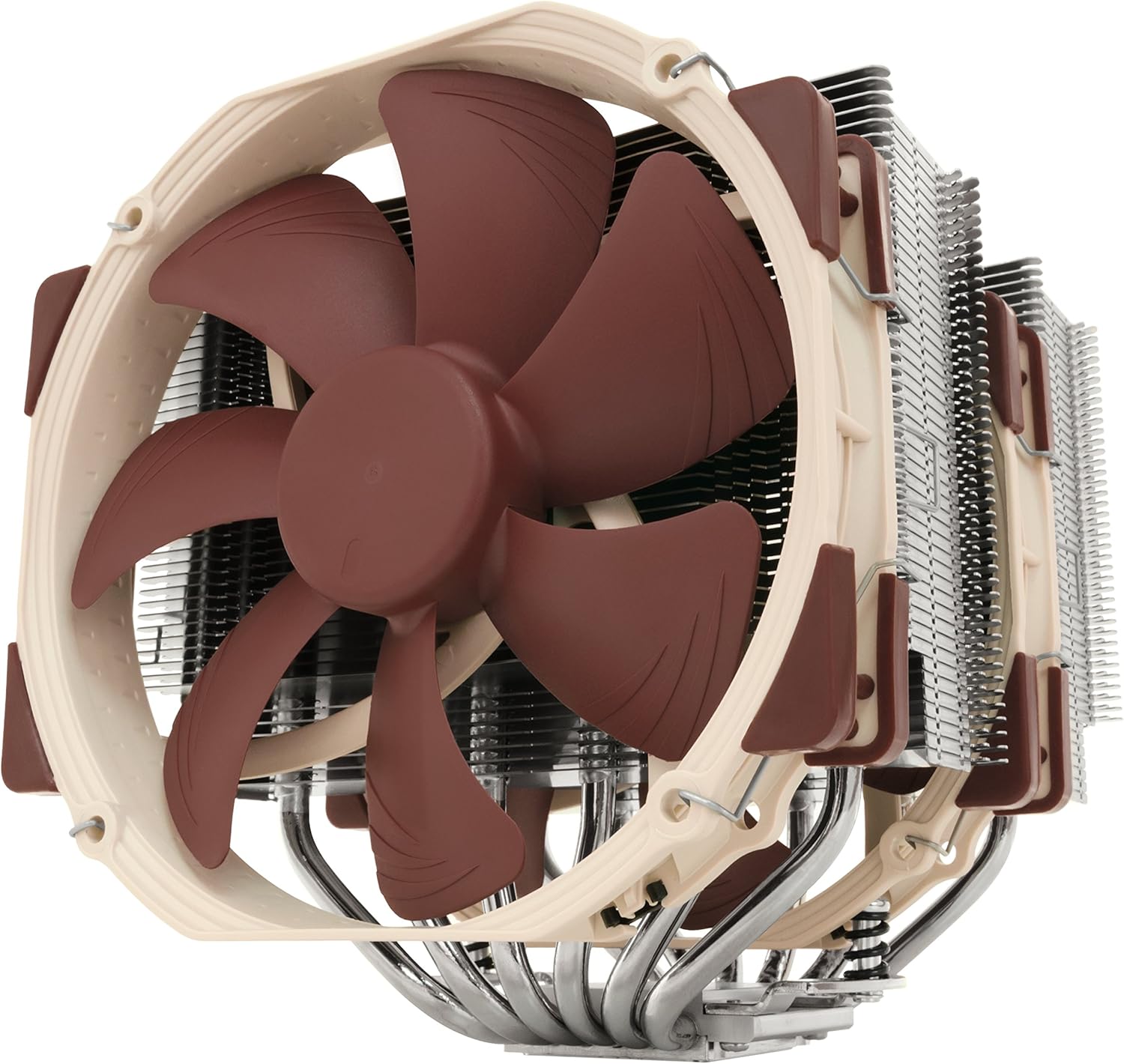
Noctua NH-D15 Dual Tower CPU Cooler
£99.95
Explore other categories
Fitness
Research-led guides to the best fitness gear, from home gym kit to workout clothing.
85 guides
Garden
Independent, research-led buying guides to the best garden tools and outdoor equipment available in the UK.
39 guides
Home
Honest, research-led buying guides for the best home and cooling gadgets available in the UK.
165 guides
Home & Office
Kit to make working from home more comfortable and productive, ranked for UK buyers.
27 guides
Kitchen
Honest, research-led buying guides for the best kitchen gadgets and appliances available in the UK.
58 guides
Pet Supplies
Everything your furry friends need, ranked by quality, comfort and value.
51 guides