Best RTX 5080 Graphics Card: 10 Ranked, All 16GB GDDR7 and a £474.75 Gap
By Felipe Iglesias · Updated

The best RTX 5080 graphics card is not decided by the memory-clock field. Across these ten listings that number is the least trustworthy on the page: four MSI cards print '30 MHz' where the part is a 30 Gbps module, the ASUS Prime OC prints '2615 GHz', and the ZOTAC Solid Core prints '2640 GHz' for the GPU clock and '30 GHz' for memory. Two descriptions get the memory generation wrong as well — the ASUS ROG Astral's own spec table says '16GB GDDR6' while its title says GDDR7, and the MSI Gaming Trio OC description says 'GDDR4'. Yet all ten report the same 16 GB of GDDR7 and the same 256-bit interface, and the MSI listings all quote the same 850W recommended PSU. As a result, the £474.75 gap between the cheapest card here (£1,289.99) and the dearest (£1,764.74) buys cooling, clocks and noise — not capacity.
So we ranked ten candidates for the best RTX 5080 graphics card on Amazon by four things you can actually check: the price on the page, the cooling hardware fitted, the clock speeds the card itself reports, and the size and noise trade-offs each one asks you to accept.
Gigabyte RTX 5080 Gaming OC 16G

This is the best RTX 5080 graphics card here for a standard ATX build: joint-highest 2730 MHz clock, 317 ratings at 4.5, £1,319.99.
Advantages
- 2730 MHz core clock, joint-highest of the ten
- 317 ratings at 4.5 — the biggest review base in this group
- Physical Dual BIOS switch for Performance or Silent mode
- 3 x DisplayPort and 1 x HDMI on a PCIe 5.0 card
- Listing quotes 4 years of EU spare-part availability
Disadvantages
- 34 cm long, the longest card here; check case clearance first
- £30 more than the cheapest RTX 5080 in this group for the same 16 GB GDDR7
- Memory-clock field reads 28000 MHz, under the 30 Gbps other listings quote
- 7% of its ratings histogram is one-star
It leads this best RTX 5080 graphics card list on two numbers: a 2730 MHz core clock — level with the AERO OC SFF and beaten only by the ROG Astral's 2760 MHz — and 317 ratings at 4.5, the largest review base on the page. At £1,319.99 it sits £30 above the MSI Shadow and still £444.75 below the dearest card here.
The WINDFORCE cooler uses three fans, and there is a physical Dual BIOS switch for Performance or Silent mode — a hardware toggle, not a software profile. Gigabyte lists 34 cm length and 14 cm width, so measure your case before ordering. A bundled VGA holder and reinforced structure carry the weight, and the listing quotes 4 years of EU spare-part availability. Ports are 3 x DisplayPort and 1 x HDMI on a PCIe 5.0 card.
Who should not buy it: anyone building in a small form factor case, because at 34 cm this is the longest card in the group and there is a dedicated SFF option further down. Nor is it for buyers chasing the lowest price — the same 16 GB of GDDR7 and the same 256-bit interface are available for £30 less. Worth noting, its memory-clock field reads 28000 MHz, below the 30 Gbps figure the MSI and ZOTAC listings quote for the same memory generation.
MSI RTX 5080 16G Shadow 3X OC

The cheapest RTX 5080 here at £1,289.99, £474.75 below the dearest, with the same 16 GB of GDDR7 and 256-bit interface as every other card.
Advantages
- Cheapest card in this group at £1,289.99
- 16 GB GDDR7, 256-bit, PCIe 5.0 — same as the £1,764.74 card
- 303 mm and 1046 g, the smallest footprint of the three-fan cards here
- ZERO FROZR stops the fans entirely at idle
- 193 ratings at 4.5 for a factory-overclocked variant
Disadvantages
- 2640 MHz core clock ties the lowest of the ten
- Memory-clock field reads '30 MHz' instead of 30 Gbps
- Description field says 2655 MHz; the spec table says 2640 MHz
- No RGB lighting listed, and MSI describes the design as Spartan
It earns second place on price alone: £1,289.99, which is £474.75 below the ASUS Noctua at the other end. The specification that matters is identical to the rest — 16 GB GDDR7, 256-bit, PCIe 5.0 — and MSI quotes the same 850W recommended PSU and 360W board power as its dearer siblings. Crucially, this is the factory-overclocked SHADOW 3X, not a base card.
In practice, the 2.5-slot, 303 mm, 1046 g frame is the easiest fit here. TORX Fan 5.0 pairs its blades and includes ZERO FROZR, so the fans stop at idle. A nickel-plated copper baseplate, heat pipes and a flow-through backplate handle the thermals, and the rear bracket carries 3 x DisplayPort 2.1b and 1 x HDMI 2.1b rated to 4K/480Hz. The listing quotes 2655 MHz in its description field, while the spec table says 2640 MHz.
That said, this is not the card for a noise-first build or a showcase case: no RGB lighting is listed, MSI calls the design Spartan, and 193 ratings is a smaller sample than the top pick's 317. Nor does it suit anyone wanting the highest clock — at 2640 MHz it ties the lowest figure of the ten. Its memory-clock field prints '30 MHz', a misprint for a 30 Gbps module, which is a fair example of why, when you are working out how to choose an RTX 5080, the memory-clock line is the one to ignore.
Gigabyte RTX 5080 AERO OC SFF 16G

The SFF-ready pick: a 2730 MHz core clock in a 30.4 cm body for £1,408.97.
Advantages
- SFF-ready at 30.4 cm x 12.6 cm, the shortest fast card here
- 2730 MHz core clock, matching the top-ranked card
- Dual BIOS (Performance / Silent) plus RGB lighting
- 4 years of EU spare-part availability listed
- 16 GB GDDR7 on a 256-bit, PCIe 5.0 interface
Disadvantages
- £89 more than the top-ranked Gigabyte Gaming OC, at the same clock
- 30.4 cm still rules out many small cases
- Resolution fields disagree: '4K' against '7680 x 4320'
- 117 ratings, the smallest sample in the top four
It is here for one reason: this is the SFF-ready card of the group's faster half, at 30.4 cm long and 12.6 cm wide against the 34 cm of the Gaming OC. The 2730 MHz core clock matches the top pick exactly, and £1,408.97 is £89 above it. Meanwhile the memory-clock field reads 28000 MHz, and every field agrees the card is PCIe 5.0 with a 256-bit interface.
It is an Nvidia GeForce RTX 5080 16GB card, so the 4K claim is the same claim every card on this page makes — though the listing quotes '4K' and '7680 x 4320' in adjacent resolution fields, and which one ASUS and Gigabyte mean is not obvious. The WINDFORCE cooler is the same family as the top card, with RGB lighting in place of the Halo ring and the same Dual BIOS Performance/Silent switch. 117 ratings at 4.5 is solid without being deep.
However, SFF-ready is not the same as small, and 30.4 cm still rules out plenty of compact cases. If your build has room for 34 cm, the Gaming OC costs less and has nearly three times the review base. By contrast, if you genuinely need a short card, this is the one — but you are paying a premium of £89 for four centimetres.
MSI RTX 5080 16G Gaming Trio OC

The cooler-focused MSI: 2715 MHz, a 1362 g TRI FROZR 4 frame and 199 ratings, for £110 over the Shadow 3X.
Advantages
- TRI FROZR 4 cooling with triple STORMFORCE fans and double-ball bearings
- 199 ratings at 4.5 — the second-largest review base here
- Gaming/Silent hardware switch plus ZERO FROZR idle mode
- 2715 MHz factory overclock, 360W board power, 850W PSU guidance
- Custom RGB lighting on a reinforced metal backplate
Disadvantages
- 338 mm and 1362 g — among the longest, heaviest cards here
- £110 more than the MSI Shadow for the same memory specification
- Description field says 'GDDR4', contradicting its own GDDR7 title
- Memory clock listed as '30 MHz' in one field and '3000 MHz' in another
Fourth place goes to the larger MSI. It carries a 2715 MHz core clock, a 2.5-slot 338 mm body weighing 1362 g, and the same 850W recommended PSU as the rest. At £1,399.99 it costs £110 more than the MSI Shadow for the same 16 GB GDDR7 — you are buying the TRI FROZR 4 cooler and the RGB.
That cooler is the point: seven claw-textured blades per STORMFORCE fan, double-ball bearings, a nickel-plated copper baseplate and an Airflow Control heatsink. There is a Gaming/Silent hardware switch and ZERO FROZR idle mode. For anyone chasing the best RTX 5080 graphics card for a big, quiet, well-lit build, this is the value option at this size.
The catch is the paperwork. Its own description field says '16GB GDDR4' and '3000 MHz Memory Clock' — two things that cannot both be true of a card whose title says GDDR7 at 30 Gbps. Even so, 199 ratings at 4.5 make it the second-best-supported card here. Skip it if your case is under 34 cm deep, or if you resent paying £110 for cooling and lighting.
ASUS Prime RTX 5080 OC 16G

The best-reviewed card under £1,400: 4.6 from 165 ratings, a vapour chamber and dual BIOS, but a memory clock listed as 2615 GHz.
Advantages
- 4.6 from 165 ratings — the best-reviewed card under £1,400
- Vapour chamber and Axial-tech fans in a 2.5-slot body
- SFF-Ready, with dual BIOS: 2655 MHz default, 2685 MHz OC
- 1801 AI TOPS quoted
- 1 x HDMI 2.1b and 3 x DisplayPort 2.1b
Disadvantages
- Memory-clock field reads '2615 GHz', which matches no real module
- GPU clock field (2655 MHz) and the OC bullet (2685 MHz) disagree
- Same £1,399.99 as the MSI Gaming Trio OC, which has 34 more ratings
- OC mode clock is the third-lowest of the ten
Fifth, and the first ASUS: £1,399.99 for an RTX 5080 for 4K gaming in a 2.5-slot, SFF-Ready body, with a 2655 MHz spec clock and 2685 MHz quoted in OC mode. It holds the highest rating of the cheaper half of this list, 4.6 from 165 ratings. The GPU clock field and the bullet disagree by 30 MHz — a small thing, but it is the same pattern the memory-clock field shows.
Engineering-wise it is the SFF-Ready Enthusiast card, cooled by a vapour chamber and Axial-tech fans with a smaller hub, longer blades and a barrier ring. ASUS quotes 1801 AI TOPS and a dual BIOS with 2655 MHz default and 2685 MHz OC. Outputs are 1 x HDMI 2.1b and 3 x DisplayPort 2.1b, and the maximum resolution fields go to 7680 x 4320.
The memory clock here prints '2615 GHz' — a number no GDDR7 module runs anywhere near, given that the two Gigabyte cards print 28000 MHz for the same job. In theory that is a data-entry problem rather than a performance one. That said, the OC mode figure of 2685 MHz is the third-lowest of the ten, so do not buy this one expecting headline clocks.
ZOTAC RTX 5080 Solid Core OC

The most self-contained package here — 30 Gbps GDDR7, IceStorm 3.0 and a bundled 16-pin cable — though 66 ratings is a thin sample.
Advantages
- 30 Gbps, 256-bit GDDR7 on PCIe 5.0
- IceStorm 3.0: three 90 mm BladeLink fans, vapour chamber, pass-through airflow
- Bundled GPU support stand and 3 x 8-pin-to-16-pin adapter cable
- 8K ready, four-display support, HDCP 2.3, VR ready
- 4.6 rating
Disadvantages
- GPU clock field reads '2640 GHz'; memory clock reads '30 GHz'
- 66 ratings is a small sample for a £1,458.49 card
- £168.50 more than the cheapest card here for the same memory capacity
- 302 mm long, with no SFF alternative at this price
Sixth: £1,458.49 for a 2.5-slot ZOTAC with a 30 Gbps, 256-bit GDDR7 module, a 302 mm body and 56 mm of thickness. Its GPU clock field reads '2640 GHz' and its memory clock reads '30 GHz' — one figure is off by a factor of a thousand, the other writes a bit-rate as a frequency. Both sit directly above correct figures in the bullets.
Hardware-wise it is the most self-sufficient card here: IceStorm 3.0 with three 90 mm BladeLink fans, a vapour chamber, composite heatpipes, pass-through airflow, FREEZE fan stop, a metal backplate and a bundled GPU support stand. ZOTAC also includes a 3 x 8-pin-to-16-pin cable, which no other listing in this group mentions. Ports run 3 x DisplayPort 2.1b and 1 x HDMI 2.1b, with 8K and four-display support stated.
The catch is the sample size: 66 ratings at 4.6 is thin for a £1,458 card, and a 4K build at this price has alternatives with 200-plus reviews. Nor does it offer much the £1,289.99 MSI does not, beyond the bundled cable and the 302 mm length. If you want the best RTX 5080 graphics card for a cool-running 4K build, the cards above it do the same job with more data behind them.
MSI RTX 5080 16G Inspire 3X OC Black

The compact MSI: 288 mm and 950 g, but 2640 MHz, 11 ratings and 16% one-star reviews at £1,486.49.
Advantages
- 288 mm long and 950 g — compact for a triple-fan 2.5-slot card
- Triple STORMFORCE fans with ZERO FROZR idle mode
- 16 GB GDDR7 at 30 Gbps, 256-bit, PCIe 5.0
- 850W recommended PSU, 16-pin, 360W board power
- 4.2 rating
Disadvantages
- 16% of its ratings are one-star, the highest share here
- Only 11 ratings, the smallest sample in this group
- £86.50 more than the larger MSI Gaming Trio OC
- 2640 MHz core clock ties the lowest figure of the ten
Seventh: the compact MSI at £1,486.49. It is 288 mm long and 950 g — 50 mm shorter and 412 g lighter than the Gaming Trio OC — but it costs £86.50 more. The core clock is 2640 MHz, joint-lowest of the ten, and it has just 11 ratings against that card's 199.
The cooler is three STORMFORCE fans with seven claw-textured blades, double-ball bearings and ZERO FROZR, over a nickel-plated copper baseplate and an Airflow Control heatsink. Power guidance is the standard 850W with a 16-pin connector at 360W. For a compact ATX or mATX build that still wants a 2.5-slot triple-fan card, that size is the whole argument.
That said, the numbers around it are unkind. Of its ratings histogram, 16% are one-star — the highest share in this group — against 71% at five stars. Meanwhile the memory-clock field reads '30 MHz', as on the other MSI cards. Do not buy this if you want proven reliability data or the best price per frame; both exist higher up this ranking.
ASUS ROG Astral RTX 5080 OC Edition

The fastest card on paper and second-best reviewed: 2760 MHz, 249 ratings at 4.7, at £317.98 above the top pick.
Advantages
- 2760 MHz spec clock, the highest of the ten (2790 MHz in OC mode)
- 249 ratings at 4.7 — the second-largest review base here
- Four Axial-tech fans, patented vapour chamber, phase-change GPU thermal pad
- 3.8-slot cooling for a high-clock, low-noise build
- 1899 AI TOPS quoted
Disadvantages
- £1,637.97 — £317.98 more than the top-ranked card
- Its own spec table says '16GB GDDR6', contradicting its GDDR7 title
- 3.8 slots blocks the expansion slot beneath it
- Memory-clock field reads '30 MHz'
Eighth place, and the fastest card here on paper: a 2760 MHz spec clock with 2790 MHz quoted in OC mode, 1899 AI TOPS, and a 4.7 rating from 249 ratings — the second-biggest review base on the page. It also costs £1,637.97, which is £317.98 above the top pick for a 30 MHz gain on the spec sheet.
This is an RTX 5080 OC Edition in ASUS's own naming, and the engineering explains the price: a 3.8-slot body, four Axial-tech fans, a patented vapour chamber with a milled heatspreader, and a phase-change thermal pad on the GPU. ASUS claims the quad-fan design lifts airflow and pressure by up to 20%. At 3.8 slots, however, it will block the expansion slot below it.
The catch is on ASUS's own spec table: the description field says '16GB GDDR6' while the title and bullets say GDDR7. That is the third distinct memory mislabel across these ten listings, after the MSI 'GDDR4' line and the '30 MHz' entries. Do not buy this one for value — the premium over the top card buys cooling and a factory overclock, not memory. If you want the fastest card here and have the case for it, it is the one.
ASUS RTX 5080 Noctua OC Edition

The quietest and dearest: three Noctua 120 mm fans and 2.6 kg of cooling for £1,764.74, with a 2700 MHz standard clock.
Advantages
- Three Noctua NF-A12x25 G2 120 mm fans for quiet cooling
- 1858 AI TOPS, 2730 MHz in OC mode (2700 MHz standard)
- 2 x HDMI 2.1b and 3 x DisplayPort 2.1b, 8K-capable output
- Vapour chamber and phase-change GPU thermal pad
- 4.7 rating
Disadvantages
- £1,764.74, the dearest card in this group
- 2700 MHz standard clock sits below cards costing £445 less
- Memory clock and GPU clock are both listed as 2700 MHz
- 2.6 kg weight, and only 39 ratings to go on
Ninth, and the dearest card here at £1,764.74 — £474.75 above the cheapest. For that you get a 2700 MHz standard clock, 2730 MHz in OC mode, 1858 AI TOPS and a 2.6 kg frame, the heaviest in this group. It has 39 ratings at 4.7.
The money goes on acoustics. Three Noctua NF-A12x25 G2 120 mm fans, a vapour chamber ASUS calls an optimised steam chamber, and a phase-change GPU thermal pad. Ports are 2 x HDMI 2.1b and 3 x DisplayPort 2.1b, and the resolution fields quote 7680 x 4320. If you want the best RTX 5080 graphics card for a silent study or studio build, this is the argument for spending the extra.
However, the clock figures do not support the price: 2700 MHz is joint fourth of the ten, below a card costing £445 less. Its memory-clock field also simply repeats the GPU clock — 2700 MHz in both boxes — the same copy-paste error the MSI cards show. Do not buy it expecting more frames; buy it if 2.6 kg of Noctua cooling and 39 ratings are worth £474.75 to you.
MSI RTX 5080 16G Gaming Trio OC White

The white Gaming Trio OC — same cooler, same 2715 MHz clock, £270 more than the black version.
Advantages
- White finish — the only white card in this group
- Same TRI FROZR 4 cooler and 2715 MHz clock as the black Gaming Trio OC
- ZERO FROZR idle mode and a Gaming/Silent hardware switch
- 16 GB GDDR7 at 30 Gbps, 256-bit, PCIe 5.0
- 850W PSU guidance, 16-pin, 360W board power
Disadvantages
- £270 more than the black version of the identical card
- 4.2 rating from 40 ratings, with 12% one-star and 12% three-star
- Unit Count field reads '150.0 gram' against 1362 g in the bullets
- 338 mm long, so no help for compact builds
Tenth: the white Gaming Trio OC at £1,669.99, which is £270 more than the black version of the same card with the same 2715 MHz clock, the same 338 mm length and the same 1362 g weight. Which means you are paying for the colour.
The rest is identical to the fourth-placed card: TRI FROZR 4 with three STORMFORCE fans, double-ball bearings, ZERO FROZR, a flow-through backplate, a Gaming/Silent switch, 360W board power and an 850W PSU recommendation. It is the only white RTX 5080 GDDR7 graphics card in this group, which matters if the rest of your build is white and little else.
The warning signs are in its rating profile: 4.2 from 40 ratings, with 12% one-star and 12% three-star. Its Unit Count field also reads '150.0 gram' while the bullet says 1362 grams — a fourth data-field misprint across these ten listings. Buy it if the colour is the point and you accept the premium; otherwise the black Trio OC at £1,399.99 is the same card for £270 less.
All 10 compared
The same ranking side by side, now that the numbers have names.
1
2
3
4
5
6
7
8
9
10
| # | Product | Price | Amazon rating |
|---|---|---|---|
| 1 | Gigabyte RTX 5080 Gaming OC 16G | £1,319.99 | 4.5 (317) |
| 2 | MSI RTX 5080 16G Shadow 3X OC | £1,289.99 | 4.5 (193) |
| 3 | Gigabyte RTX 5080 AERO OC SFF 16G | £1,408.97 | 4.5 (117) |
| 4 | MSI RTX 5080 16G Gaming Trio OC | £1,399.99 | 4.5 (199) |
| 5 | ASUS Prime RTX 5080 OC 16G | £1,399.99 | 4.6 (165) |
| 6 | ZOTAC RTX 5080 Solid Core OC | £1,458.49 | 4.6 (66) |
| 7 | MSI RTX 5080 16G Inspire 3X OC Black | £1,486.49 | 4.2 (11) |
| 8 | ASUS ROG Astral RTX 5080 OC Edition | £1,637.97 | 4.7 (249) |
| 9 | ASUS RTX 5080 Noctua OC Edition | £1,764.74 | 4.7 (39) |
| 10 | MSI RTX 5080 16G Gaming Trio OC White | £1,669.99 | 4.2 (40) |
Final Verdict
For most people the cheapest RTX 5080 here is the right buy: the MSI GeForce RTX 5080 16G SHADOW 3X OC at £1,289.99 carries the same 16 GB of GDDR7, the same 256-bit interface and the same 850W PSU recommendation as cards costing £474.75 more. If noise matters more than money, the ASUS Noctua OC Edition at £1,764.74 spends its premium on three 120 mm Noctua fans and a 2.6 kg frame. Meanwhile, if your case is small, the Gigabyte AERO OC SFF at £1,408.97 is the SFF-ready option. In short, the best RTX 5080 graphics card for you is decided by your case and your tolerance for fan noise, not by the memory-clock line on the spec sheet — which is why this best RTX 5080 graphics card ranking puts price and cooling first.
Why trust this ranking?
We rank on price, customer ratings and the specifications that decide the job, and we read each specification table against the marketing bullets on the same listing. When a number does not survive that check, we say so in the entry rather than quietly dropping the product. We also say when a product is the wrong one for you.
How we rank, in full
Written by
Felipe Iglesias
Founder & Lead Reviewer
Felipe is a computational engineering student who has been working in SEO since he was sixteen. He founded ranked10 and researches every guide on the site.
Related buying guides
Every guide below ranks ten products the same way this one does.
 Tech
Best Mini Projector 2026: 10 Ranked
The best mini projector here is the XuanPad 40000L at £129.99: native 1080p and Netflix built in. We rank 10 and compare the real ANSI lumens.
 Tech
Best Gaming Motherboard 2026: 10 Ranked
Best gaming motherboard 2026: the £127.99 ASUS TUF Gaming B650-Plus WiFi wins with 14 power stages at £9.14 each, half the £16.22 a stage of a dearer board.
 Tech
Best Floorstanding Speakers 2026: 10 Ranked
Best floorstanding speakers 2026: the Q Acoustics 3050i wins with two 165 mm drivers per tower, and the Fenton SHF700B pair costs £159.90.
 Tech
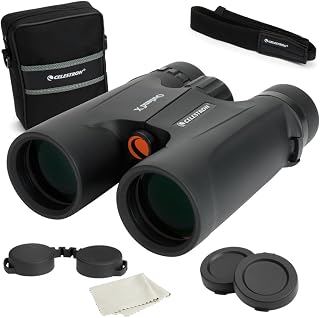
Best Binoculars 2026: 10 Ranked
The best binoculars for 2026 ranked: the £25.99 Kylietech 12x42 gives a 3.5 mm exit pupil, nearly three times the light of the £34.99 occer 12x25.
 Tech
Best Camcorder 2026: 10 Ranked
The best camcorder for most buyers is the FIREFOTO 4K 64MP at £59.99, working out at £0.94 a megapixel against £2.49 on the 8K PITIKI.
 Tech
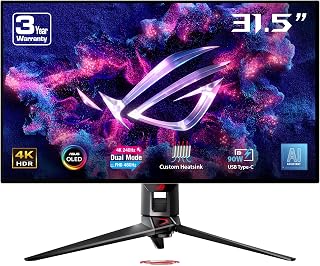
Best OLED Gaming Monitor 2026: 10 Ranked, Brightness Listed Four Ways
The best OLED gaming monitor picks ranked by panel, refresh rate and price — brightness is listed four different ways across these listings.
 Tech
Best 128GB SD Cards 2026: 10 Ranked, and Three Adverts That Contradict Themselves
Every 128GB SD card here leads with read speed. Three listings contradict their own specs — we show you both numbers before you buy.
 Tech
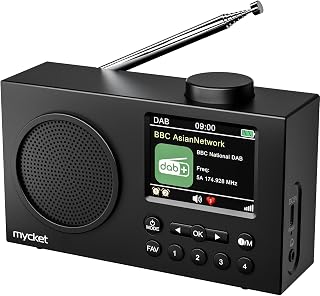
Best DAB Radios 2026: 9 Ranked, and the 30W Claim That Doesn't Add Up
The best DAB radios compared: one claims 30W yet a 2,000mAh battery lasting 10 hours — that averages 0.74W. Nine models ranked on their own figures.
 Tech
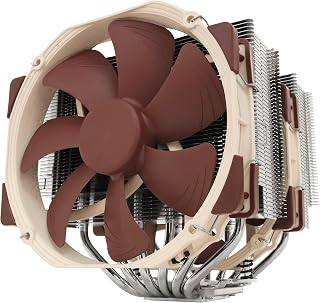
Best CPU Air Cooler 2026: 10 Ranked, One Sold Twice at Two Prices
We ranked the best CPU air cooler picks on Amazon, including the same Peerless Assassin 120 SE listed twice at £29.99 and £35.90.
 Tech
Best Case Fans 2026: 9 Ranked by What a Fan Actually Costs
The best case fans are rarely sold singly: a £21.49 five-pack is £4.30 a fan, while £18.99 buys one. Nine ranked by cost per fan and quoted noise.
Products you might like
The best rated products from our other Tech guides.
-
Noctua NF-P12 redux-1700 PWM 120mm Quiet Fan
£12.95
4.8
in Best Case Fans 2026: 9 Ranked by What a Fan Actually Costs
-
 WD_BLACK SN850X 4TB NVMe SSD
£499.99
4.8
in Best 4TB SSD for PS5: 10 Ranked, and the Speed Numbers That Don't Add Up
-
 Canon EF 50mm f/1.8 STM
£129.00
4.8
in Best 50mm Lens 2026: 10 Ranked, Spec Sheets Cross-Checked
-
Noctua NH-D15 Dual Tower CPU Cooler
£99.95
4.8
in Best CPU Air Cooler 2026: 10 Ranked, One Sold Twice at Two Prices
-
 Corsair MP600 PRO LPX 4TB PS5 SSD
£415.01
4.8
in Best 4TB SSD for PS5: 10 Ranked, and the Speed Numbers That Don't Add Up
-
 CTEK MXS 5.0 5A Battery Charger with Temperature Compensation
£74.49
4.8
in Best Car Battery Charger 2026: 10 Ranked, and Two Share a Model Number
-
 JBL Charge 6 Portable Bluetooth Speaker, 24H, Built-in Powerbank
£159.00
4.8
in Best Bluetooth Speaker 2026: 10 Portable Speakers Ranked
-
 Acer Predator GM7 1TB NVMe Gen4
£155.99
4.8
in Best 1TB SSD for PS5: 10 Ranked, From £135.99 to £199.99
-
Acer Predator GM7 2TB SSD, Gen4 NVMe 2.0, 7200MB/s, Graphene Thermal Pad
£228.99
4.8
in Best 2TB SSD for PS5 in 2026: 10 Ranked Against Sony’s Own Rules
-
 Wharfedale Diamond 9.1 Bookshelf Speakers (Pair, Walnut)
£129.00
4.8
in Best Bookshelf Speakers 2026: 10 Ranked, From £94.99
-
 WD Elements 1TB Portable Hard Drive
£93.00
4.7
in Best 1TB External Hard Drive 2026: 10 Ranked, and the 625 MB/s Myth
-
WD 2TB Elements Portable External Hard Drive
£99.99
4.7
in Best 2TB External Hard Drive: 8 Ranked, and the Speeds That Don't Add Up
-
 Crucial BX500 1TB 2.5" SATA SSD
£149.99
4.7
in Best 1TB SATA SSD: 10 Ranked, and Why £190 Buys 10MB/s
-
 soundcore Anker 2 Portable Bluetooth Speaker, 12W Stereo, IPX7, 24H
£28.49
4.7
in Best Bluetooth Speaker 2026: 10 Portable Speakers Ranked
-
 SanDisk 512GB Extreme microSD Card + Adapter
£109.00
4.7
in Best 512GB MicroSD Card 2026: 10 Ranked, and Why Read Speed Misleads
Comments
Reader comments are not checked against the manufacturer's claims above.
No comments yet
Be the first to add something we missed — a price change, a spec that turned out wrong, or how one of these held up.
Leave a comment
No account needed. Own one of these? Tell other readers how it actually performed.