Best Gaming Motherboard 2026: 10 Ranked
By Felipe Iglesias · Updated
The short answer
The best gaming motherboard for most builds is the ASUS TUF Gaming B650-Plus WiFi at £127.99: its 14 power stages work out to £9.14 each, the cheapest per stage of any AM5 board here, and 1,244 owners rate it 4.4. It takes a Ryzen 7000-series chip on AM5, holds 128 GB of DDR5, and gives you a PCIe 5.0 M.2 slot, Wi-Fi 6 and 2.5 Gb Ethernet.

Pay £162.19 for a board with 8+2 power stages and each stage costs you £16.22. Pay £127.99 for the ASUS TUF Gaming B650-Plus WiFi and you get 14 stages at £9.14 each, which is four more stages for £34.20 less. The same sum makes the £184.99 MSI X870E Gaming Plus WiFi £13.21 a stage even though it carries the same 14, so £57 of its price buys USB4, Wi-Fi 7 and a third M.2 slot rather than more power delivery.
That count matters because the VRM is what feeds a 16-core Ryzen under a long session, and it is the one figure that separates the £115 MSI B850M Gaming Plus WiFi6E from the £189 ASUS TUF Gaming B850-Plus WiFi. Everything else here, the M.2 count, the Wi-Fi generation, the memory ceiling, can be worked around with a card or a bigger drive. A thin VRM cannot.
The platform split decides as much as the price. AM5 boards take Ryzen 7000, 8000 and 9000 chips with DDR5 and run from £115 to £189 here. AM4 boards take Ryzen 5000 with DDR4, and the £99.99 MSI MPG B550 Gaming Plus is £28.00 cheaper than the winner, which is real money if you already own the chip and the memory.
ASUS TUF Gaming B650-Plus WiFi

É a compra certa para um build AM5 novo que vai durar anos: 14 fases de VRM, slot M.2 PCIe 5.0 e 1,244 donos a dar-lhe 4.4 por £127,99.
Advantages
- 14 power stages at £9.14 each, the lowest cost per stage of any AM5 board here
- PCIe 5.0 M.2 and USB4 support on a £127.99 board
- 2.5 Gb Ethernet, Wi-Fi 6 and Bluetooth 5.2 built in
- £3.29 cheaper than the MSI B850 Gaming Plus WiFi6E while carrying two more power stages
- 1,244 owners rate it 4.4
Disadvantages
- Wi-Fi 6 only, so it misses the Wi-Fi 7 and 5 Gbps LAN of the £144.98 MSI B850 Gaming Plus WiFi
- The memory ceiling is 128 GB, half the 256 GB the two MSI B850 boards take
- Moving to it from an AM4 build means buying DDR5 as well, where the £99.99 MSI MPG B550 Gaming Plus keeps your old memory
This is the board to buy if you want the most power delivery per pound on AM5. It leads because 14 stages at £127.99 is £9.14 a stage, and the £184.99 MSI X870E Gaming Plus WiFi matches that count at £13.21 a stage, so nothing else on this page delivers as much for a Ryzen 7 or Ryzen 9.
You get four DDR5 slots holding up to 128 GB, a PCIe 5.0 M.2 slot for the fastest SSDs, USB4 support, Wi-Fi 6, Bluetooth 5.2, 2.5 Gb Ethernet and a 256 Mbit UEFI BIOS. It also drives up to seven storage devices, which is more than most builders will ever fit.
The limit is wireless. Wi-Fi 6 is a generation behind, and there is no 5 Gbps LAN. The £124.70 MSI B850 Gaming Plus WiFi6E costs £3.29 less with Wi-Fi 6E and a 256 GB memory ceiling, though it drops to 12 stages at £10.39 each and a PCIe 4.0 x16 slot.
MSI B850 Gaming Plus WiFi6E

Para um build AM5 que quer slot PCIe 5.0 para gráfica, M.2 Gen5 e Wi-Fi 6E por £124,70.
Advantages
- £124.70, the lowest price of any AM5 board here
- M.2 Gen5 at 128 Gbps plus a second Gen4 M.2 slot at 64 Gbps
- 256 GB DDR5 ceiling, double the winner's 128 GB
- Wi-Fi 6E, Bluetooth 5.3 and 2.5 Gbps Ethernet
- 431 owners rate it 4.5
Disadvantages
- PCIe 4.0 x16 only, so a PCIe 5.0 graphics card loses half its bandwidth
- 12 stages at £10.39 each, against £9.14 on the £127.99 ASUS board
- 431 ratings so far, against 1,244 for the winner
Buy this if you want the newest socket for the least money. At £124.70 it undercuts the winner by £3.29 and still takes a Ryzen 9000 chip on AM5 with DDR5.
The 12 duet rail power stages cost £10.39 each, so you pay £1.25 more per stage than the ASUS TUF Gaming B650-Plus WiFi. In return you get a 256 GB memory ceiling, four SMT DIMM slots, one M.2 Gen5 x4 slot at 128 Gbps plus a Gen4 x4 slot at 64 Gbps, Wi-Fi 6E, Bluetooth 5.3 and a 2.5 Gbps LAN port.
The graphics slot is where the saving shows. It runs PCIe 4.0 x16 at 64 GB/s, so a PCIe 5.0 card works at half its link speed. The £144.98 MSI B850 Gaming Plus WiFi costs £20.28 more and answers that with PCIe 5.0 x16 at 128 GB/s, plus Wi-Fi 7 and 5 Gbps Ethernet.
MSI B850 Gaming Plus WiFi

Para quem monta AM5 e quer Wi-Fi 7, LAN de 5 Gbps e três slots M.2 na mesma placa, por £144,98.
Advantages
- Wi-Fi 7, Bluetooth 5.4 and a 5 Gbps Ethernet port, the fastest wireless here
- Three M.2 slots, one of them Gen5 at 128 Gbps
- PCIe 5.0 x16 at 128 GB/s
- 256 GB DDR5 ceiling and 8,200+ MT/s memory support
- £20.28 more than its sibling buys the newer wireless and the third M.2 slot
Disadvantages
- £12.08 per stage, against £9.14 for the £127.99 ASUS TUF Gaming B650-Plus WiFi
- Same 12 stages as the £124.70 MSI B850 Gaming Plus WiFi6E for £20.28 more
- Only 375 owners have rated it so far
This suits the builder who wants the newest wireless and the most storage options without paying £189. It is the middle of the MSI B850 pair, and it buys the features rather than the phases.
The 12 duet rail stages cost £12.08 each, the third highest on this page. What the extra money buys is a PCIe 5.0 x16 slot at 128 GB/s, three M.2 connectors (one Gen5 at 128 Gbps, one Gen4 at 64 Gbps, one Gen4 at 32 Gbps), Wi-Fi 7, Bluetooth 5.4, a 5 Gbps Ethernet port and 256 GB of DDR5 support.
You pay for those features twice. The £124.70 MSI B850 Gaming Plus WiFi6E has the same 12 stages for £20.28 less, and the £127.99 ASUS TUF Gaming B650-Plus WiFi asks £2.94 less per stage for 14 of them, at £9.14 each.
Gigabyte B650 Gaming X AX V2

Para um build AM5 de gama média com SSD PCIe 5.0, com 544 compradores a dar-lhe 4.3 por £129,99.
Advantages
- PCIe 5.0 M.2 plus two PCIe 4.0 M.2 slots
- DDR5 to 8,000 MHz with AMD EXPO and Intel XMP profiles
- 192 GB memory ceiling, 64 GB above the winner
- M.2 thermal guard and support for 25110-size SSDs
- 544 owners rate it 4.3
Disadvantages
- 8+2+2 phases, so only eight feed the CPU against 14 on the £127.99 winner
- £2.00 more than the ASUS TUF Gaming B650-Plus WiFi for fewer CPU phases
- Wi-Fi 6, not 6E or 7
This is the mid-range AM5 option, and it suits a build where the CPU is a Ryzen 5 or Ryzen 7 rather than a 16-core part. The 8+2+2 layout is honest about that: eight phases do the heavy lifting for the processor.
Those 12 phases work out to £10.83 each. The board also brings a PCIe 5.0 M.2 slot plus two PCIe 4.0 M.2 slots, DDR5 support to 8,000 MHz with AMD EXPO and Intel XMP profiles, a 192 GB ceiling, an M.2 thermal guard, support for 25110-size SSDs and Wi-Fi 6.
The compromise is the CPU phase count. It costs £2.00 more than the £127.99 ASUS TUF Gaming B650-Plus WiFi, which feeds the processor through 14 stages rather than eight, and it settles for Wi-Fi 6 where the MSI B850 boards carry 6E and 7.
ASUS TUF Gaming B850-Plus WiFi

Para um build AM5 de topo com um Ryzen de 16 núcleos: 17 fases de 80A, PCIe 5.0 e Wi-Fi 7 por £189.
Advantages
- 17 power stages rated at 80A each, the strongest delivery here
- PCIe 5.0 x16 plus a PCIe 5.0 M.2 slot, all three M.2 slots with heatsinks
- Wi-Fi 7, 2.5 Gb Ethernet and a rear USB 20 Gbps Type-C port
- 8-layer PCB with 8+8 pin ProCool power connectors
- 423 owners rate it 4.5
Disadvantages
- £61.01 more than the £127.99 ASUS TUF Gaming B650-Plus WiFi, which already covers a Ryzen 7
- £11.12 per stage against £9.14 on the winner
- Memory support stops at 192 GB in one field and 256 GB in another, so plan around four 32 GB sticks
Choose this if the CPU is a Ryzen 9 and you intend to keep it boosting for hours. It is the heaviest power delivery on this page at 14+2+1 stages, each rated for 80A.
Spread over £189, that is £11.12 a stage, and the supporting hardware is built for the same job: an 8-layer PCB, 8+8 pin ProCool power connectors, one PCIe 5.0 M.2 slot and two PCIe 4.0 M.2 slots with heatsinks on all three, a PCIe 5.0 x16 slot, Wi-Fi 7, 2.5Gb Ethernet, a rear USB 20 Gbps Type-C port and a Thunderbolt (USB4) header.
The bill is £61.01 above the £127.99 ASUS TUF Gaming B650-Plus WiFi, which already carries 14 stages for a Ryzen 7. Unless you are running the biggest chip, those three extra stages are money that would be better spent on memory or a faster SSD.
MSI B850M Gaming Plus WiFi6E
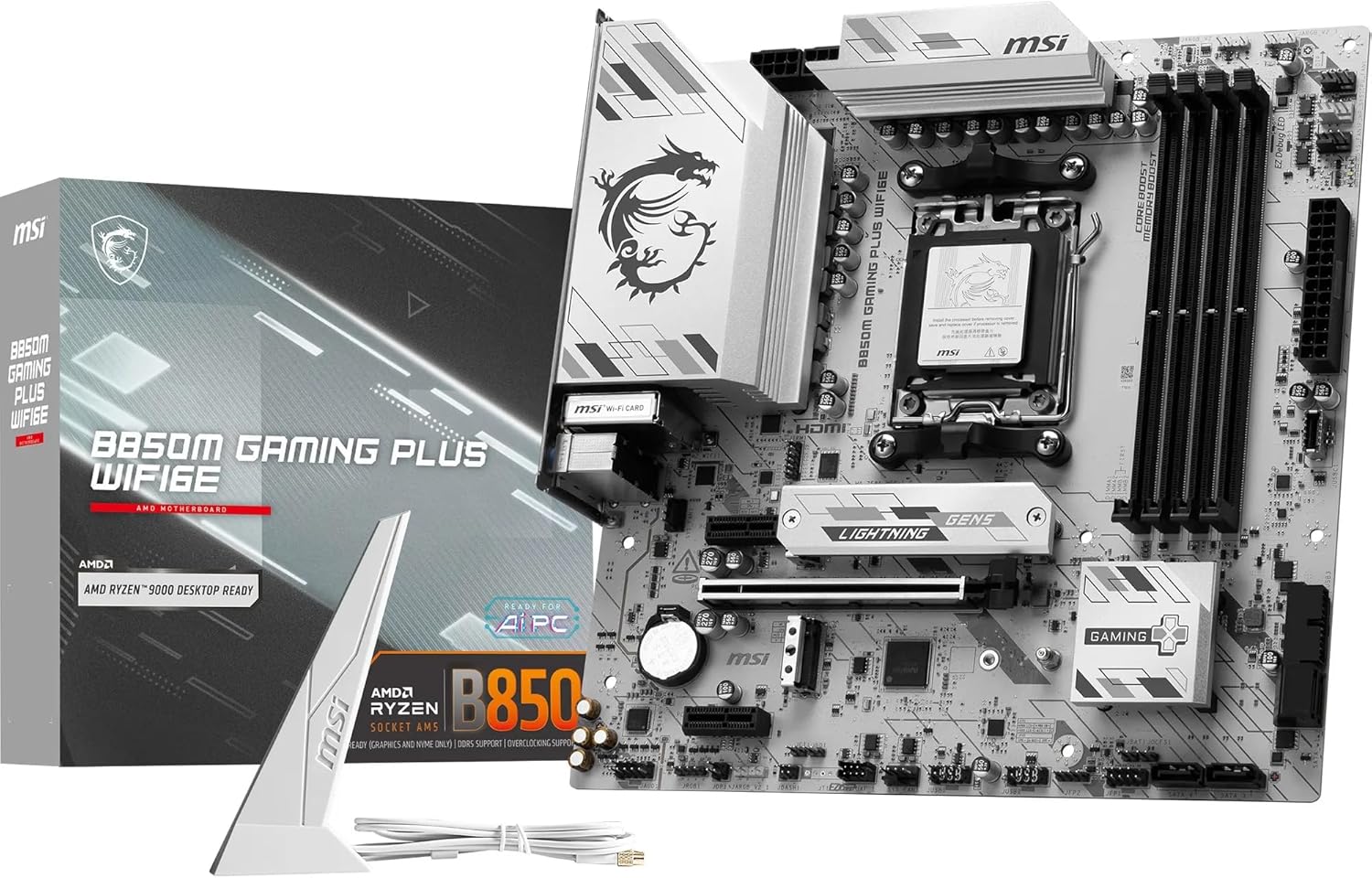
Para um build AM5 compacto micro-ATX que ainda quer slot M.2 Gen5 e Wi-Fi 6E por £115.
Advantages
- £115.00, the least you can pay for AM5 here
- M.2 Gen5 at 128 Gbps plus a Gen4 slot, with M.2 Shield Frozr
- 256 GB DDR5 ceiling and 8,200+ MT/s support
- Wi-Fi 6E, Bluetooth 5.3 and 2.5 Gbps Ethernet
- Micro-ATX footprint for smaller cases
Disadvantages
- 10 power stages, the fewest of any AM5 board here, at £11.50 each
- A micro-ATX board takes fewer expansion cards than the ATX options
- Only 195 owners have rated it, the thinnest sample in the top half of this page
This is for a small AM5 build where the case will not take a full ATX board. It is the least you can pay to get onto the platform here.
The 10 duet rail stages cost £11.50 each. In a micro-ATX footprint you still get four DDR5 SMT slots and 256 GB of support, an M.2 Gen5 x4 slot at 128 Gbps plus a Gen4 x4 slot at 64 Gbps with M.2 Shield Frozr, a PCIe 4.0 x16 slot with Steel Armor, Wi-Fi 6E, Bluetooth 5.3, a 2.5 Gbps LAN port and 7.1 audio with Audio Boost.
Ten stages is the fewest of any AM5 board here, which is why it sits below the ATX options. The £124.70 MSI B850 Gaming Plus WiFi6E costs £9.70 more and adds two stages and a full-size board, and it stays the better buy if your case has the room.
ASUS ROG Strix B550-F Gaming WiFi II

Para quem já tem um Ryzen 5000 e quer Wi-Fi 6 e Ethernet de 2.5 Gb sem comprar CPU nova, com 3,685 donos a dar 4.6.
Advantages
- 3,685 owners rate it 4.6, the joint-highest score here
- Wi-Fi 6 and 2.5 Gb Ethernet built in
- Dual M.2 slots with PCIe 4.0
- Socket AM4, so an existing Ryzen 5000 drops straight in
Disadvantages
- £40.00 more than the £99.99 MSI MPG B550 Gaming Plus on the same socket
- AM4 is the end of the road: no Ryzen 9000 and no DDR5
- DDR4 memory cannot move across to an AM5 build later
Buy this if you already own a Ryzen 5000 and a set of DDR4 modules. It is the strongest of the AM4 trio here, and the ratings are the reason: 3,685 owners give it 4.6, the joint-highest score on this page.
On the AM4 socket you get Wi-Fi 6, 2.5 Gb Ethernet with LANGuard, dual M.2 slots with PCIe 4.0 readiness, and Windows 11 support. It also holds up to 128 GB of DDR4, which is more memory than a gaming build will use.
The catch is the platform, not the board. At £139.99 it costs £40.00 more than the £99.99 MSI MPG B550 Gaming Plus on the same AM4 socket, and neither will take a Ryzen 9000 processor or DDR5 memory later.
MSI MPG B550 Gaming Plus
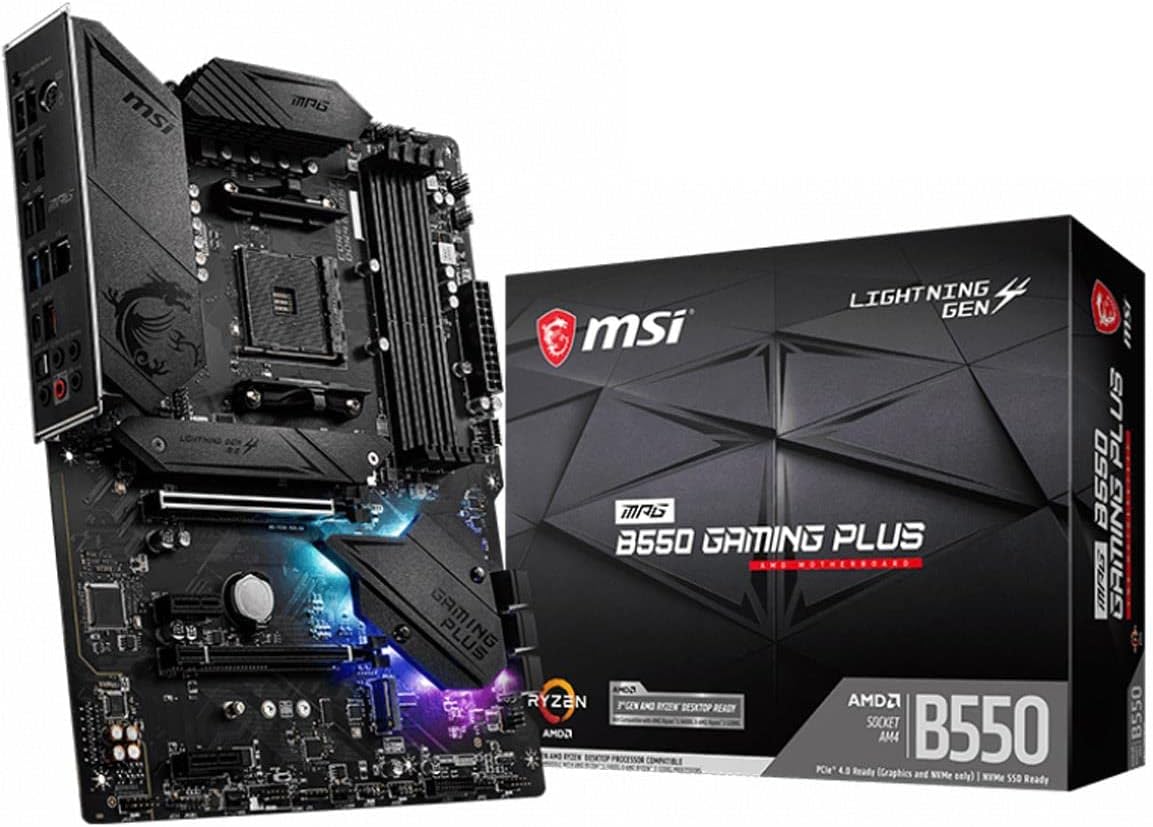
Para o build AM4 mais barato com histórico: 5,786 donos dão 4.5 a esta placa de £99,99, dois M.2 e PCIe 4.0.
Advantages
- 5,786 owners rate it 4.5, more buyer proof than anything else here
- £99.99, the lowest price on this page, and £28.00 under the ASUS TUF Gaming B650-Plus WiFi
- Dual M.2 and PCIe 4.0 for the graphics card
- 128 GB of DDR4 at up to 4,400 MHz
- 7 W/mK thermal pads on a 2 oz copper PCB
Disadvantages
- No path beyond Ryzen 5000 and DDR4
- No M.2 Gen5 slot, so the newest SSDs run at Gen4 speed
- A new build pays £15.01 more for the AM5 MSI B850M Gaming Plus WiFi6E and gets DDR5 instead
This is the budget AM4 pick, and the one to buy if you are keeping an existing Ryzen chip and memory. Nothing else here has been bought and rated so often: 5,786 owners give it 4.5.
At £99.99 it brings dual M.2 connectors with PCIe 4.0 on both the graphics and storage side, USB 3.2 Gen2, 128 GB of DDR4 at up to 4,400 MHz, 7 W/mK thermal pads, a 2 oz thickened copper PCB, Mystic Light with 16.8 million colours and Audio Boost.
The ceiling is the socket. The £115 MSI B850M Gaming Plus WiFi6E is £15.01 more and brings AM5, DDR5 and a Gen5 M.2 slot, none of which this board can accept. Pick it for the price and the track record, not for the upgrade path.
MSI X870E Gaming Plus WiFi

Para um build AM5 que precisa de USB4 a 40 Gbps e três M.2 sem pagar preço de topo de gama.
Advantages
- USB4 Type-C at 40 Gbps with display output
- PCIe 5.0 x16 at 128 GB/s plus a Gen5 M.2 slot at 128 Gbps
- Three M.2 slots, one Gen5 and two Gen4
- Wi-Fi 7, Bluetooth 5.4 and 5 Gbps Ethernet
- 14 stages rated at 60A each
Disadvantages
- £13.21 per stage, the highest of any AM5 board here
- 14 stages, the same count as the £127.99 ASUS TUF Gaming B650-Plus WiFi for £57.00 more
- Only 140 owners have rated it
This is for the build that needs USB4 and the newest wireless rather than the most power phases. It is the only board here with a 40 Gbps USB4 Type-C port that also carries display output.
The 14 duet rail stages are rated at 60A each, which is £13.21 a stage. Around them sit a PCIe 5.0 x16 slot at 128 GB/s, three M.2 connectors (one Gen5 at 128 Gbps, two Gen4 at 64 Gbps) with EZ M.2 Shield Frozr II, DDR5 to 8,200+ MT/s, Wi-Fi 7, Bluetooth 5.4, a 5 Gbps Ethernet port and 7.1 audio with Audio Boost.
Fourteen stages is exactly what the £127.99 ASUS TUF Gaming B650-Plus WiFi offers, and that board asks £9.14 a stage. Here £57.00 of the price goes on USB4, Wi-Fi 7 and the third M.2 slot instead of on feeding the CPU.
ASUS ROG Strix B550-A Gaming

Para um build AM4 que quer PCIe 4.0, dois M.2, Ethernet de 2.5 Gb e um visual claro por £119,99.
Advantages
- 2,391 owners rate it 4.6
- Intel 2.5 Gb Ethernet with LANGuard
- Dual M.2 with PCIe 4.0 and a USB 3.2 Gen 2 Type-C port
- HDMI 2.1 and DisplayPort 1.2 outputs for a Ryzen with integrated graphics
Disadvantages
- No Wi-Fi, so budget for a card or £20.00 more for the ROG Strix B550-F Gaming WiFi II
- AM4 socket: no Ryzen 9000 and no DDR5
- £20.00 more than the £99.99 MSI MPG B550 Gaming Plus on the same socket
This suits an AM4 build where you already own the processor and want fast wired networking without paying for a wireless module. It is the second of the two ROG Strix AM4 boards here.
For £119.99 you get Intel 2.5 Gb Ethernet with LANGuard, dual M.2 slots with PCIe 4.0 readiness, a USB 3.2 Gen 2 Type-C port, HDMI 2.1 and DisplayPort 1.2 outputs for a Ryzen with integrated graphics, and teamed power stages with a ProCool connector. It holds 128 GB of DDR4, and 2,391 owners rate it 4.6.
There is no Wi-Fi on this board, which is the reason the £139.99 ROG Strix B550-F Gaming WiFi II exists £20.00 above it with Wi-Fi 6 built in. Add a card, or pay the difference and skip the cable.
All 10 compared
The same ranking side by side, now that the numbers have names.
1
2
3
4
5
6
7
8
9
10
| # | Product | Score | Socket & memory | Power stages | £ per stage | PCIe & M.2 | Price | Amazon rating |
|---|---|---|---|---|---|---|---|---|
| 1 | ASUS TUF Gaming B650-Plus WiFi | 9.2 /10 | AM5, DDR5 Ryzen 7000, 8000, 9000 | 14 | £9.14 o mais baixo em AM5 aqui | — | £127.99 | 4.4 (1,244) |
| 2 | MSI B850 Gaming Plus WiFi6E | 9.0 /10 | AM5, DDR5 256 GB de máximo | 12 duet rail | £10.39 | — | £124.70 | 4.5 (431) |
| 3 | MSI B850 Gaming Plus WiFi | 8.9 /10 | AM5, DDR5 256 GB de máximo | 12 duet rail | £12.08 | — | £144.98 | 4.4 (375) |
| 4 | Gigabyte B650 Gaming X AX V2 | 8.7 /10 | AM5, DDR5 192 GB de máximo | 8+2+2 12 fases | £10.83 | — | £129.99 | 4.3 (544) |
| 5 | ASUS TUF Gaming B850-Plus WiFi | 8.5 /10 | AM5, DDR5 | 14+2+1 80A DrMOS | £11.12 | — | £189.00 | 4.5 (423) |
| 6 | MSI B850M Gaming Plus WiFi6E | 8.4 /10 | AM5, DDR5 micro-ATX | 10 duet rail | £11.50 | — | £115.00 | 4.5 (195) |
| 7 | ASUS ROG Strix B550-F Gaming WiFi II | 8.2 /10 | AM4, DDR4 2133 MHz de base, 128 GB | n/a | n/a | — | £139.99 | 4.6 (3,685) |
| 8 | MSI MPG B550 Gaming Plus | 8.0 /10 | AM4, DDR4 4400 MHz OC, 128 GB | n/a | n/a | — | £99.99 | 4.5 (5,786) |
| 9 | MSI X870E Gaming Plus WiFi | 7.9 /10 | AM5, DDR5 8200 MT/s OC | 14 60A por fase | £13.21 | — | £184.99 | 4.3 (140) |
| 10 | ASUS ROG Strix B550-A Gaming | 7.8 /10 | AM4, DDR4 2666 MHz, 128 GB | n/a | n/a | — | £119.99 | 4.6 (2,391) |
How many power stages does a gaming motherboard need?
Ten stages are enough for a Ryzen 5 or Ryzen 7, and 14 or more is the safe floor for a 16-core Ryzen 9. Each stage shares the current the processor pulls when it boosts, so fewer stages means each one runs hotter and the board is more likely to hold the chip back under a long session.
Judge the count as a whole rather than the headline number. An 8+2+2 board has 12 stages but only eight of them feed the CPU, which is why the Gigabyte B650 Gaming X AX V2 sits below boards with 12 straight stages. If the description splits the figures with plus signs, the last numbers cover the memory controller and integrated graphics, not the cores.
Is price per power stage a fair way to compare boards?
Yes, and it is the quickest way to spot where your money is going. Divide the price by the stage count: the £127.99 ASUS TUF Gaming B650-Plus WiFi lands on £9.14 a stage, while the £184.99 MSI X870E Gaming Plus WiFi carries the same 14 stages for £13.21 each. The difference is £57.00, and it pays for USB4, Wi-Fi 7 and a third M.2 slot rather than for power delivery.
The figure also exposes the bad buys. A £162.19 board with 8+2 stages works out at £16.22 a stage, so it asks nearly double the winner's rate for fewer CPU phases. Run the division before you order, then ask yourself whether the extras on the dearer board are ones you will actually plug in.
Should you buy AM5 or AM4 in 2026?
AM5 if you are building from scratch, AM4 only if you already own a Ryzen 5000 and DDR4 memory. AM5 takes Ryzen 7000, 8000 and 9000 processors with DDR5, and the cheapest route in here is the £115 MSI B850M Gaming Plus WiFi6E. AM4 stops at Ryzen 5000 with DDR4, where the £99.99 MSI MPG B550 Gaming Plus is the value pick.
The £28.00 gap between those two boards looks small until you add the memory. Moving to AM5 means new DDR5 modules on top of the board, so a fresh platform costs noticeably more than the price difference suggests. The best gaming motherboards for a new build are all AM5; the cheap ones are all AM4.
Do you need PCIe 5.0 or USB4 for gaming?
No, not for frame rates. A PCIe 4.0 x16 slot moves data at 64 GB/s, which is more than a modern graphics card uses today, so the £124.70 MSI B850 Gaming Plus WiFi6E is not slow because its main slot is 4.0.
Where PCIe 5.0 and USB4 do earn their money is storage and peripherals. A Gen5 M.2 slot doubles the link to 128 Gbps for the fastest drives, and a 40 Gbps USB4 port, as on the £184.99 MSI X870E Gaming Plus WiFi, moves a large project folder or drives a dock with display output. Buy it for those jobs, not for the graphics card.
How much should you spend on a gaming motherboard?
Between £100 and £130 buys everything a gaming build actually needs. That band holds the £99.99 MSI MPG B550 Gaming Plus for AM4 upgrades and the £127.99 ASUS TUF Gaming B650-Plus WiFi for new AM5 builds, which is the best gaming motherboard here for the money at £9.14 a stage.
Between £130 and £190 you are buying Wi-Fi 7, a 5 Gbps LAN port, three M.2 slots or a stronger VRM. Above £180 only makes sense with a 16-core processor, where the £189 ASUS TUF Gaming B850-Plus WiFi and its 17 stages of 80A start to justify themselves under sustained load.
What should you not pay extra for?
Memory overclocking figures are the first thing to ignore. The difference between 8,000 MHz and 8,400 MHz support shows up in a benchmark and almost never in a game, and you will hit the memory controller's limit long before the board's.
Wireless marketing is the second. Wi-Fi 6, 6E and 7 all handle online play comfortably at normal distances, so paying a premium for the newest standard only pays off with a matching router and a congested 6 GHz band to escape to. RGB lighting is the third: it costs money and adds nothing to how the board feeds your processor.
Final Verdict
Buy the ASUS TUF Gaming B650-Plus WiFi at £127.99 if you are building an AM5 PC for gaming, because 14 power stages at £9.14 each is the best value on this page and the board covers PCIe 5.0 storage, USB4, Wi-Fi 6 and 2.5 Gb Ethernet. It does not suit someone holding a Ryzen 5000 and DDR4, who should take the £99.99 MSI MPG B550 Gaming Plus and save £28.00 rather than buy new memory.
It also is not the board for a 16-core Ryzen owner chasing headroom, where the £189 ASUS TUF Gaming B850-Plus WiFi adds three 80A stages and Wi-Fi 7 for £61.01 more. For everyone else, that makes it the best gaming motherboard here, and 14 stages at £9.14 each is the arithmetic every other board on this page has to beat.
Questions people ask
What is the best gaming motherboard to buy in 2026?
The ASUS TUF Gaming B650-Plus WiFi at £127.99, because it gives 14 power stages at £9.14 each, a PCIe 5.0 M.2 slot and USB4 support, and 1,244 owners rate it 4.4. If you already own a Ryzen 5000 and DDR4, the £99.99 MSI MPG B550 Gaming Plus is the smarter spend. For a 16-core Ryzen, step up to the £189 ASUS TUF Gaming B850-Plus WiFi.
Do you need DDR5 memory for a gaming motherboard?
Only if you buy an AM5 board. Every AM5 board here, from the £115 MSI B850M Gaming Plus WiFi6E upwards, needs DDR5, while the AM4 boards take DDR4. DDR5 costs more per gigabyte, so factor four 16 GB modules into the build budget before you choose the platform.
Is AM4 still worth buying in 2026?
Yes, if you already have a Ryzen 5000 processor and DDR4 memory to reuse. AM4 boards here start at £99.99 and one of them carries 5,786 buyer ratings. Buying AM4 from scratch makes little sense though, because the socket takes no Ryzen 9000 chip and no DDR5, so the next upgrade means a new board and new memory anyway.
How much should you spend on a gaming motherboard?
Around £100 to £130 for a normal gaming build, which covers 10 to 14 power stages, a PCIe 4.0 or 5.0 x16 slot and dual M.2 storage. Spend £150 and up only if you want Wi-Fi 7, a 5 Gbps LAN port or a VRM strong enough for a 16-core processor. Above roughly £180 the returns are small unless the CPU is expensive.
Does the motherboard affect gaming performance or FPS?
Not directly. Frame rates come from the processor and graphics card, and any board with a PCIe x16 slot will run them. The board matters when it holds the processor back: too few power stages or poor cooling means the chip drops its boost clock during a long session, which is the one way a motherboard shows up in your frame times.
What size gaming motherboard should you buy?
ATX unless your case forces something smaller. ATX gives you four memory slots, more expansion cards and more M.2 connectors, which the ATX boards here all use. A micro-ATX board such as the £115 MSI B850M Gaming Plus WiFi6E fits smaller cases and still carries four DDR5 slots and a Gen5 M.2, but it takes fewer add-in cards.
Do you need built-in Wi-Fi on a gaming motherboard?
No, if the PC sits near an Ethernet socket. Wired 2.5 Gb Ethernet is faster and steadier than any wireless standard, and several boards here include it. Built-in Wi-Fi is worth paying for when the machine lives in another room, and the £139.99 ASUS ROG Strix B550-F Gaming WiFi II and the Wi-Fi 7 boards cover that case.
How long should a gaming motherboard last?
Eight to ten years of use is realistic, and the socket decides how much of that you can upgrade into. An AM4 board takes Ryzen 5000 and no further, so its useful life ends when you want a newer processor. An AM5 board takes Ryzen 7000, 8000 and 9000, which is a longer runway for the £127.99 or so a good one costs.
Why trust this ranking?
We rank on price, customer ratings and the specifications that decide the job, and we read each specification table against the marketing bullets on the same listing. When a number does not survive that check, we say so in the entry rather than quietly dropping the product. We also say when a product is the wrong one for you.
How we rank, in full
Written by
Felipe Iglesias
Founder & Lead Reviewer
Felipe is a computational engineering student who has been working in SEO since he was sixteen. He founded ranked10 and researches every guide on the site.
Related buying guides
Every guide below ranks ten products the same way this one does.
 Tech
Best Mini Projector 2026: 10 Ranked
The best mini projector here is the XuanPad 40000L at £129.99: native 1080p and Netflix built in. We rank 10 and compare the real ANSI lumens.
 Tech
Best Floorstanding Speakers 2026: 10 Ranked
Best floorstanding speakers 2026: the Q Acoustics 3050i wins with two 165 mm drivers per tower, and the Fenton SHF700B pair costs £159.90.
 Tech
Best Binoculars 2026: 10 Ranked
The best binoculars for 2026 ranked: the £25.99 Kylietech 12x42 gives a 3.5 mm exit pupil, nearly three times the light of the £34.99 occer 12x25.
 Tech
Best Camcorder 2026: 10 Ranked
The best camcorder for most buyers is the FIREFOTO 4K 64MP at £59.99, working out at £0.94 a megapixel against £2.49 on the 8K PITIKI.
 Tech
Best OLED Gaming Monitor 2026: 10 Ranked, Brightness Listed Four Ways
The best OLED gaming monitor picks ranked by panel, refresh rate and price — brightness is listed four different ways across these listings.
 Tech
Best 128GB SD Cards 2026: 10 Ranked, and Three Adverts That Contradict Themselves
Every 128GB SD card here leads with read speed. Three listings contradict their own specs — we show you both numbers before you buy.
 Tech
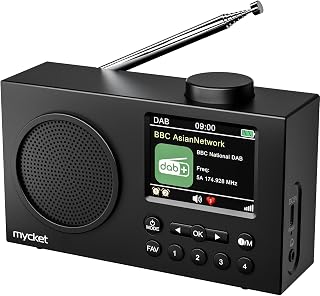
Best DAB Radios 2026: 9 Ranked, and the 30W Claim That Doesn't Add Up
The best DAB radios compared: one claims 30W yet a 2,000mAh battery lasting 10 hours — that averages 0.74W. Nine models ranked on their own figures.
 Tech
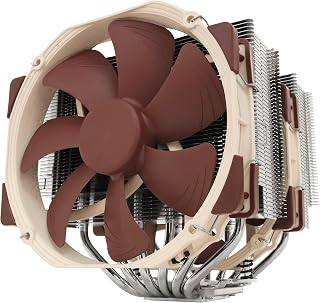
Best CPU Air Cooler 2026: 10 Ranked, One Sold Twice at Two Prices
We ranked the best CPU air cooler picks on Amazon, including the same Peerless Assassin 120 SE listed twice at £29.99 and £35.90.
 Tech
Best Case Fans 2026: 9 Ranked by What a Fan Actually Costs
The best case fans are rarely sold singly: a £21.49 five-pack is £4.30 a fan, while £18.99 buys one. Nine ranked by cost per fan and quoted noise.
 Tech
Best Camera Tripods 2026: Nine Ranked, and the Spec Tables That Contradict the Copy
Best camera tripods ranked: nine Amazon listings where the spec table fights the sales copy — a 33 lb claim against a 13 lb spec, and worse.
Products you might like
The best rated products from our other Tech guides.
-
Noctua NF-P12 redux-1700 PWM 120mm Quiet Fan
£12.95
4.8
in Best Case Fans 2026: 9 Ranked by What a Fan Actually Costs
-
 WD_BLACK SN850X 4TB NVMe SSD
£499.99
4.8
in Best 4TB SSD for PS5: 10 Ranked, and the Speed Numbers That Don't Add Up
-
 Canon EF 50mm f/1.8 STM
£129.00
4.8
in Best 50mm Lens 2026: 10 Ranked, Spec Sheets Cross-Checked
-
Noctua NH-D15 Dual Tower CPU Cooler
£99.95
4.8
in Best CPU Air Cooler 2026: 10 Ranked, One Sold Twice at Two Prices
-
 Corsair MP600 PRO LPX 4TB PS5 SSD
£415.01
4.8
in Best 4TB SSD for PS5: 10 Ranked, and the Speed Numbers That Don't Add Up
-
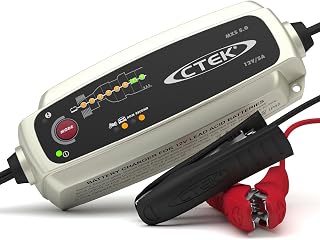 CTEK MXS 5.0 5A Battery Charger with Temperature Compensation
£74.49
4.8
in Best Car Battery Charger 2026: 10 Ranked, and Two Share a Model Number
-
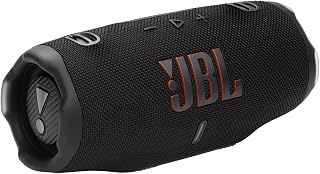 JBL Charge 6 Portable Bluetooth Speaker, 24H, Built-in Powerbank
£159.00
4.8
in Best Bluetooth Speaker 2026: 10 Portable Speakers Ranked
-
 Acer Predator GM7 1TB NVMe Gen4
£155.99
4.8
in Best 1TB SSD for PS5: 10 Ranked, From £135.99 to £199.99
-
Acer Predator GM7 2TB SSD, Gen4 NVMe 2.0, 7200MB/s, Graphene Thermal Pad
£228.99
4.8
in Best 2TB SSD for PS5 in 2026: 10 Ranked Against Sony’s Own Rules
-
 Wharfedale Diamond 9.1 Bookshelf Speakers (Pair, Walnut)
£129.00
4.8
in Best Bookshelf Speakers 2026: 10 Ranked, From £94.99
-
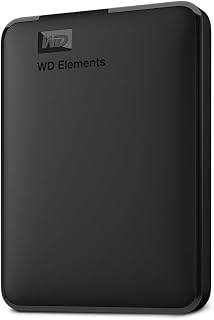 WD 2TB Elements Portable External Hard Drive
£99.99
4.7
in Best 2TB External Hard Drive: 8 Ranked, and the Speeds That Don't Add Up
-
WD Elements 1TB Portable Hard Drive
£93.00
4.7
in Best 1TB External Hard Drive 2026: 10 Ranked, and the 625 MB/s Myth
-
 Crucial BX500 1TB 2.5" SATA SSD
£149.99
4.7
in Best 1TB SATA SSD: 10 Ranked, and Why £190 Buys 10MB/s
-
 soundcore Anker 2 Portable Bluetooth Speaker, 12W Stereo, IPX7, 24H
£28.49
4.7
in Best Bluetooth Speaker 2026: 10 Portable Speakers Ranked
-
 SanDisk Extreme 1TB microSD Card + Adapter
£157.99
4.7
in Best 1TB microSD Card 2026: 10 Ranked, Read vs Write
Comments
Reader comments are not checked against the manufacturer's claims above.
No comments yet
Be the first to add something we missed — a price change, a spec that turned out wrong, or how one of these held up.
Leave a comment
No account needed. Own one of these? Tell other readers how it actually performed.