Best Studio Headphones 2026: 10 Ranked, 32 Ohm to 250 Ohm
By Felipe Iglesias · Updated

The best studio headphones listings in this category contradict their own marketing more often than they confirm it. The Audio-Technica ATH-M20X is labelled 'Over Ear', 'On Ear' and 'Over-Ear' in three separate fields of the same page. The FIFINE H8 connects by 3.5mm and 6.35mm jack and still carries a 'Wireless Technology Type: RF' field. Meanwhile the number that actually decides whether a pair works with your kit is impedance, and it runs from 32 ohm — OneOdio Pro-002, MAONO MH700, M-Audio HDH40 — up to 250 ohm on the beyerdynamic DT 990 PRO. Only one model here, the DT 770 PRO X at 48 ohm, states outright that it needs no external amp.
We ranked ten of the best studio headphones on Amazon on three tests you can check yourself: whether the stated impedance matches gear you already own, whether the spec sheet agrees with itself, and how much review evidence sits behind the star rating. On that last point the field is lopsided. The Sony MDR-7506 carries 27,549 ratings at 4.7 for £75, while the newest beyerdynamic DT 770 PRO X carries 649 at 4.6 for £189. Price and certainty do not move together here.
Sony MDR-7506 Closed-Back Studio Monitor Headphones

Top of the list on evidence rather than marketing: 27,549 ratings at 4.7, a stated 63 ohm load and £75 — the best studio headphones here if you want proof before you buy.
Advantages
- 27,549 ratings at 4.7 — the biggest evidence base in this list
- 63 ohm, which sits between the 32 ohm budget group and the 250 ohm DT 990 PRO
- 40mm neodymium drivers with a stated 10Hz to 20kHz range
- Closed-back, 227g, folds flat and includes a carrying pouch
- Coiled cable 1.2m to 3m with 3.5mm plug and 6.3mm adapter included
Disadvantages
- Spec table lists 'Touch' as the control method on a wired headphone
- 63 ohm appears only in the product title, not in the spec fields
- At £75 it is more than double the £33.99 M-Audio HDH40
- The 1.2m to 3m coiled cable is bulky to carry
This is the largest body of evidence in the article by a wide margin. The Sony MDR-7506 carries 27,549 ratings at 4.7 and sits at number 2 in Studio Headphones on Amazon, behind only the Audio-Technica ATH-M20X. At £75 it is £54 cheaper than the DT 770 PRO and £114 cheaper than the DT 770 PRO X. These are the best studio headphones here in the sense that most buyers have already tested them for you.
Inside, the studio monitor headphones use 40mm neodymium drivers with a stated 10Hz to 20kHz range. The closed-back shell gives passive isolation and limits bleed into a live mic. At 227g it folds flat and ships with a pouch, and the coiled cable reaches from 1.2m to 3m with a 3.5mm plug plus a 6.3mm adapter in the box. That covers a phone, a laptop and a mixer without shopping for anything else.
However, one field on the page is nonsense: the spec table lists the control method as 'Touch' on a wired headphone that has no touch controls. Since 63 ohm appears only in the title and never in the spec table, treat that number as the one thing to verify. Skip this pair if you want a short flat cable for a pocket — the coiled lead is the wrong shape for that — or if you insist on a detachable cable before you spend £75.
Audio-Technica ATH-M20X Professional Monitor Headphones

The contradiction that defines this article: one page, three ear-placement labels, and no impedance figure anywhere on it.
Advantages
- £45, the second cheapest set here and the cheapest from a studio brand
- 26,527 ratings at 4.5 and ranked number 1 in Studio Headphones
- 40mm drivers with rare earth magnets and copper-clad aluminium voice coils
- Closed-back design with a single-side cable exit on the left earcup
- Comes with a 6.3mm snap-on adapter and a 2-year manufacturer guarantee
Disadvantages
- The same listing labels it Over Ear, On Ear and Over-Ear in three fields
- No impedance figure stated anywhere in the spec table
- Listed with a 'Touch' control method and an 'Application' controller type
- Bass-weighted tuning suits tracking more than critical mixing
The ATH-M20X is the cheapest way into this list from a brand with a studio reputation: £45, 26,527 ratings at 4.5, and number 1 in Studio Headphones on Amazon while sitting at 108 in Musical Instruments & DJ overall. In practice it is the budget studio headphones pick most people start with, and the volume of ratings means you are not the first to test it.
On the engineering side the numbers are straightforward: 40mm drivers with rare earth magnets and copper-clad aluminium voice coils, a closed-back shell for isolation, a single-side cable exit on the left earcup, and a 6.3mm snap-on adapter in the box. Tuning is weighted towards low frequency, which suits tracking and casual monitoring more than surgical work. A 2-year manufacturer guarantee applies.
Crucially, the page argues with itself. The same listing says 'Over Ear' in one field, 'On Ear' in another and 'Over-Ear' in a third. On top of that, no impedance figure appears anywhere in the spec table — the single number that tells you whether your interface will drive it. That said, 26,527 buyers at 4.5 clearly got on with it. Avoid it if you need a verified impedance figure or a stated sensitivity before ordering.
beyerdynamic DT 770 PRO (80 Ohm)

£129, 4.7 from 15,885 ratings, Made in Germany, 5Hz to 35kHz — and a spec table that never mentions impedance.
Advantages
- 4.7 from 15,885 ratings and ranked 3 in Studio Headphones
- Stated 5Hz to 35,000Hz response with 96 dB nominal sound pressure level
- Replaceable circumaural velour earpads for long sessions
- 3.5mm jack with a 3/4" adapter and a protective case included
- Made in Germany with a hard-wearing build, £129
Disadvantages
- No impedance field anywhere in the spec table — 80 ohm comes from the model name only
- Fixed 3.0m single-sided cable with no detachable option listed
- The colour field simply reads 'Gray', with no finish choice stated
Of the ten best studio headphones here, this is the one whose spec sheet is least willing to explain itself. The rating is excellent — 4.7 from 15,885 buyers, ranked 3 in Studio Headphones — and at £129 it sits £60 below the DT 770 PRO X. The 80 ohm figure that matters most appears in the model name and nowhere in the specification fields.
What the fields do confirm: a stated 5Hz to 35,000Hz frequency response, 96 dB nominal sound pressure level, a 3.0m single-sided cable, soft circumaural velour earpads that can be replaced, and 3.5mm jack connection with a 3/4" adapter and a protective case in the box. The closed-back studio headphones are made in Germany and described as hard-wearing. The velour pads are the practical reason people wear these for six-hour sessions.
Worth noting: this listing carries no impedance field at all, unlike the DT 990 PRO, which states 250 ohm plainly. So do not assume the 80 ohm version will run from a phone or a weak laptop jack just because its number is lower. Even so, 15,885 ratings at 4.7 is a strong signal. Skip it if you need a cable that comes away from the headphone — the 3.0m lead here is fixed.
beyerdynamic DT 990 PRO 250 Ohm Open-Back

The highest impedance here at 250 ohm and the biggest beyerdynamic rating count at 16,615 — open-back, so it leaks both ways.
Advantages
- 250 ohm impedance stated plainly in the spec table — the highest in this guide
- 16,615 ratings at 4.7, the largest count of any beyerdynamic here
- Stated 5Hz to 35,000Hz response with replaceable velour earpads
- Padded, adjustable spring steel frame built for long sessions
- Coiled cable with 3.5mm plug and 6.35mm adapter, plus the HEADPHONE LAB plug-in
Disadvantages
- 250 ohm needs proper amplification — the listing makes no no-amp claim
- Open-back design leaks sound in both directions
- Ear placement labelled 'Open Ear' while the form factor says 'Over Ear'
- £136 with no carrying case listed in the box contents
At £136 with 16,615 ratings at 4.7, this is the most-reviewed beyerdynamic model in the list. It is also the extreme end of the impedance range in this article: 250 ohm, against 32 ohm on the OneOdio Pro-002, MAONO MH700 and M-Audio HDH40 and 63 ohm on the Sony MDR-7506. In theory that is a mixing advantage; in practice it means your interface has to do real work.
These are some of the best headphones for mixing here by design, not by marketing. The open-back shell produces a transparent, spacious sound with strong bass and treble, backed by a stated 5Hz to 35,000Hz response. The spring steel frame is padded and adjustable, the circumaural velour pads are replaceable, and the coiled cable ends in a 3.5mm plug with a 6.35mm adapter included. beyerdynamic also bundles access to its HEADPHONE LAB mixing plug-in.
The trade-off is unavoidable: open-back means sound goes out as well as in, so a shared room, a noisy flat or a live vocal mic will notice. The listing also labels ear placement 'Open Ear' while the form factor says 'Over Ear' — two labels for one headphone. Do not buy this if you plan to run it straight from a laptop or a phone with no dedicated headphone amp.
OneOdio Pro-002 Over-Ear Studio Headphones

Twenty-one thousand ratings at 4.4 for £34.99, with 32 ohm and 110 dB sensitivity — the loudest low-impedance set here.
Advantages
- £34.99 with 21,189 ratings at 4.4 and number 1 in DJ Headphones
- 32 ohm impedance and 110 dB sensitivity — the highest sensitivity stated here
- Detachable 6.35mm and 3.5mm plugs, so no adapter hunting
- Coiled cable stretches to 9.8ft and the cups swivel 90° for single-ear work
- 50mm drivers with neodymium magnets and a shareport for a second listener
Disadvantages
- 4.4 rating, the joint-lowest in this guide
- Histogram shows 6 in 100 ratings at one or two stars
- Control method listed as 'Touch' with no touch controls on the product
- Bass-forward tuning rather than a flat monitoring reference
The Pro-002 is the volume seller of the cheap end: 21,189 ratings at 4.4, £34.99, and ranked number 1 in DJ Headphones while sitting at 30 in Musical Instruments & DJ overall. The stated 32 ohm impedance puts it in the same group as the MAONO MH700 and the M-Audio HDH40, and its 110 dB sensitivity is the highest figure stated in this article.
It carries 50mm drivers with neodymium magnets and a detachable cable system that ends in both a 6.35mm and a 3.5mm plug, so you can switch between a mixer and a laptop without an adapter. The DJ-style coiled cord stretches to 9.8ft, the earcups swivel 90° for single-ear monitoring, and the headband is self-adjusting. There is also a shareport for a second listener.
By contrast with the 4.7-rated sets above it, this one is 4.4, the joint-lowest score in the list. The review histogram puts 6 of 100 ratings at one or two stars, so roughly one buyer in sixteen was unhappy. The control method field again reads 'Touch' on a headphone that has no controls. If you want a flat, neutral reference for critical work rather than a bass-forward listen, buy elsewhere.
OneOdio Pro50 Hi-Res Closed-Back Studio Headphones

£39.09 and Hi-Res certified, but 6,801 ratings — a third of the Pro-002's total — and no Studio Headphones ranking at all.
Advantages
- £39.09 with a detachable 3.5mm and 6.35mm cable set included
- 50mm drivers with a Japanese-made voice coil and diaphragm, Hi-Res certification claimed
- Closed-back with noise isolation and memory-protein earcups
- 9.8ft coiled cable plus a second cable with inline mic
- Housing reverses and cups fold flat for transport
Disadvantages
- 6,801 ratings versus 21,189 on the cheaper Pro-002
- Not ranked in Studio Headphones; its rank is 76 in Foldable Headphones
- 'Wireless Technology Type: no' is a meaningless field on a wired headphone
- No impedance figure stated in the spec table
The Pro50 costs £39.09 and holds 4.5 from 6,801 ratings. That is a third of the review volume behind the cheaper Pro-002, which is worth knowing before you assume the higher model number means the safer purchase. Its best sellers rank is '76 in Foldable Headphones' — this listing does not appear in the Studio Headphones chart at all.
The spec sheet is more specific than most here: 50mm driver units built around a Japanese-made voice coil and drive diaphragm, a Hi-Res Audio certification claim, closed-back acoustic structure with noise isolation, memory-protein earcups, and a detachable 3.5mm and 6.35mm cable set with a 9.8ft coiled lead. The housing reverses and the cups fold flat, and a second cable with an inline mic is included.
That said, one field is worth reading twice: 'Wireless Technology Type: no'. It is a field that answers a question nobody asked, on a headphone with a 3.5mm jack and a wired connection listed in two other fields. Either way, if you want the largest possible review base at this price, the Pro-002 has three times as many ratings. Buy this one for the certification and the cable set, not for the evidence.
beyerdynamic DT 770 PRO X (48 Ohm)

The only set here that states outright it needs no external amp, at 48 ohm — and the most expensive at £189.
Advantages
- 48 ohm, the only model here stating it needs no external amp
- Detachable cable with a locking mini-XLR connector
- 3.5mm jack and 6.3mm adapter included, closed-back isolation
- Velour earpads and padded headband, 306g, handcrafted in Germany
- Replaceable parts and a 2-year warranty
Disadvantages
- £189, the most expensive set in this guide
- 649 ratings, under 4% of the 15,885 behind the £129 DT 770 PRO
- Frequency response field reads '5 Hz' alone instead of a range
- No impedance field in the spec table — 48 ohm appears in the bullets
At £189 this is the priciest item in the guide and the newest, with 649 ratings at 4.6. It is also the only one of the best studio headphones here that makes a claim about amplification: an 'optimised impedance (48 ohms)' balanced for studio interfaces, laptops and mobile devices 'without the need for an external amp'. If portability of signal chain matters more than price, that sentence is the whole argument.
Mechanically it is the most serviceable of the beyerdynamic trio. The cable detaches via a locking mini-XLR connector, and a 3.5mm jack with a 6.3mm adapter is supplied. The closed-back shell gives sound isolation and controlled bass, the velour earpads and padded headband are built for long sessions, and the unit weighs 306g. It is handcrafted in Germany with replaceable parts.
Even so, two numbers deserve scrutiny. The frequency response field reads '5 Hz' — a single figure where a range belongs — so the 5Hz to 35,000Hz claim is not repeated here as it is on the other two models. And 649 ratings is under 4% of the 15,885 behind the 80 ohm DT 770 PRO at £129. Buy this if you need a detachable cable and laptop-friendly impedance; wait if you want a decade of buyer history behind your £189.
MAONO MH700 Wired Studio Headphones
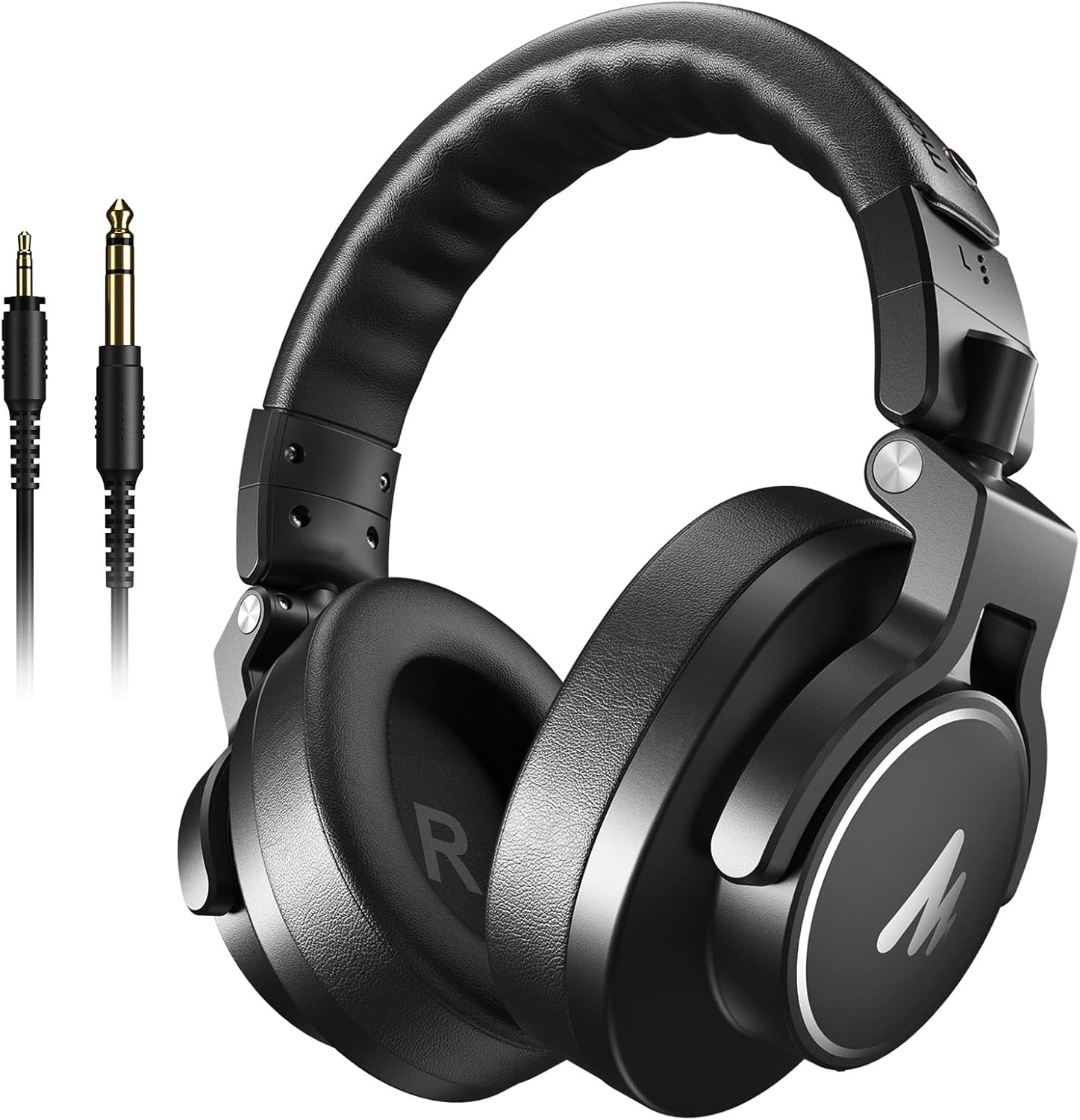
£41.64 with two detachable cables and a shareable dual-jack design, but the highest one-star share in the list.
Advantages
- £41.64 with two detachable cables: 3m coiled 3.5mm-to-6.35mm and 1.2m 3.5mm-to-3.5mm
- Locking connectors and dual jacks for two listeners on one source
- 50mm dynamic drivers, 32 ohm impedance and 100 dB sensitivity
- Foldable cups that flip 180°, adjustable metal headband, replaceable PU earcups
- Storage bag included
Disadvantages
- 6 in 100 ratings are one star — the highest one-star share of the ten sets here
- 4.4 rating, joint-lowest in the guide
- Frequency response field reads '20 KHz' alone, not a range
- 100 dB sensitivity is below the 110 dB stated for the £34.99 OneOdio Pro-002
The MH700 costs £41.64 and holds 4.4 from 4,245 ratings. Its stated 32 ohm impedance and 100 dB sensitivity are both conservative next to the OneOdio Pro-002's 110 dB, and the drivers are 50mm dynamic units. Four thousand ratings is middling for this list, but it is real evidence rather than a launch-day score.
The practical appeal is cable flexibility. Two detachable leads ship in the box — a 3m coiled 3.5mm-to-6.35mm and a 1.2m 3.5mm-to-3.5mm — with locking connectors to stop accidental pulls. Dual jacks allow two listeners to share one source, which is unusual at this price. The metal headband adjusts, the PU oval earcups are replaceable, the cups fold and flip 180°, and a storage bag is included. As headphones for podcasting and mixing, the dual-cable setup covers a mixer and a phone without adapters.
As a result, the numbers are the caveat, not the features. Six of 100 ratings are one star, the highest one-star share among the ten sets here, and the one-star and two-star counts together reach 7%. Note too that the frequency response field reads '20 KHz' as a single figure rather than a range. Avoid it if your priority is the lowest possible failure rate at this price.
FIFINE H8 Studio Monitoring Headphones

£36.99, 4.5 from 1,506 ratings, and filed as 'RF' wireless despite being wired on 3.5mm and 6.35mm.
Advantages
- £36.99 with 4.5 from 1,506 ratings and 32 ohm impedance
- Two 9.8ft detachable coiled cables, 3.5mm-to-3.5mm and 3.5mm-to-6.35mm
- 50mm drivers with a stated 20Hz to 20kHz range
- Closed-back circumaural shell with passive noise cancellation, 265g
- Adjustable padded headband, no break-in period claimed
Disadvantages
- Filed as 'Wireless Technology Type: RF' on a wired 3.5mm/6.35mm headphone
- 1,506 ratings — a thin track record next to the Sony's 27,549
- 7 in 100 ratings fall at one or two stars
- No carrying case listed in the box contents
This is where the spec sheet stops making sense. The FIFINE H8 costs £36.99, holds 4.5 from 1,506 ratings, and lists a 32 ohm impedance. It also lists 'Wireless Technology Type: RF' — on wired headphones for recording and monitoring that connect by 3.5mm and 6.35mm jack. There is no wireless anything in the box contents, which are two detachable coiled cables, a manual and the headphones.
What is real: 50mm drivers, a stated 20Hz to 20kHz range, a closed-back circumaural shell for passive noise cancellation, and a weight of 265g with an adjustable padded headband. Both supplied cables are 9.8ft DJ-style coiled leads, one 3.5mm-to-3.5mm and one 3.5mm-to-6.35mm, so a mixer, interface, amp or mic headphone output is covered without extras.
The catch is evidence. At 1,506 ratings this is one of the thinnest track records in the guide, and the histogram puts 4 in 100 at one star and 3 in 100 at two. That is not alarming, but it is not the Sony's 27,549 either. Skip it if you want a long buyer history or if a contradictory wireless field on a wired product puts you off.
M-Audio HDH40 Closed-Back Over-Ear Headphones

The cheapest at £33.99 with 4.5 from 1,413 ratings — and the lowest stated sensitivity of the ten at 95 dB.
Advantages
- £33.99, the cheapest set in this guide, with 4.5 from 1,413 ratings
- 32 ohm impedance and 40mm neodymium dynamic driver
- 180° rotatable frame with stainless steel telescopic arms and leather cushioning
- 2.7m cable plus a 1/4" adapter for mixers, interfaces and digital pianos
- Ear placement labelled consistently as Over Ear in all three fields
Disadvantages
- 95 dB sensitivity — the lowest stated figure among the ten sets here
- 2.7m fixed cable with no detachable option listed
- 12-month manufacturer warranty, the shortest in this guide
- 1,413 ratings, one of the thinner evidence bases here
At £33.99 this is the cheapest of the best studio headphones here, with 4.5 from 1,413 ratings. For the money you get a 32 ohm impedance that matches the OneOdio Pro-002, the MAONO MH700 and the FIFINE H8, plus a 95 dB sensitivity figure. That 95 dB is the lowest number of its kind stated anywhere in this article, against 110 dB on the OneOdio Pro-002 and 100 dB on the MAONO MH700.
The build is more specific than the price suggests. The 40mm neodymium dynamic driver is aimed at studio monitoring, podcasting and private listening. The frame rotates 180°, the arms are stainless steel and telescopic with a scale, and the headband is flexible with leather cushioning. A 2.7m cable runs to the earcups and a 1/4" adapter covers mixers, interfaces and digital pianos. The manufacturer warranty is 12 months, the shortest stated in this guide.
However, that 2.7m cable is fixed — no detachable option is listed, unlike the OneOdio and MAONO sets at similar prices. As over-ear studio headphones for a desk, that is fine. For anything you carry daily, it is the wrong shape. Buy on the sensitivity and impedance figures rather than on the low price alone.
All 10 compared
The same ranking side by side, now that the numbers have names.
1
3
4
5
6
7
8
9
10
| # | Product | Price | Amazon rating |
|---|---|---|---|
| 1 | Sony MDR-7506 Closed-Back Studio Monitor Headphones | £75.00 | 4.7 (27,549) |
| 2 | Audio-Technica ATH-M20X Professional Monitor Headphones | £45.00 | 4.5 (26,527) |
| 3 | beyerdynamic DT 770 PRO (80 Ohm) | £129.00 | 4.7 (15,885) |
| 4 | beyerdynamic DT 990 PRO 250 Ohm Open-Back | £136.00 | 4.7 (16,615) |
| 5 | OneOdio Pro-002 Over-Ear Studio Headphones | £34.99 | 4.4 (21,189) |
| 6 | OneOdio Pro50 Hi-Res Closed-Back Studio Headphones | £39.09 | 4.5 (6,801) |
| 7 | beyerdynamic DT 770 PRO X (48 Ohm) | £189.00 | 4.6 (649) |
| 8 | MAONO MH700 Wired Studio Headphones | £41.64 | 4.4 (4,245) |
| 9 | FIFINE H8 Studio Monitoring Headphones | £36.99 | 4.5 (1,506) |
| 10 | M-Audio HDH40 Closed-Back Over-Ear Headphones | £33.99 | 4.5 (1,413) |
Final Verdict
For most people, the Sony MDR-7506 at £75 is the safest of the best studio headphones to buy blind: 27,549 ratings at 4.7, a 63 ohm load that sits comfortably between the 32 ohm budget group and the 250 ohm DT 990 PRO, and a closed-back design that keeps click tracks out of your mic. If you mix in a quiet room and own an interface that drives high impedance properly, the DT 990 PRO at 250 ohm is the open, spacious option — but it is the wrong choice for shared rooms or vocal tracking. If you want to plug straight into a laptop with no amp, the DT 770 PRO X at 48 ohm is the only one of the best studio headphones here that says so in writing, and it costs £189 for the privilege.
Why trust this ranking?
We rank on price, customer ratings and the specifications that decide the job, and we read each specification table against the marketing bullets on the same listing. When a number does not survive that check, we say so in the entry rather than quietly dropping the product. We also say when a product is the wrong one for you.
How we rank, in full
Written by
Felipe Iglesias
Founder & Lead Reviewer
Felipe is a computational engineering student who has been working in SEO since he was sixteen. He founded ranked10 and researches every guide on the site.
Related buying guides
Every guide below ranks ten products the same way this one does.
 Tech
Best Mini Projector 2026: 10 Ranked
The best mini projector here is the XuanPad 40000L at £129.99: native 1080p and Netflix built in. We rank 10 and compare the real ANSI lumens.
 Tech
Best Gaming Motherboard 2026: 10 Ranked
Best gaming motherboard 2026: the £127.99 ASUS TUF Gaming B650-Plus WiFi wins with 14 power stages at £9.14 each, half the £16.22 a stage of a dearer board.
 Tech
Best Floorstanding Speakers 2026: 10 Ranked
Best floorstanding speakers 2026: the Q Acoustics 3050i wins with two 165 mm drivers per tower, and the Fenton SHF700B pair costs £159.90.
 Tech
Best Binoculars 2026: 10 Ranked
The best binoculars for 2026 ranked: the £25.99 Kylietech 12x42 gives a 3.5 mm exit pupil, nearly three times the light of the £34.99 occer 12x25.
 Tech
Best Camcorder 2026: 10 Ranked
The best camcorder for most buyers is the FIREFOTO 4K 64MP at £59.99, working out at £0.94 a megapixel against £2.49 on the 8K PITIKI.
 Tech
Best OLED Gaming Monitor 2026: 10 Ranked, Brightness Listed Four Ways
The best OLED gaming monitor picks ranked by panel, refresh rate and price — brightness is listed four different ways across these listings.
 Tech
Best 128GB SD Cards 2026: 10 Ranked, and Three Adverts That Contradict Themselves
Every 128GB SD card here leads with read speed. Three listings contradict their own specs — we show you both numbers before you buy.
 Tech
Best DAB Radios 2026: 9 Ranked, and the 30W Claim That Doesn't Add Up
The best DAB radios compared: one claims 30W yet a 2,000mAh battery lasting 10 hours — that averages 0.74W. Nine models ranked on their own figures.
 Tech
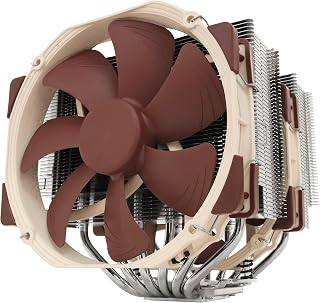
Best CPU Air Cooler 2026: 10 Ranked, One Sold Twice at Two Prices
We ranked the best CPU air cooler picks on Amazon, including the same Peerless Assassin 120 SE listed twice at £29.99 and £35.90.
 Tech
Best Case Fans 2026: 9 Ranked by What a Fan Actually Costs
The best case fans are rarely sold singly: a £21.49 five-pack is £4.30 a fan, while £18.99 buys one. Nine ranked by cost per fan and quoted noise.
Products you might like
The best rated products from our other Tech guides.
-
Noctua NF-P12 redux-1700 PWM 120mm Quiet Fan
£12.95
4.8
in Best Case Fans 2026: 9 Ranked by What a Fan Actually Costs
-
 WD_BLACK SN850X 4TB NVMe SSD
£499.99
4.8
in Best 4TB SSD for PS5: 10 Ranked, and the Speed Numbers That Don't Add Up
-
 Canon EF 50mm f/1.8 STM
£129.00
4.8
in Best 50mm Lens 2026: 10 Ranked, Spec Sheets Cross-Checked
-
Noctua NH-D15 Dual Tower CPU Cooler
£99.95
4.8
in Best CPU Air Cooler 2026: 10 Ranked, One Sold Twice at Two Prices
-
 Corsair MP600 PRO LPX 4TB PS5 SSD
£415.01
4.8
in Best 4TB SSD for PS5: 10 Ranked, and the Speed Numbers That Don't Add Up
-
 CTEK MXS 5.0 5A Battery Charger with Temperature Compensation
£74.49
4.8
in Best Car Battery Charger 2026: 10 Ranked, and Two Share a Model Number
-
 JBL Charge 6 Portable Bluetooth Speaker, 24H, Built-in Powerbank
£159.00
4.8
in Best Bluetooth Speaker 2026: 10 Portable Speakers Ranked
-
 Acer Predator GM7 1TB NVMe Gen4
£155.99
4.8
in Best 1TB SSD for PS5: 10 Ranked, From £135.99 to £199.99
-
Acer Predator GM7 2TB SSD, Gen4 NVMe 2.0, 7200MB/s, Graphene Thermal Pad
£228.99
4.8
in Best 2TB SSD for PS5 in 2026: 10 Ranked Against Sony’s Own Rules
-
 Wharfedale Diamond 9.1 Bookshelf Speakers (Pair, Walnut)
£129.00
4.8
in Best Bookshelf Speakers 2026: 10 Ranked, From £94.99
-
 WD 2TB Elements Portable External Hard Drive
£99.99
4.7
in Best 2TB External Hard Drive: 8 Ranked, and the Speeds That Don't Add Up
-
WD Elements 1TB Portable Hard Drive
£93.00
4.7
in Best 1TB External Hard Drive 2026: 10 Ranked, and the 625 MB/s Myth
-
 Crucial BX500 1TB 2.5" SATA SSD
£149.99
4.7
in Best 1TB SATA SSD: 10 Ranked, and Why £190 Buys 10MB/s
-
 soundcore Anker 2 Portable Bluetooth Speaker, 12W Stereo, IPX7, 24H
£28.49
4.7
in Best Bluetooth Speaker 2026: 10 Portable Speakers Ranked
-
 SanDisk 512GB Extreme microSD Card + Adapter
£109.00
4.7
in Best 512GB MicroSD Card 2026: 10 Ranked, and Why Read Speed Misleads
Comments
Reader comments are not checked against the manufacturer's claims above.
No comments yet
Be the first to add something we missed — a price change, a spec that turned out wrong, or how one of these held up.
Leave a comment
No account needed. Own one of these? Tell other readers how it actually performed.