
The number most buyers compare first when they search for the best 24-70mm lens is maximum aperture — and it is the number these listings get wrong. The Canon EF 24-70mm f/4L IS USM is named f/4, and its own spec table reads 'Maximum Aperture: 4 f'. Yet a bullet on the same £625.48 page promises 'Fast f/2.8 max. aperture'. Meanwhile the Sigma 28-70mm F2.8 DG DN and the Canon RF 24-70mm F2.8 L IS USM both give their maximum aperture as '2.8 Millimetres' — millimetres measure length, not aperture — and both then list a minimum aperture of 2.8, the same figure as the maximum. Sony's two 24-70mm f/2.8 G Masters are £126 apart, £1,399 and £1,525, and the cheaper original collects 10 one-star ratings in every 100 against 4 for the newer lens.
We ranked nine of the best 24-70mm lens options on Amazon on three things you can check yourself: rating volume rather than score alone, the price printed on the page, and whether the spec table contradicts the marketing copy above it. Where a page argued with itself, we say so and give both numbers.
Sony FE 24-70mm F2.8 GM II

The best 24-70mm lens in this ranking: 4.7 from 335 ratings, 87% of them five-star, and only 4% at one star.
Advantages
- 4.7 from 335 ratings, with 87% five-star and only 4% one-star
- 695g, with an 82mm filter thread, 9 diaphragm blades and f/22 minimum aperture
- Four XD linear motors; Sony quotes 30fps and 4K 120p on a compatible body
- Over 20% lighter and 16mm shorter than the previous model, volume down about 18%
- Nano AR Coating listed, plus optical stabilisation
Disadvantages
- £1,525 is the highest price in this ranking, £126 above Sony's own original G Master
- 82mm filters add cost over the 67mm and 72mm options
- Spec table lists a 'Screen Size' of 70 Millimetres on a lens with no screen
- 4% of its 335 ratings are one star
It takes first place on consistency as much as score: 4.7 from 335 ratings, with 87% at five stars and 4% at one star. In practice that matches the Sigma 28-70mm for the lowest one-star share among the Sony-fit lenses here, and it comes at the highest price in the ranking, £1,525.
The headline claim is weight. Sony quotes 695g, over 20% less than the previous model, a barrel 16mm shorter and overall volume down roughly 18%. Inside there are four XD linear motors, a floating focus mechanism and a 9-blade aperture closing to f/22. At the same time Sony quotes up to 30 frames per second and 4K 120p on a compatible body, and the spec table lists a Nano AR Coating.
However, £1,525 is £126 more than Sony's own original 24-70mm f/2.8 G Master, and the 82mm filter thread costs more to feed than the 67mm and 72mm alternatives below. Worth noting too: the spec table lists 'Fixed Focal Length: 70 Millimetres' and a 'Screen Size' of 70 Millimetres on a lens with no screen. If you rarely shoot wider than f/4, the f/4 zooms here save you about £900.
Sigma 24-70mm F2.8 DG DN II (Sony E)

Second because 376 ratings at 4.7 is the largest sample of any Sony-fit lens here, at £356 less than the Sony GM II.
Advantages
- 376 ratings at 4.7 — the largest sample of any Sony-fit lens in this ranking
- 88% five-star and 5% one-star
- £1,169, which is £356 below the Sony FE 24-70mm F2.8 GM II
- Six FLD glass elements, 9 diaphragm blades, f/22 minimum aperture
- 2.92:1 zoom ratio with an 82mm filter thread
Disadvantages
- Bullets amount to a packing list; the page explains almost nothing about the lens
- Spec table says 'Focus Type: Fixed Focus' on a zoom
- No image stabilisation listed
- 5% of its 376 ratings are one star
It takes second on sample size: 376 ratings at 4.7, with 88% at five stars and 5% at one star. By contrast the Sony GM II above has 335 ratings and 4% one-star. The price is £1,169 — £356 below the Sony and £537 above the Sigma 28-70mm further down.
On paper this is the best 24-70mm lens for Sony E mount in the group. The spec table highlights six FLD glass elements, a 9-blade aperture, a minimum aperture of f/22, an 82mm filter thread and a 2.92:1 zoom ratio. Those FLD elements are there to control colour fringing at the edges of the frame.
The catch is the listing itself. Sigma's only bullets are 'Sigma', 'Image & Sound Accessory' and a packing list of front and rear caps and a sun visor. The spec table says 'Focus Type: Fixed Focus' and 'Fixed Focal Length: 24 Millimetres' on a zoom lens, and stabilisation is listed as 'No'. Even so, 4.7 from 376 buyers is hard to argue with. If you need stabilisation built into the lens, look elsewhere.
Canon EF 24-70mm f/2.8L II USM

Third on the strength of 889 ratings at 4.6 with 86% five-star, and no image stabilisation at £1,572.
Advantages
- 4.6 from 889 ratings, with 86% at five stars
- Ring USM motor and fluorine coatings on the front and rear elements
- 9 diaphragm blades, f/22 minimum aperture, 82mm filter thread
- Constant f/2.8 across 24-70mm with a 3:1 zoom ratio
Disadvantages
- No image stabilisation
- £1,572 — £946 more than Canon's own f/4L IS USM
- 5% of its 889 ratings are one star
- Spec table lists a 'Screen Size' of 1 inch, which is not a lens measurement
It sits third because 889 buyers have rated it 4.6, with 86% at five stars and 5% at one star. Only the Nikon F-mount zoom below has more ratings. Crucially, this Canon 24-70mm lens is the f/2.8 version; the f/4L IS USM further down costs £625.48 and adds stabilisation.
The optical formula uses a ring USM motor with a high-speed CPU and image-optimised AF algorithms, plus fluorine coatings on the front and rear elements to shed smears and fingerprints. The spec table gives a 9-blade aperture, a minimum aperture of f/22, an 82mm filter thread and a 3:1 zoom ratio.
That said, there is no image stabilisation, which the Canon RF version below does list. The price, £1,572, is the second highest here and £946 more than the Canon f/4L IS USM. As a result it only makes sense if you need f/2.8 on an EF body. The spec table also lists 'Screen Size: 1 Inches', which means nothing on a lens. If you shoot RF mount, this will not fit without an adapter.
Canon RF 24-70mm F2.8 L IS USM

Fourth: 4.7 with the lowest one-star share here at 2%, but £1,871.97 and an aperture figure that contradicts itself.
Advantages
- 4.7 from 159 ratings, with 85% five-star and only 2% one-star
- 5-stop image stabilisation and a Nano USM motor for silent AF
- Three aspherical and three UD elements, 9-blade aperture
- Weather-sealed with fluorine coatings, 21cm minimum focus
Disadvantages
- £1,871.97 — the highest price in this ranking
- Maximum aperture listed as '2.8 Millimetres', a unit of length
- Minimum aperture listed as 2.8, identical to the maximum
- Lens Type given as 'Macro' on a standard zoom
It scores well — 4.7 from 159 ratings, 85% at five stars and just 2% at one star, the lowest one-star share of the nine. The catch is the price: £1,871.97, which is £300 more than the next dearest lens, the Canon EF f/2.8L II USM at £1,572.
On features it is the best 24-70mm f/2.8 lens here for RF bodies: 5-stop image stabilisation, a Nano USM motor for silent AF, three glass-moulded aspherical elements, three UD elements, a 9-blade aperture, and weather sealing with fluorine coatings front and rear. Minimum focus is 21cm, the filter thread is 82mm, and the lens control ring is assignable.
However, the aperture data on the page does not agree with itself. Maximum aperture is listed as '2.8 Millimetres' — millimetres measure length — and the minimum aperture is listed as 2.8, the same number. Lens Type is given as 'Macro' rather than standard. None of that changes the optics, but it is worth noting before you trust the rest of the table.
Sigma 28-70mm F2.8 DG DN (Sony E)

Fifth: not a true 24-70mm, but 677 ratings at 4.6 and constant f/2.8 for £631.39 make it the value pick.
Advantages
- 677 ratings at 4.6, with 77% five-star
- Constant f/2.8 for £631.39, about half the price of the 24-70mm f/2.8 zooms here
- 9 diaphragm blades, f/22 minimum aperture, 67mm filter thread
- Internal focusing, focus mode switch and Nano Porous Coating
Disadvantages
- 28mm at the wide end, not 24mm
- Lens Type listed as 'Telephoto' on a standard zoom
- Maximum aperture listed as '2.8 Millimetres', minimum listed as 2.8
- 4% one-star and 15% four-star ratings
It starts at 28mm, not 24mm, so it is not strictly a 24-70mm — that is why it sits fifth. In practice it still delivers f/2.8 across the range for £631.39, which is £537 less than the Sigma 24-70mm f/2.8 lens above it. The review base is strong: 677 ratings at 4.6.
The body is built around internal focusing, and the spec table lists a focus mode switch, Nano Porous Coating and optical stabilisation. The filter thread is 67mm, the smallest here; the Nikon Z uses 72mm and the rest use 77mm or 82mm. The aperture has 9 blades closing to f/22, and the zoom ratio is listed as '2,5:1', comma and all.
Three lines of data disagree with each other, though. Lens Type is given as 'Telephoto' for a 28-70mm standard zoom, maximum aperture as '2.8 Millimetres', and minimum aperture as 2.8 — the same figure again. Screen Size is listed as 72.2 Millimetres, which no lens has. Even so, at this price the arithmetic is hard to beat. If you need 24mm at the wide end, this is not the lens.
Canon EF 24-70mm f/4L IS USM

Sixth: the clearest aperture contradiction in the group, but at £625.48 it is the cheapest EF-mount 24-70mm here.
Advantages
- £625.48 — the cheapest EF-mount 24-70mm in this ranking
- Optical image stabilisation, which the EF f/2.8L II lacks
- 0.38m minimum focus distance and an ultrasonic AF motor
- UD and super UD elements, 9-blade aperture, 77mm filter thread
Disadvantages
- A page bullet claims 'Fast f/2.8 max. aperture' on an f/4 lens
- 4.4 from 419 ratings — the lowest score of the Canon zooms here
- 6% one-star and 3% two-star ratings
- 'Fixed Focal Length' listed as 50 Angstrom, an atomic-scale unit
It lands sixth on price and honesty rather than optics. The spec table reads 'Maximum Aperture: 4 f', the name says f/4, and a bullet on the same £625.48 page promises 'Fast f/2.8 max. aperture'. Two of those three cannot be right. The ratings are the weakest of the Canon zooms here: 4.4 from 419, with 6% at one star and 3% at two stars.
Optically it is a constant f/4 zoom with optical image stabilisation, a 9-blade aperture closing to f/22, a 77mm filter thread and a 0.38m close focus. It uses UD and super UD elements and an ultrasonic AF motor, which Canon describes as near-silent.
This is the lens to weigh up if you are deciding on a 24-70mm f/4 vs f/2.8 lens and mostly shoot stopped down or in good light: it costs £946 less than the f/2.8L II USM and adds stabilisation the f/2.8 lacks. That said, f/4 will not do the low-light work of the f/2.8 zooms, and the page's own contradiction is a reason to confirm the specification before buying. 'Fixed Focal Length' is listed as 50 Angstrom, a unit used to measure atoms.
Nikon AF-S NIKKOR 24-70mm f/2.8G ED

Seventh: the largest sample here at 936 ratings, but 4.4, no stabilisation and seven aperture blades hold it back.
Advantages
- 936 ratings — the largest sample in this ranking
- £513.96, the cheapest constant f/2.8 lens here
- Nanocrystal coating, ED glass and a 77mm filter thread
- 0.38m minimum focus distance and f/22 minimum aperture
Disadvantages
- 4.4 from 936 ratings, with 24% below five stars
- No image stabilisation
- 7 diaphragm blades, the fewest here
- 7% of its ratings are one star
It has the biggest sample of the nine: 936 ratings. The score is 4.4, with 76% at five stars, 12% at four and 7% at one, which means nearly a quarter of its ratings sit below five stars. Crucially, the price is £513.96 — the second lowest here and the cheapest constant f/2.8 lens on the list. So why seventh? Because of that rating spread and the missing stabilisation.
The design is a constant f/2.8 zoom with ED glass, a nanocrystal coating and a 77mm filter thread. Minimum focus distance is 0.38m. The diaphragm has 7 blades, the fewest here alongside the Nikon Z f/4, and minimum aperture is f/22.
That said, there is no VR: stabilisation is listed as 'no' in the spec table, while both Canon RF and EF options above offer it. The 7-blade aperture also gives less round out-of-focus highlights than the 9-blade designs. If you shoot a Nikon F body and want a Nikon 24-70mm lens for under £550, this is the one; if you have moved to Z mount, the f/4 S below is £50 cheaper and scores 4.6.
Sony 24-70mm f/2.8 G Master (original)

Eighth: £126 cheaper than the newer GM II, but 4.3 and 10% one-star ratings are the worst tail in this ranking.
Advantages
- £1,399, which is £126 below the newer GM II
- Optical SteadyShot stabilisation and a dust- and moisture-resistant design
- Constant f/2.8 with a 9-blade circular aperture and f/22 minimum
- XA, ED and Super ED elements with Nano AR Coating
Disadvantages
- 4.3 from 275 ratings — the lowest score in this ranking
- 10% one-star and 2% two-star ratings
- Rated 0.4 lower than the newer GM II by buyers
- 82mm filters, the most expensive thread size here
It is £126 cheaper than the GM II at the top: £1,399 against £1,525. Meanwhile its rating profile is the weakest of the nine. The score is 4.3 from 275 ratings, and 10% of those are one star against 4% for the newer lens — ten one-star ratings in every hundred, more than double the GM II's rate.
It is still a serious lens. The spec table lists XA, ED and Super ED elements, a circular 9-blade aperture, Nano AR Coating, optical SteadyShot stabilisation and a dust- and moisture-resistant design. The zoom is internal, so overall length stays constant, and the filter thread is 82mm with a minimum aperture of f/22.
However, it is no longer the best 24-70mm lens Sony sells — the GM II is, on both score and sample. As a result the case for the original rests entirely on that £126 saving, which is roughly 9% of the price. If the saving matters more than the ratings gap, it is defensible. At full price, the newer lens wins.
Nikon NIKKOR Z 24-70mm f/4 S

Ninth: the lowest price here at £463.15 and a solid 4.6, but f/4 and seven blades keep it off the top.
Advantages
- £463.15 — the lowest price in this ranking
- 4.6 from 240 ratings, with 81% at five stars
- About 500g, 72mm filter thread and a 2.9x zoom ratio
- Nano Crystal and ARNEO coatings, f/22 minimum aperture
Disadvantages
- f/4 maximum aperture, the smallest here alongside the Canon EF f/4L
- 7 diaphragm blades, the joint-fewest here
- 3% one-star and 2% two-star ratings
- Spec table lists 'Aspect Ratio: Unknown' and a 46mm 'Fixed Focal Length'
It is the cheapest lens in this ranking at £463.15 and one of the highest rated at 4.6, with 81% of 240 ratings at five stars and 3% at one star. So why last? Because it is an f/4, with 7 diaphragm blades and a 72mm filter thread — the smallest maximum aperture and the joint-fewest blades here. For most Z-mount buyers wanting the best 24-70mm lens to start with, that trade is fine.
It weighs about 500g, uses ARNEO and Nano Crystal coatings, and has a 2.9x zoom ratio. The spec table lists optical stabilisation and a minimum aperture of f/22. It ships with a lens case CL-C1, hood HB-85, front cap LC-72B and rear cap LF-N1.
That said, f/4 will limit you indoors and at dusk, which is why the f/2.8 zooms above cost two to four times as much. The spec table also lists 'Fixed Focal Length: 46 Millimetres' and 'Aspect Ratio: Unknown' on a lens, neither of which means anything to a buyer. If you shoot a Z 50, Z 6II or Z 7II and mostly work in daylight, this is the best standard zoom lens for full frame money on the page.
All 9 compared
The same ranking side by side, now that the numbers have names.
1
2
3
4
5
6
7
8
9
| # | Product | Price | Amazon rating |
|---|---|---|---|
| 1 | Sony FE 24-70mm F2.8 GM II | £1,525.00 | 4.7 (335) |
| 2 | Sigma 24-70mm F2.8 DG DN II (Sony E) | £1,169.00 | 4.7 (376) |
| 3 | Canon EF 24-70mm f/2.8L II USM | £1,572.00 | 4.6 (889) |
| 4 | Canon RF 24-70mm F2.8 L IS USM | £1,871.97 | 4.7 (159) |
| 5 | Sigma 28-70mm F2.8 DG DN (Sony E) | £631.39 | 4.6 (677) |
| 6 | Canon EF 24-70mm f/4L IS USM | £625.48 | 4.4 (419) |
| 7 | Nikon AF-S NIKKOR 24-70mm f/2.8G ED | £513.96 | 4.4 (936) |
| 8 | Sony 24-70mm f/2.8 G Master (original) | £1,399.00 | 4.3 (275) |
| 9 | Nikon NIKKOR Z 24-70mm f/4 S | £463.15 | 4.6 (240) |
Final Verdict
For most people buying a first full-frame standard zoom, the Sigma 28-70mm F2.8 DG DN at £631.39 is the sensible entry: 677 ratings at 4.6, a 67mm filter thread, and about half the price of the 24-70mm f/2.8 zooms above it. If you shoot Canon EF and want the best 24-70mm lens for long-term reliability, the EF 24-70mm f/2.8L II USM carries 889 ratings at 4.6, though it has no image stabilisation — the f/4L IS USM at £625.48 adds stabilisation and saves you £946. If you shoot Sony E mount and want the newest glass, the FE 24-70mm F2.8 GM II at £1,525 has 87% five-star ratings; however, if you would rather keep £126, the original G Master is still the best 24-70mm lens under £1,400 here. Either way, check the aperture line before you buy.
Why trust this ranking?
We rank on price, customer ratings and the specifications that decide the job, and we read each specification table against the marketing bullets on the same listing. When a number does not survive that check, we say so in the entry rather than quietly dropping the product. We also say when a product is the wrong one for you.
How we rank, in full
Written by
Felipe Iglesias
Founder & Lead Reviewer
Felipe is a computational engineering student who has been working in SEO since he was sixteen. He founded ranked10 and researches every guide on the site.
Related buying guides
Every guide below ranks ten products the same way this one does.
 Tech
Best Mini Projector 2026: 10 Ranked
The best mini projector here is the XuanPad 40000L at £129.99: native 1080p and Netflix built in. We rank 10 and compare the real ANSI lumens.
 Tech
Best Gaming Motherboard 2026: 10 Ranked
Best gaming motherboard 2026: the £127.99 ASUS TUF Gaming B650-Plus WiFi wins with 14 power stages at £9.14 each, half the £16.22 a stage of a dearer board.
 Tech
Best Floorstanding Speakers 2026: 10 Ranked
Best floorstanding speakers 2026: the Q Acoustics 3050i wins with two 165 mm drivers per tower, and the Fenton SHF700B pair costs £159.90.
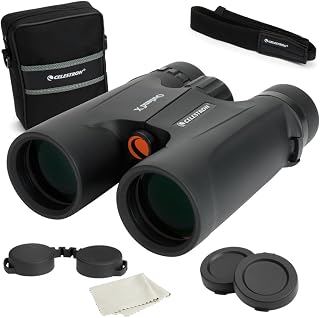 Tech
Best Binoculars 2026: 10 Ranked
The best binoculars for 2026 ranked: the £25.99 Kylietech 12x42 gives a 3.5 mm exit pupil, nearly three times the light of the £34.99 occer 12x25.
 Tech
Best Camcorder 2026: 10 Ranked
The best camcorder for most buyers is the FIREFOTO 4K 64MP at £59.99, working out at £0.94 a megapixel against £2.49 on the 8K PITIKI.
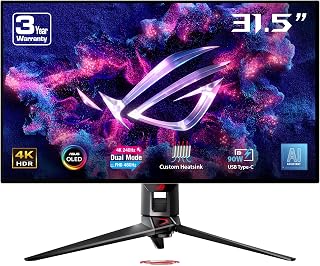 Tech
Best OLED Gaming Monitor 2026: 10 Ranked, Brightness Listed Four Ways
The best OLED gaming monitor picks ranked by panel, refresh rate and price — brightness is listed four different ways across these listings.
 Tech
Best 128GB SD Cards 2026: 10 Ranked, and Three Adverts That Contradict Themselves
Every 128GB SD card here leads with read speed. Three listings contradict their own specs — we show you both numbers before you buy.
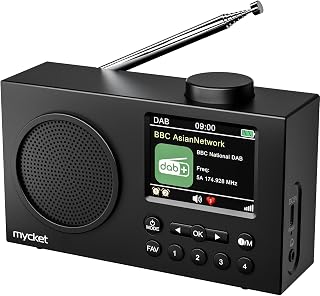 Tech
Best DAB Radios 2026: 9 Ranked, and the 30W Claim That Doesn't Add Up
The best DAB radios compared: one claims 30W yet a 2,000mAh battery lasting 10 hours — that averages 0.74W. Nine models ranked on their own figures.
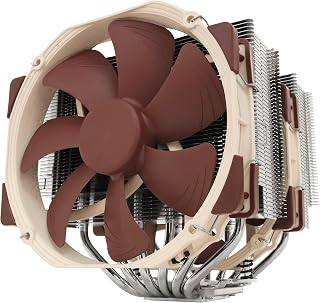 Tech
Best CPU Air Cooler 2026: 10 Ranked, One Sold Twice at Two Prices
We ranked the best CPU air cooler picks on Amazon, including the same Peerless Assassin 120 SE listed twice at £29.99 and £35.90.
 Tech
Best Case Fans 2026: 9 Ranked by What a Fan Actually Costs
The best case fans are rarely sold singly: a £21.49 five-pack is £4.30 a fan, while £18.99 buys one. Nine ranked by cost per fan and quoted noise.
Products you might like
The best rated products from our other Tech guides.
-
Noctua NF-P12 redux-1700 PWM 120mm Quiet Fan
£12.95
4.8
in Best Case Fans 2026: 9 Ranked by What a Fan Actually Costs
-
 WD_BLACK SN850X 4TB NVMe SSD
£499.99
4.8
in Best 4TB SSD for PS5: 10 Ranked, and the Speed Numbers That Don't Add Up
-
 Canon EF 50mm f/1.8 STM
£129.00
4.8
in Best 50mm Lens 2026: 10 Ranked, Spec Sheets Cross-Checked
-
Noctua NH-D15 Dual Tower CPU Cooler
£99.95
4.8
in Best CPU Air Cooler 2026: 10 Ranked, One Sold Twice at Two Prices
-
 Corsair MP600 PRO LPX 4TB PS5 SSD
£415.01
4.8
in Best 4TB SSD for PS5: 10 Ranked, and the Speed Numbers That Don't Add Up
-
 CTEK MXS 5.0 5A Battery Charger with Temperature Compensation
£74.49
4.8
in Best Car Battery Charger 2026: 10 Ranked, and Two Share a Model Number
-
 JBL Charge 6 Portable Bluetooth Speaker, 24H, Built-in Powerbank
£159.00
4.8
in Best Bluetooth Speaker 2026: 10 Portable Speakers Ranked
-
 Acer Predator GM7 1TB NVMe Gen4
£155.99
4.8
in Best 1TB SSD for PS5: 10 Ranked, From £135.99 to £199.99
-
Acer Predator GM7 2TB SSD, Gen4 NVMe 2.0, 7200MB/s, Graphene Thermal Pad
£228.99
4.8
in Best 2TB SSD for PS5 in 2026: 10 Ranked Against Sony’s Own Rules
-
 Wharfedale Diamond 9.1 Bookshelf Speakers (Pair, Walnut)
£129.00
4.8
in Best Bookshelf Speakers 2026: 10 Ranked, From £94.99
-
 WD Elements 1TB Portable Hard Drive
£93.00
4.7
in Best 1TB External Hard Drive 2026: 10 Ranked, and the 625 MB/s Myth
-
WD 2TB Elements Portable External Hard Drive
£99.99
4.7
in Best 2TB External Hard Drive: 8 Ranked, and the Speeds That Don't Add Up
-
 Crucial BX500 1TB 2.5" SATA SSD
£149.99
4.7
in Best 1TB SATA SSD: 10 Ranked, and Why £190 Buys 10MB/s
-
 soundcore Anker 2 Portable Bluetooth Speaker, 12W Stereo, IPX7, 24H
£28.49
4.7
in Best Bluetooth Speaker 2026: 10 Portable Speakers Ranked
-
 SanDisk 512GB Extreme microSD Card + Adapter
£109.00
4.7
in Best 512GB MicroSD Card 2026: 10 Ranked, and Why Read Speed Misleads
Comments
Reader comments are not checked against the manufacturer's claims above.
No comments yet
Be the first to add something we missed — a price change, a spec that turned out wrong, or how one of these held up.
Leave a comment
No account needed. Own one of these? Tell other readers how it actually performed.